Get Full Government Meeting Transcripts, Videos, & Alerts Forever!
Get email alerts on the Arpa Status Baltimore topic
No spam. Unsubscribe anytime.
Mayor27s recovery office says $641.17 million in ARPA funds fully obligated; $391.3 million expended as of Dec. 31, 2024
Summary
The mayor27s Office of Recovery Programs reported to the council that all ARPA state and local fiscal recovery funds awarded to Baltimore have been obligated and that roughly 56% of obligated funds have been spent, with variances across agencies due largely to capital timelines and contracting delays.
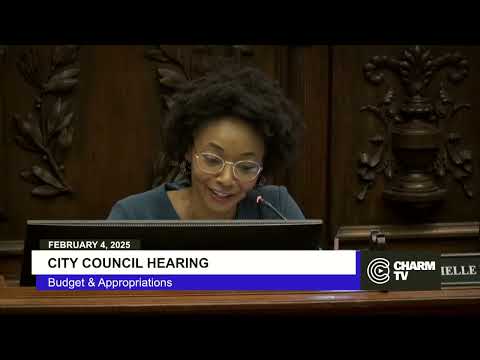
The mayor27s Office of Recovery Programs told the City Council Budget and Appropriations Committee that Baltimore has fully obligated its allocation of American Rescue Plan Act (ARPA) state and local fiscal recovery funds and has expended roughly $391.3 million as of Dec. 31, 2024.
"As acquired on 01/31/2025, all 641,170,126 awarded to Baltimore City has been fully obligated," Chief Recovery Officer Shamaya Kearney told the committee. Kearney said the office will shift attention to meeting statutory expenditure deadlines and to close monitoring of spending through the statutory October 2026/December 2026 requirements that apply to ARPA.
The recovery office reported that about 56% of agency obligations have been expended but that spending is uneven across departments and partner organizations. Kearney noted capital projects and recent grants explain much of the variance: some agencies are at low spend because projects are capital in nature and invoices arrive when work reaches milestones or final completion; others experienced delayed contract awards or permitting.
Kearney provided examples of low spend and reasons given by agencies: the Department of General Services is completing facility projects (including fire‑department and City Hall roof work) where contractor invoicing and permitting timing slow recorded spend; DPW is awaiting vehicle deliveries tied to fleet purchases; the Department of Transportation had bid extensions and protests that delayed sidewalk and ADA ramp work but has since issued notices to proceed; Recreation and Parks has several recreation center projects under construction with phased spending; Enoch Pratt renovations were being coordinated with HVAC work to minimize branch closures.
The recovery office said it maintains a monthly project‑management regime and frequent project manager check‑ins with funded partners and that staff conduct reconciliations with accounting staff to identify under‑spend risks early. "We have a very robust monitoring mechanism to ensure that we are working and talking with all of our funded partners," Kearney said.
Kearney also warned that federal guidance limits post‑obligation reallocation of funds: dollars may be repurposed only in a narrow set of circumstances (for example, vendor nonperformance or noncompliance). The office said it will continue working with agencies and partners to identify underspending early and pursue permissible reallocations if needed to ensure funds are expended by federal deadlines.
Ending: The recovery office said it would continue monthly monitoring, provide regular council reports and work with the administration and agencies to resolve permitting, procurement and invoicing issues that are slowing recorded expenditures.