Get Full Government Meeting Transcripts, Videos, & Alerts Forever!
Get email alerts on the City Schools Finances Capital topic
No spam. Unsubscribe anytime.
City Schools reports audited FY24 results, $93 million assigned fund balance and multi‑year capital program needs
Summary
Baltimore City Public Schools presented audited FY24 general‑fund results, an assigned fund balance for capital projects and an update on major replacement and renovation projects and Healthy Schools funding as part of the committee27s budget briefing.
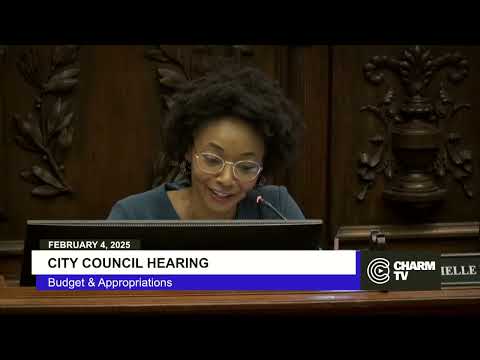
Baltimore City Public Schools (City Schools) officials presented audited fiscal 2024 financial results and a snapshot of capital planning to the City Council Budget and Appropriations Committee, showing final audited general‑fund results and an assigned fund balance set aside for capital contributions.
Deputy Chief Financial Officer Mary Anne Cox told the committee that City Schools follows a state reporting schedule and that the audited consolidated financial report is the authoritative document for FY24. City Schools reported an excess of revenue over expenditures at year‑end that the district has placed into assigned fund balance for capital priorities and other commitments.
"We present this information as part of the quarterly budget briefings required by local government," Cox said, noting the district27s different reporting calendar as a local education agency and that the audit and annual consolidated financial report are submitted to the state.
City Schools said the majority of its revenue comes from the state and the city, and that the state27s funding formula (state aid and relative wealth calculations) drives most of the district27s revenue. Investment earnings were higher in FY24 and provided a positive contribution to the year‑end result, the district said.
The district reported it had assigned roughly $93 million of excess FY24 general‑fund revenue to planned capital and other priorities; those assignments are consistent with school board policy and the CEO27s authority to designate fund balance after internal prioritization discussions.
Capital planning and FY26 outlook: City Schools and its facilities team described the district27s major project pipeline and funding outlook. Facilities staff said district capital needs outstrip projected annual resources by an estimated industry gap of roughly $375 million annually, underscoring a long backlog of deferred maintenance and project demand.
Facilities director Maureen Gershberg summarized a multi‑year pipeline of major projects and said the district anticipates receiving state and local capital allocations for replacements and renovations in FY26 while continuing to rely on recurring Healthy Schools and local CIP funding for systemic repairs such as roofs, windows and HVAC. Gershberg listed near‑term completions and milestones including the Furley replacement building, early learning annexes and modular classrooms scheduled for delivery over the next two to three years and noted that all classrooms had some form of cooling as of June 1, 2024.
City Schools also reminded the committee that its annual CIP submission asks for more projects than can be funded; the district said at the 90% IAC funding benchmark it expected approximately $26.6 million in state CIP funding this cycle but submitted requests for many more projects.
Why it matters: The district27s audited fund‑balance designation affects how the city and the school board plan capital contributions and set priorities for both locally funded projects and state capital requests. Committee members asked for clarifications on differences in adopted budget figures and for grant and community‑services line‑item details; school financial staff said they will provide follow‑ups.
Ending: City Schools officials said they will post the audited consolidated financial report on the district website and provide requested follow‑up detail to the committee on community‑services and grant account questions.