Get Full Government Meeting Transcripts, Videos, & Alerts Forever!
Get email alerts on the City Budget Fy24 Fy25 topic
No spam. Unsubscribe anytime.
Baltimore budget office reports $46 million FY24 surplus, warns of $14.4 million FY25 shortfall and recommends $51.2 million in closeout supplements
Summary
Baltimore27s budget director told the City Council Budget and Appropriations Committee that the city closed fiscal 2024 with an approximately $46 million general‑fund surplus but is projecting a $14.4 million deficit in the first quarter of fiscal 2025 and is recommending a $51.2 million package of supplemental appropriations to cover agencies that ended last year in deficit.
Baltimore27s budget director told the City Council Budget and Appropriations Committee that the city closed fiscal 2024 with an approximately $46 million general‑fund surplus but is projecting a $14.4 million deficit in the first quarter of fiscal 2025 and is recommending a $51.2 million package of supplemental appropriations to cover agencies that ended last year in deficit.
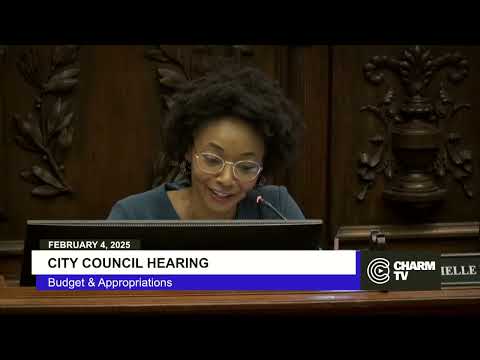
"Today we are going to provide just a final update of the preliminary year end position for fiscal 24 as well as our first quarter projections for fiscal 25," City Budget Director Laura Larson said at the committee hearing. Larson said year‑end revenue strength — including higher property collections, a larger final income tax disbursement from the state and elevated interest earnings — produced a $77 million revenue surplus that helped offset about $30.9 million in agency expenditure deficits.
Why it matters: The city27s closeout position affects how councilors and the administration manage one‑time fund balance uses, allocate capital contributions and craft the coming fiscal 2026 outlook amid state budget pressure.
Larson told the committee the city27s previously reported $58.3 million projected surplus for FY24 narrowed during closeout activity to about $46 million because of late water billing entries from the Department of Public Works that added roughly $12.2 million in charges to agency budgets. "Those final entries were made as part of the closeout process," she said.
The budget office identified the primary revenue drivers for FY24 as property tax collection improvements, a large year‑end state income tax reconciliation and higher interest earnings. On the expenditure side, Larson said the city experienced a $20 million surplus in debt service but recorded deficits across several operational agencies.
Closeout supplemental package: Larson recommended a package of retroactive appropriations to cover deficit agencies and meet the city charter requirement that agencies end the fiscal year in balance. The budget office described the package as a $51.2 million net appropriation to be funded largely from income tax surplus, investment earnings, targeted transfers from debt service and limited use of fund balance tied to final FEMA reimbursements. Agencies and amounts the budget office identified included: board of elections $1.4 million; Department of Finance $4.2 million; Fire Department $33.4 million (primarily overtime and EMS contractual costs); Health Department $5.3 million (final COVID‑related invoicing, expected to be reimbursed by FEMA); Law Department $1.5 million; Liquor License Board $0.3 million; Police Department $3.1 million; Department of Public Works $5.6 million; Recreation and Parks $3.7 million; Sheriff27s Office $4.5 million; and Department of Transportation about $0.6 million.
Larson cautioned the numbers remain subject to final audit work performed by the Bureau of Accounting and Payroll Services. "Work on the closeout process is continuing," she said, adding the city27s annual consolidated financial report is expected later this winter.
FY25 first‑quarter outlook: For the current fiscal year the budget office reported a projected $14.4 million overall deficit in its first‑quarter update. The office expects a roughly $10 million revenue surplus this year but a $25.4 million expenditure deficit (about a 1% variance from budget). Income tax and transfer/recordation taxes were the primary revenue surpluses; moving violations, parking revenues and certain investment earnings are the largest projected shortfalls.
Larson told the committee moving violations are down largely because red‑light camera citations per camera have declined and a planned deployment of 24 additional cameras was delayed into the second quarter. Parking revenues are underperforming because citations are down and meter revenue has been affected by equipment upgrades and repairs; DOT has hired staff to increase enforcement and will pilot license‑plate reader technology for residential permit enforcement later in the year.
Questions from council members focused on water billing reconciliations and vacancy trends. Larson said DPW27s UMAX billing system failed to reconcile certain city accounts for two years, and the department finished the reconciliation as part of closeout. She told the committee DPW will reconcile that account quarterly going forward and suggested the committee invite DPW to a future briefing to explain steps taken to tighten billing controls.
Discussion, direction and next steps: Committee members asked for follow‑ups the budget office offered to provide, including exact property‑tax collection rates, details on unreconciled purchasing‑card activity and a BOE memo implementing FY24 carry‑forwards. Larson said procurement and p‑card reconciliation controls have been tightened and that unreconciled p‑card accounts are suspended monthly until reconciled.
The committee did not take a formal vote during the hearing; Larson said the supplemental package for deficit agencies is slated for the Board of Estimates agenda the following day and for committee consideration as part of the FY24 closeout process.
Ending: The budget office said it is finalizing second‑quarter projections and will return to the committee with updated numbers. Council members also asked the administration to provide further detail on overtime drivers in enforcement services, the number of ARPA‑funded positions moved to the general fund and agency‑level vacancy breakdowns.