Get Full Government Meeting Transcripts, Videos, & Alerts Forever!
Get email alerts on the Municipal Finance topic
No spam. Unsubscribe anytime.
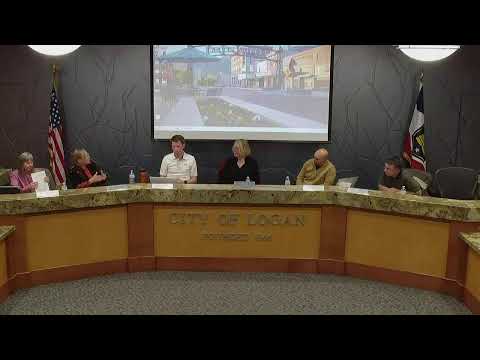
Logan Council holds public hearings on wastewater impact fee and $60M bond parameters; ratifies airport board member, approves brush-truck funding
Summary
At its Feb. 4 meeting the Logan City Council held public hearings on a revised wastewater multifamily impact fee and parameters for up to $60 million in water and sewer revenue bonds, ratified Brett Hughey to the Airport Authority and approved a resolution to spend brush-truck sale proceeds on fleet consolidation.
The Logan City Council on Feb. 4 conducted public hearings on an updated wastewater impact-fees study and on parameters for potential water and sewer revenue bonds, while taking votes on a board appointment and a fire-fleet appropriation.
Tyler Richard, a city staff presenter, described an update to the city’s wastewater impact-fees study that reexamined the share of treatment capacity eligible for fees. The study estimated about $38,700,000 in past eligible costs used to size the fee and said the prior per-equivalent-residential-unit (ERU) fee was $24.33. Under the updated study, multifamily units — defined to include condominiums, duplexes and apartments — would be assessed a reduced multifamily rate; Richard said multifamily units would now be charged about $17.03 per door and the reduction reflects measured lower water use in multifamily housing.
Richard said the revised multifamily fee must be adopted not only by Logan but by the other municipalities that share the region’s wastewater treatment plant before it takes effect for those jurisdictions.
The council also held a public hearing on a parameters resolution relating to the possible future issuance of water and sewer revenue bonds. City staff described the parameters established in January’s parameters resolution: up to $60,000,000 in principal, an interest rate not to exceed 6 percent and a maximum term of 31 years. City staff said this hearing is required under state law and that the parameters are broad in order to allow flexibility when staff later presents specific projects and a final financing plan. Staff also explained a related reimbursement function: adopting parameters now allows the city to reimburse itself for qualifying costs already incurred (staff cited a land purchase of $775,000 as an example); staff emphasized the city is not using these bonds to pay other existing bond obligations.
No formal council vote was required or taken at the hearings themselves.
Votes at a glance
- Approval of minutes and agenda: Motion to accept the minutes and approve the agenda was moved and seconded at the start of the meeting and carried by voice vote.
- Airport Authority board ratification: The council ratified Brett Hughey for another term on the Airport Authority; the motion was moved, seconded and approved by voice vote.
- Resolution to appropriate brush-truck proceeds: The council approved a resolution (referred to in the meeting as Resolution 2053) to appropriate proceeds from the sale of a brush truck (sale price cited as $24,500) to equip a different vehicle as the consolidated brush truck. The motion to approve the resolution was moved, seconded and carried.
Other items on the consent and workshop agendas included staff requests to appropriate $80,071 in state-distributed alcohol-enforcement funds and $37,244 in police overtime reimbursements, reports from the planning commission (including approvals of a short-term rental and a boarding/grooming business, and a continued review of an office/call-center project at 1099 West 400 North that raised parking and wetland questions), and boundary-adjustment proposals with neighboring Millville and Nibley.
Why it matters: The impact-fee change could lower the one-time sewer impact charge for new multifamily developments in Logan if the change is adopted by the other agencies that share the treatment plant. The bond-parameters hearing establishes borrowing limits city staff may use later; it does not itself authorize a particular project or issue debt.
Next steps: Staff said any specific bond issuance, final project selection or budget resolution will come back to the council for formal approval. The impact-fee change also requires adoption by the other municipalities served by the sewage-treatment plant before it takes effect for their jurisdictions.