Get Full Government Meeting Transcripts, Videos, & Alerts Forever!
Get email alerts on the Board Communications topic
No spam. Unsubscribe anytime.
Board reviews conduct and communication protocols, emphasizes routing questions through superintendent
Summary
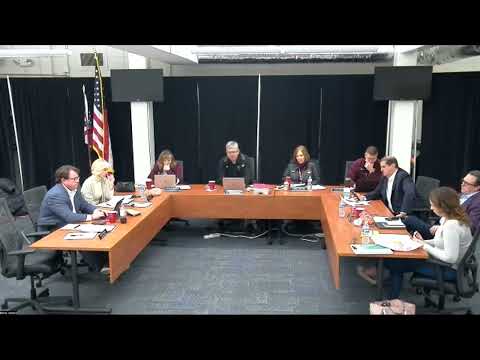
The New Albany‑Plain Local Board of Education spent its Feb. 4 meeting reviewing boardmanship guidance from the Ohio School Boards Association and clarifying how members should communicate with administrators and the public.
The New Albany‑Plain Local Board of Education spent its Feb. 4 meeting reviewing boardmanship guidance from the Ohio School Boards Association and clarifying how members should communicate with administrators and the public.
Superintendent Michael Sawyers told the board that, for efficiency and to ensure consistent responses, members should route most operational questions through board leadership or the superintendent’s office rather than contacting building staff directly. “You can access Michael and Becky anytime you want,” Sawyers said, and he urged members to let administration consolidate information so answers can be shared with the full board.
Board members framed the conversation around three recurring themes: role boundaries, respectful questioning during presentations, and how to keep all members similarly informed without engaging in unlawful deliberations outside public meetings. Board member Mark described his experience putting presenters “on the hot seat” and said he now tries to preview tough questions with staff when possible so presenters are prepared. Board member Paul and others urged members to be mindful of tone and of when a follow‑up conversation outside a formal meeting would be more constructive than a line‑of‑questioning during a presentation.
Administrators said the current, default protocol routes board requests through the president for agenda and major items, but that individual members may contact the superintendent for information. Sawyers said when a question requires input from multiple administrators, his office will gather responses and distribute them so information is shared equitably with the full board. He also described a practical hierarchy for operational questions when he is unavailable: Laurie (teaching and learning), Ken (business and operations), Becky (finance).
Legal and procedural limits also shaped the discussion. Board members were reminded that FERPA prevents staff from sharing some student‑level details and that individual board members must avoid “direct dealing” with bargaining‑unit employees on terms and conditions of employment. Sawyers and board counsel flagged that these limits protect both student privacy and staff licensure.
The board discussed practical steps to reduce surprises in meetings: (1) getting slide decks and materials by Friday when possible; (2) encouraging members to preview substantive questions with administration before the public meeting; and (3) considering one‑way communication tools (recorded updates or broadcast voicemail) to keep members informed without risking impermissible deliberation. One board member described a tool that lets members record a message that is distributed to other members as a way to share situational updates without generating chain deliberations.
Next steps: the superintendent’s office will continue to standardize agenda‑preview timelines (administration said it will work to have final materials out by Friday whenever feasible), investigate tools to improve one‑way dissemination to board members, and reissue guidance about when members should route questions through the superintendent or the board president. The board also said it will revisit communications expectations at the upcoming retreat.
Ending: The exchange concluded with an emphasis on balancing public transparency with respect for staff roles and privacy protections; members agreed to try pre‑meeting questions in cases where advanced notice would help presenters provide fuller answers.