Get Full Government Meeting Transcripts, Videos, & Alerts Forever!
Get email alerts on the Reverse Mortgages Equity Sharing topic
No spam. Unsubscribe anytime.
Committee hears testimony on bill to limit lender claims in home equity investments
Summary
The Senate Committee on Housing and Development opened a Feb. 5 public hearing on Senate Bill 534, a measure that, as written, would limit the percentage of a home's appreciated equity a lender may claim when it provides a lump sum in a reverse-mortgage–style contract and declares an emergency on passage.
The Senate Committee on Housing and Development opened a Feb. 5 public hearing on Senate Bill 534, a measure that, as written, would limit the percentage of a home's appreciated equity a lender may claim when it provides a lump sum in a reverse-mortgage–style contract and declares an emergency on passage.
Supporters and industry witnesses agreed there is a consumer-protection issue but differed sharply on what the bill as written would regulate and whom it would affect.
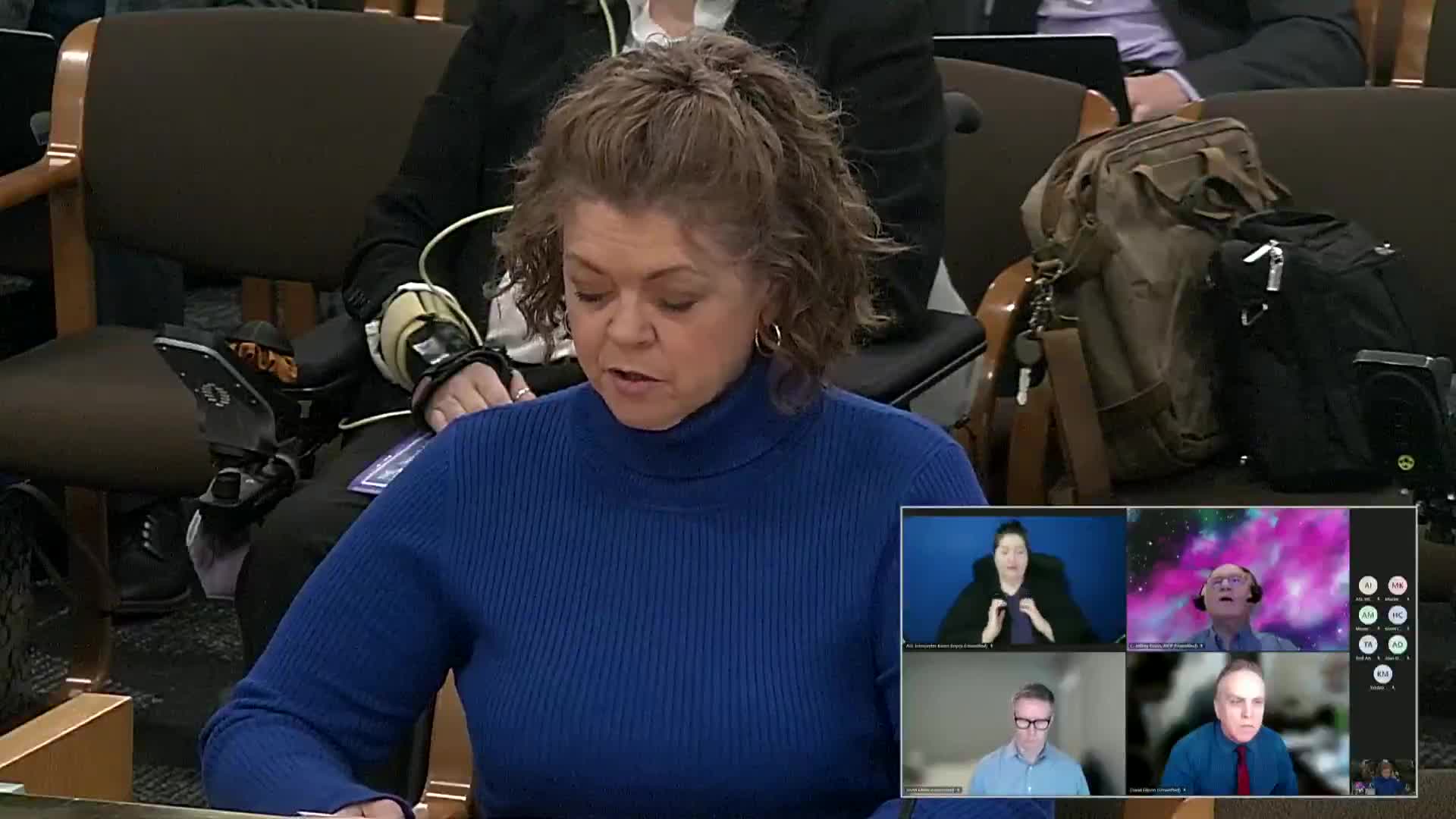
Samantha Demshack, a testifier who identified herself as an advocate for seniors and people living with dementia, urged the committee to support the bill to protect older homeowners from “home equity sharing” contracts she described as opaque. She told the panel she had reviewed the paperwork for a client who accepted $40,000 on a home appraised at $215,000 and later owed roughly $137,000 when the house’s value rose to about $425,000. “A person should know how much is being held from their equity,” Demshack said, adding that the lack of clear disclosures had pushed that client into applying for Medicaid to cover long-term care costs.
Industry witnesses representing mortgage lenders and national reverse-mortgage providers told the committee the bill as drafted risks sweeping in federally regulated reverse mortgages and would harm a regulated consumer option. Rod Miller, Reverse Mortgage Division Manager for Back Res Mortgage, testifying on behalf of the Oregon Mortgage Bankers Association, said, “A true reverse mortgage doesn't behave in the ways that were just described,” and noted federal protections including mandatory HUD-approved counseling and FHA insurance for the predominant Home Equity Conversion Mortgage product.
David Ellison, a loan officer with Longbridge Financial, described the difference between FHA-regulated reverse mortgages and newer equity‑sharing products as stark. He told the committee the bill as drafted “seems to cut not only those equity sharing agreements out, but also conventional reverse or FHA reverse mortgage loans out,” and urged the sponsors to narrow the language to target equity‑sharing contracts rather than federally regulated reverse mortgages.
Committee members and witnesses agreed there is a problem with some home equity investment products — and that the Consumer Financial Protection Bureau and other federal entities have flagged complex, nontransparent terms in those agreements — but several witnesses and at least one sponsor said the bill’s current language uses the term “reverse mortgage” in a way that could bring federally regulated FHA loans under state limits unintentionally. One committee member said the bill will need amendment language to clarify the intended target.
No formal action was taken; the committee closed the public hearing and indicated more work on amendments will be needed before the bill returns for consideration.