Get Full Government Meeting Transcripts, Videos, & Alerts Forever!
Get email alerts on the Tax Credit Single Family Workforce topic
No spam. Unsubscribe anytime.
Senator Brock Smith outlines pilot tax credit to support construction of single-family homes for workforce buyers (SB 500)
Summary
Senate Bill 500, presented by sponsor Sen. David Brock Smith, would create a state income tax credit equal to up to 50% of eligible construction costs to incentivize building single‑family homes sold to buyers at or below 120% AMI, subject to limits including a $5 million annual statewide cap.
Senate Bill 500, presented by sponsor Senator David Brock Smith (District 1), would create a state individual and corporate income tax credit to incentivize construction of single‑family dwellings sold at prices affordable to households with incomes at or below 120% of area median income (AMI).
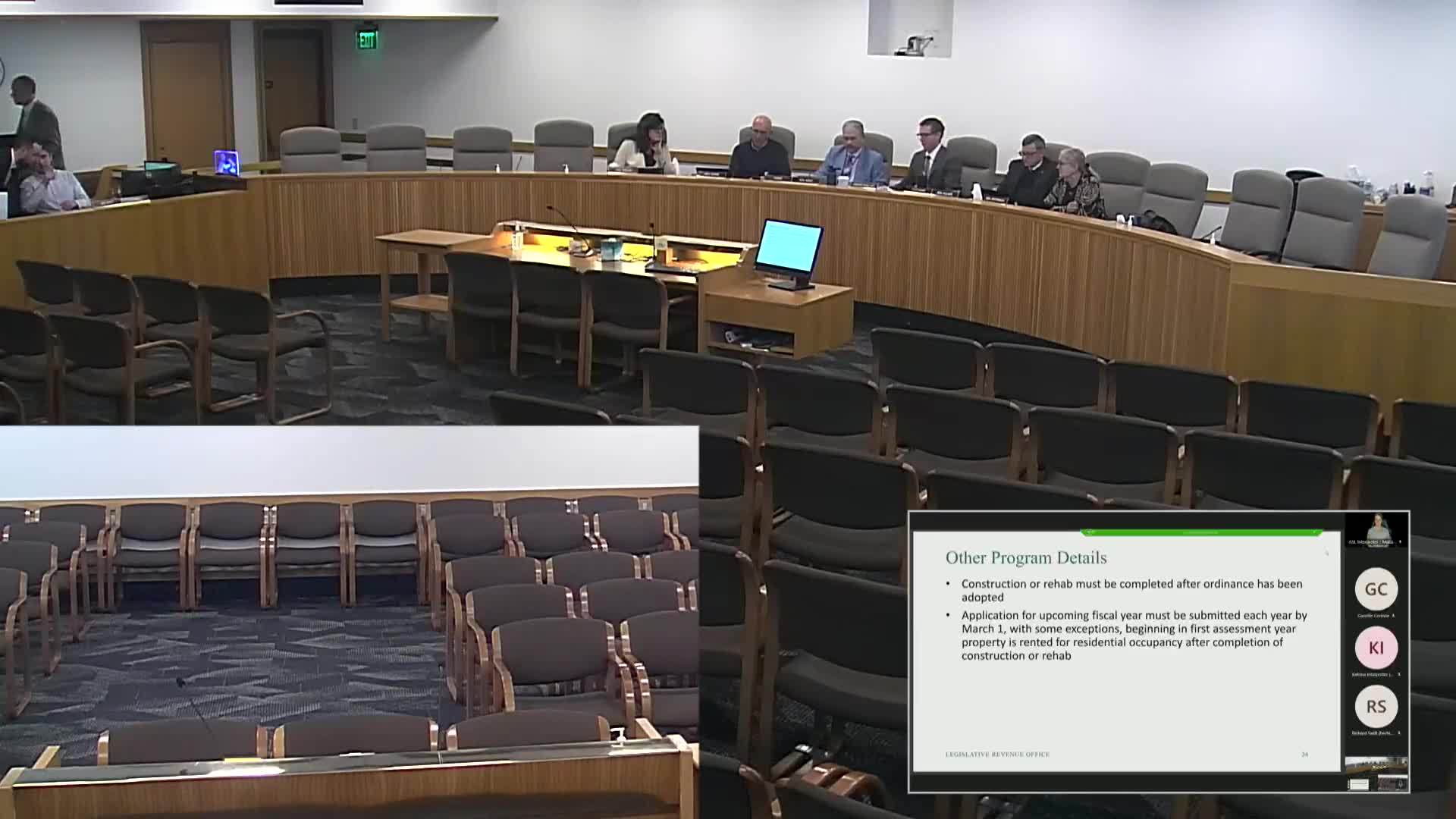
Senator Brock Smith described SB 500 as a pilot tax credit intended to help workforce households—including teachers, first responders and hospitality workers—buy homes. The bill would allow a credit equal to 50% of eligible costs incurred in constructing a qualified property, limited to the taxpayer’s tax liability in the year the credit is claimed; unused credit amounts could be carried forward up to three years. The sponsor said the credit would be available for tax years 2026 through 2031 (pilot period) and proposed an annual statewide cap of $5 million on credits. The bill would require that at least 35% of credits in any tax year be for properties located in counties with population under 125,000.
SB 500 defines a “qualified price” and “qualified purchaser” as those affordable to households at or below 120% AMI and imposes resale restrictions (the sponsor described an 11‑year resale limitation to keep units affordable). The bill also limits eligible construction costs (for example, an internal cap in the draft was described as $200 per square foot to prevent outsized eligible-cost claims) and includes limited transferability for certain non-taxpaying developers (such as nonprofit developers). Senator Brock Smith described the program as a modest pilot—$5 million per year for five years—designed to augment other housing investments.
Committee members asked detailed technical questions about how the credit interacts with taxpayers’ tax liability (nonrefundable vs. refundable), how eligible costs are defined and capped, how a sale price would be set to reflect household income capacity (what underwriting or affordability standard will determine the “qualified price”), and how the county allocation requirement would be administered. Committee staff and the sponsor said the bill language could be adjusted to clarify carryforward rules and to better define application of AMI to sale price, and staff offered to provide drafting suggestions.
Senators expressed interest in protecting the public fisc and ensuring the credit targets units that remain affordable over time. Senator Patterson asked why at least 35% of credits are reserved for smaller counties; the sponsor said the carve-out is intended to ensure rural participation. Senator Starr and others sought clarity on the practical price-setting and affordability underwriting mechanisms; staff offered to provide examples and model calculations for subsequent briefings.
No formal vote or committee action was taken at the Feb. 5 hearing; the sponsor and staff said they will work with committee members on technical refinements.