Get Full Government Meeting Transcripts, Videos, & Alerts Forever!
Get email alerts on the Behavioral Health Budget topic
No spam. Unsubscribe anytime.
Oregon Health Authority outlines behavioral health funding priorities during HB 5025 hearing
Summary
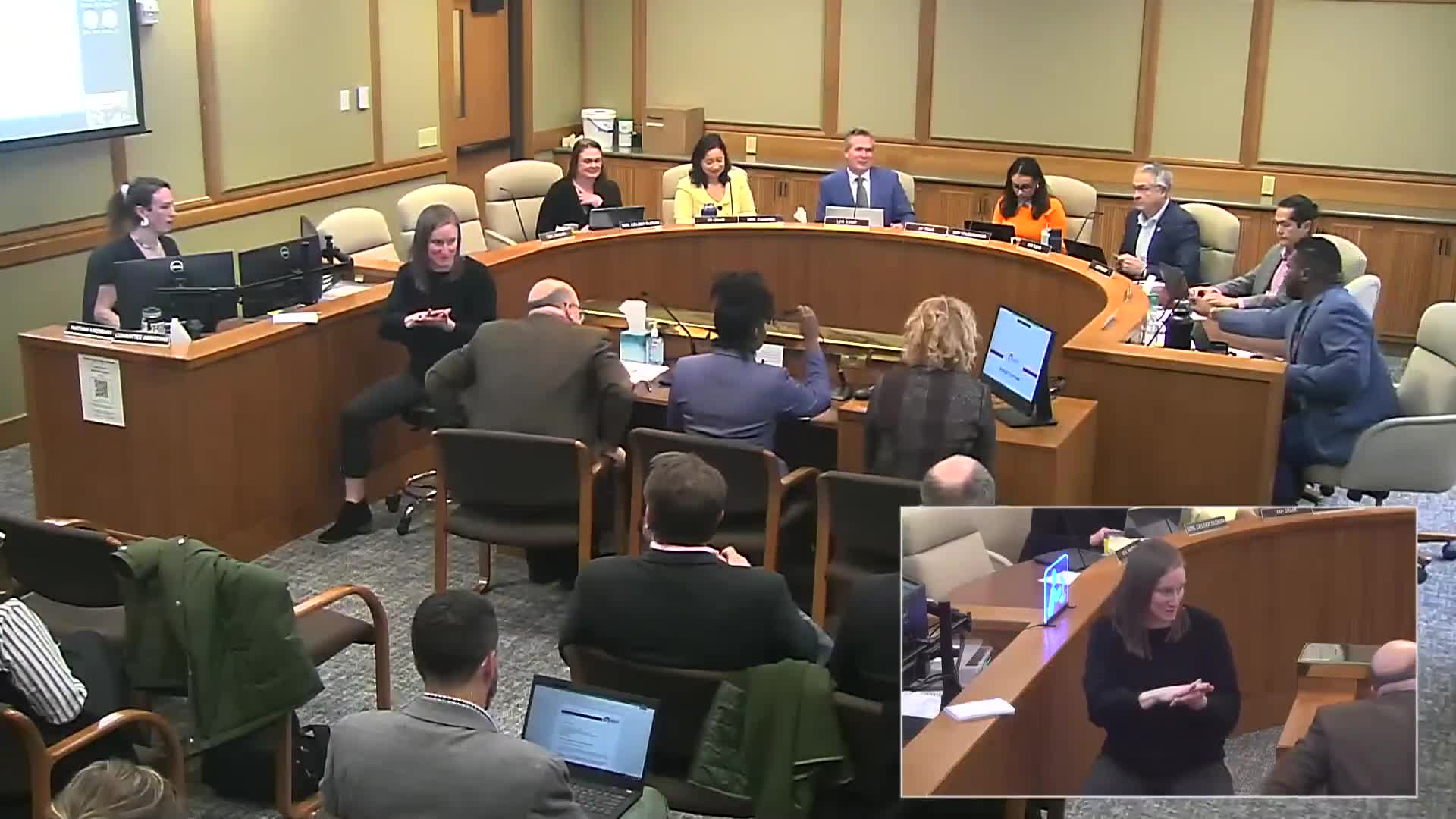
Oregon Health Authority officials reviewed the governor's recommended budget for the Behavioral Health Division and described major fund sources, planned program expansions, and priority policy option packages during a Feb. 5 public hearing on House Bill 5025.
Oregon Health Authority behavioral health leaders told the Joint Subcommittee on Human Services on Feb. 5 that Medicaid remains the central funding source for the state's behavioral health system and that the governor's recommended budget for 2025'27 invests in workforce, crisis response and community residential capacity.
The presentation, delivered by Ebony Clark (Behavioral Health Director), John Collins (Deputy Director for Operations and Strategy) and Krista Jones (Deputy Director for Service Delivery), reviewed the governor's recommended budget in HB 5025 and described a set of policy option packages intended to expand community services, strengthen crisis response and sustain harm reduction work.
OHA officials emphasized that the behavioral health system is funded and operated across several parts of state government and that Medicaid accounts for the majority of federal funding supporting services. "The behavioral health system is funded and run by not just the Behavioral Health Division, but is really a partnership across several divisions," Clark said. John Collins noted the limitations of some funding streams: "Medicaid dollars cannot be spent on capital construction. They have to be spent on services."
Budget highlights presented to the committee included the composition of fund sources and specific investments. Clark said the governor's budget shows about $732 million in general fund (roughly 45% of the division's proposed budget) and about $582 million in other funds (about 35%). OHA staff said federal funds include Medicare/Medicaid matching and other federal grants; Medicaid-related federal funds make up roughly 92% of the federal funding cited in the presentation. The agency also identified other funds such as marijuana tax proceeds, Measure 110 drug treatment dollars and opioid settlement distributions as important non-general-fund sources.
OHA leaders described several programmatic priorities in the proposed budget: expansion of certified community behavioral health centers (CCBHCs); continuation and expansion of the behavioral health community navigator program (identified as $2.4 million in general fund); additional staffing for civil commitment work; investments to expand youth in-home intensive behavioral health treatment (IIBHT); and funding aimed at reducing administrative burden and improving metrics tied to county financial assistance agreements. OHA also said it will continue implementing the 988 crisis line campaign and prioritize two-person mobile crisis response teams.
The agency framed the request as an incremental build on prior biennial investments and said several drivers are increasing demand for services, including higher Oregon Health Plan enrollment and pandemic-era changes in acuity. Clark told the committee that increased dollars do not always immediately translate to reduced demand because needs have grown in some areas faster than funding.
The subcommittee opened a public hearing and received testimony from peer organizations, legal aid groups, provider associations and labor unions in support of continued and expanded behavioral health investments. OHA staff said written follow-up on several data requests (for example, on cost and construction eligibility) will be provided to committee members.
OHA presented the budget and policy package details for committee review; no formal committee action was taken at the Feb. 5 hearing. The public testimony period will continue at future hearings on HB 5025 and other parts of the Oregon Health Authority budget.