Get Full Government Meeting Transcripts, Videos, & Alerts Forever!
Get email alerts on the Fertilizer Reporting And Groundwater Nitrate topic
No spam. Unsubscribe anytime.
Senate hearing on SB 747 splits farmers and public-health advocates over fertilizer reporting for large irrigated farms
Summary
The Senate Committee on Natural Resources and Wildfire heard testimony Feb. 4 on Senate Bill 747, a proposal requiring owners of 200 or more irrigated acres to report annual fertilizer application to the Oregon Department of Agriculture; supporters said the data are needed to address nitrate contamination in drinking water, while farmers and industry groups called the proposal unworkable and potentially punitive.
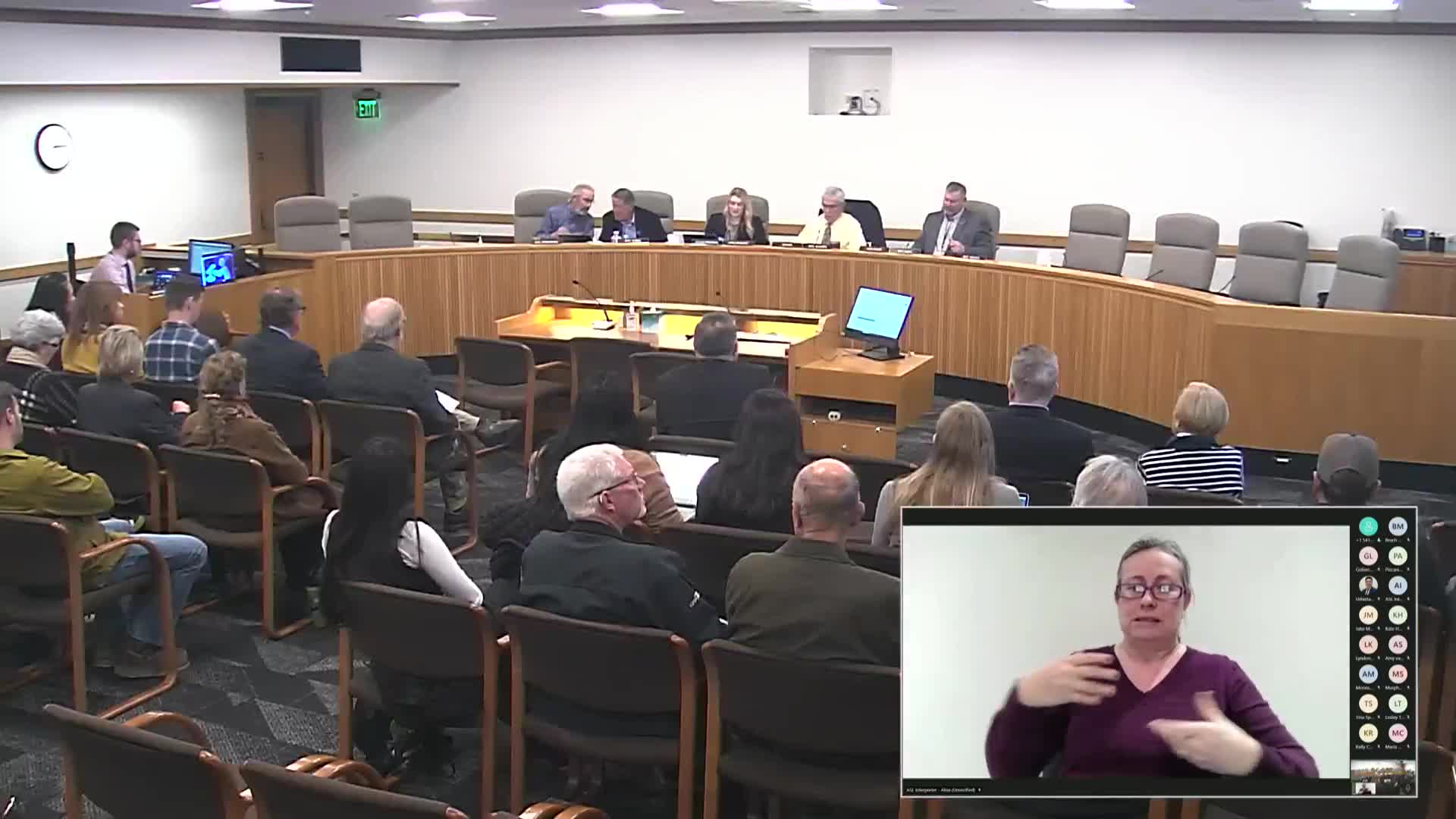
The Senate Committee on Natural Resources and Wildfire held a public hearing Feb. 4 on Senate Bill 747, which would require the Oregon Department of Agriculture to establish a reporting system for fertilizer applied to irrigated agricultural land and require owners of at least 200 irrigated acres to submit annual reports. Senator Khan Pham, chief sponsor of the bill, said the measure is intended to collect data needed to address nitrate contamination that has affected well water in parts of the state; the committee took no vote during the hearing.
Senator Khan Pham (chief sponsor) told the committee the bill is a public-health measure aimed at protecting drinking water for children and other vulnerable residents. "Every Oregonian deserves the right to drink clean drinking water," Pham said, and described communities in the Lower Umatilla Basin that have used bottled water for decades because of nitrate contamination. Pham and other supporters emphasized the bill would collect data rather than impose new fertilizer limits: "This bill does not impose restrictions. It simply collects data so agencies can provide better technical support," he said.
Proponents included community members and environmental groups who said fertilizer runoff is a leading source of nitrates in groundwater. Alice Morrison of Friends of Family Farmers and Caleb Lay of Oregon Rural Action testified in support, saying the reporting would help direct technical assistance and could reduce overapplication that both harms water and wastes farmer inputs. Lisa Arkin of Beyond Toxics referenced an existing state system for pesticide notification (FIRNs) as precedent for public reporting of natural-resource chemical use.
Opponents included many farmers, commodity organizations and industry groups who said the bill fails to account for agronomic complexity and would create onerous burdens. Representative Shelley Bossart Davis, a farmer and House member, testified in opposition and said the measure "assumes farmers apply fertilizers without regard to crop science or sustainability." Representative Anna Scharf and other rural legislators and witnesses described large variation in soils, crops, irrigation systems, weather and farm ownership structures that make simple pounds-per-acre reporting misleading and difficult to enforce. Several witnesses noted the bill would exempt 90% of Oregon farms while covering roughly 80% of irrigated acreage by focusing on the largest operations, but questioned whether the 200-acre threshold and the owner-based reporting requirement are workable.
Technical and legal concerns surfaced during testimony. Mitch Wolgamott, a former DEQ official, said data on applied nitrogen is needed to evaluate sources of groundwater nitrates. Several growers and agronomists, including Michelle Armstrong Zielinski, said the bill as drafted contains enforcement language and that section 2 references civil penalties up to $10,000; Zielinski told the committee the statute cited in the draft could permit fines for perceived overapplication. Farmers also raised practical questions about whether reporting would be required per owner, per LLC or per operator, and whether variable-rate application technology and different nutrient needs within fields could be represented by a single pounds-per-acre figure.
Community members directly impacted by contaminated wells testified that their water is unsafe. Maria Collin, who lives in the Boardman area and whose well tested at 39 mg/L nitrate, had her testimony read in Spanish and said she and her grandchildren have health symptoms and rely on bottled water because their well is not safe. Advocates and local residents asked the committee to act to gather data and provide technical support and remediation options.
Industry groups and associations that opposed the bill included the Oregon Seed Council, Oregon Farm Bureau Federation, Oregon Business and Industry, Oregonians for Food and Shelter, and commodity-specific groups. They urged the committee to seek voluntary, science-driven approaches and to fund research and technical assistance rather than impose mandatory reporting. Multiple legislators and witnesses urged investment in remediation and well-replacement programs and in additional research at Oregon State University.
Chair Golden closed the public hearing without a vote and invited additional written testimony. Committee staff noted written comments will be accepted through the posted deadline in the legislative system and stakeholders indicated continuing negotiation and technical discussions could follow.