Get Full Government Meeting Transcripts, Videos, & Alerts Forever!
Get email alerts on the Pension Disability Ptsd topic
No spam. Unsubscribe anytime.
Bill would create a clearer duty standard for PTSD disability claims; PERS raises timing and capacity concerns
Summary
Senate Bill 588 would make a PTSD diagnosis more clearly eligible for a duty disability designation for police officers and firefighters under PERS and would set timing expectations for contested‑case hearings; PERS said the duty standard is administrable but the 90‑day hearing requirement is not fully within its control.
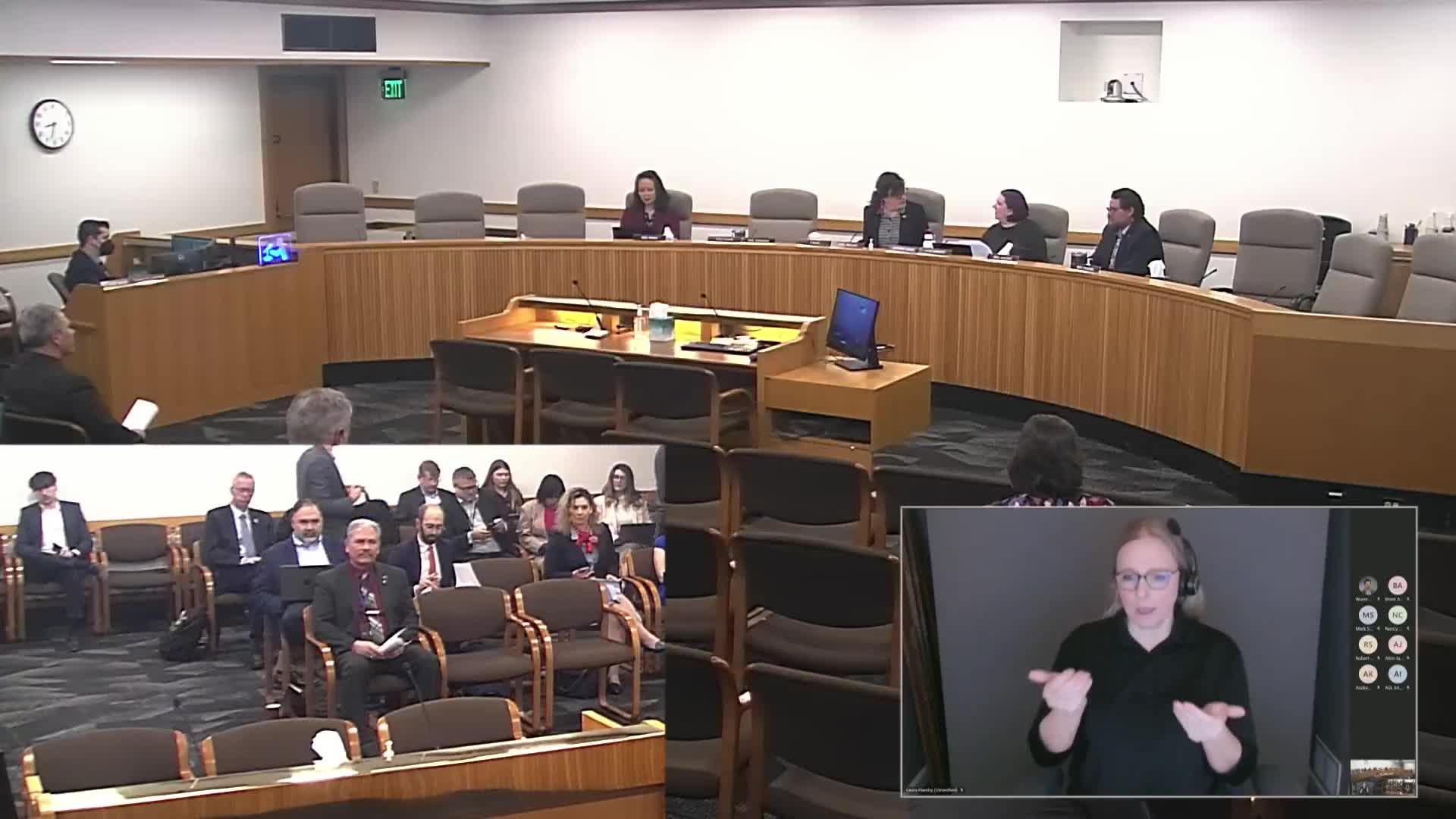
The Senate Committee on Labor and Business held a public hearing Feb. 4 on Senate Bill 588, which would specify circumstances under which post‑traumatic stress disorder (PTSD) diagnosed in police officers and firefighters is treated as an on‑duty disability for PERS purposes and would declare an emergency effective on passage.
Brian Stewart of Clackamas Fire District No. 1, speaking for the Oregon Fire Chiefs Association, urged support for the bill, telling the committee first responders routinely experience traumatic events and that the current process to establish work‑related disability places heavy administrative and financial burdens on affected members and families. "We ask for your support in Senate Bill 5 88," Stewart said.
PERS leadership said they acknowledge delays in individual cases and that the agency is working to address backlog and resourcing. Kevin O'Lanick, PERS director, said: "We acknowledge that as an agency, the delay in Mr. Ellis' case is unacceptable and we're working to move the case forward." He and Heather Case, senior policy advisor, described PERS' appeals process and explained that their appeals staff conduct detailed compliance reviews — compiling medical records, drafting lengthy letters and sometimes approving disability without a hearing; the appeals unit approved 43 of 119 disability contested cases received between January and December 2024, PERS said.
PERS said the bill's clearer standard for when PTSD should be designated as a duty disability for police and fire members could be administrable and consistent with the division's current rule that requires a psychiatrist or psychologist opinion for an initial PTSD diagnosis. But PERS raised concerns about sections requiring an agency‑held contested‑case hearing within 90 days when requested, noting contested hearings are scheduled by the Office of Administrative Hearings (OAH) and cannot be guaranteed within set timeframes.
PERS also described factors that extend processing times: record collection delays, resourcing that PERS says has been strained by a record volume of appeals doubled since pre‑pandemic levels, and pandemic-era disruptions to medical access. To address backlog, PERS said it has requested three permanent positions in its 2025‑27 budget request (a supervisor, a compliance specialist and an administrative assistant) to support appeals processing.
Committee discussion focused on the need to balance timely adjudication with administrability. Senator Meek and others asked PERS to work with stakeholders on clarifying the timing and process for contested cases, and PERS said it would collaborate on amendments. Supporters and committee members emphasized treating mental health disabilities consistently with physical injuries and reducing protracted delays.
Ending: The committee closed the public hearing; sponsors and PERS agreed to continue stakeholder work on bill language and on potential administrative fixes, including triage and capacity increases at PERS.