Get Full Government Meeting Transcripts, Videos, & Alerts Forever!
Get email alerts on the Electrical Licensing topic
No spam. Unsubscribe anytime.
Bill would let state and local agencies share enforcement resources, raise penalties for building-code violations
Summary
Senate Bill 87 would let the Electrical and Elevator Board enter into agreements with municipalities to share enforcement responsibilities for electrical licensing and safety and would increase maximum penalties and the Construction Contractors Board's share of penalty revenue to fund field enforcement.
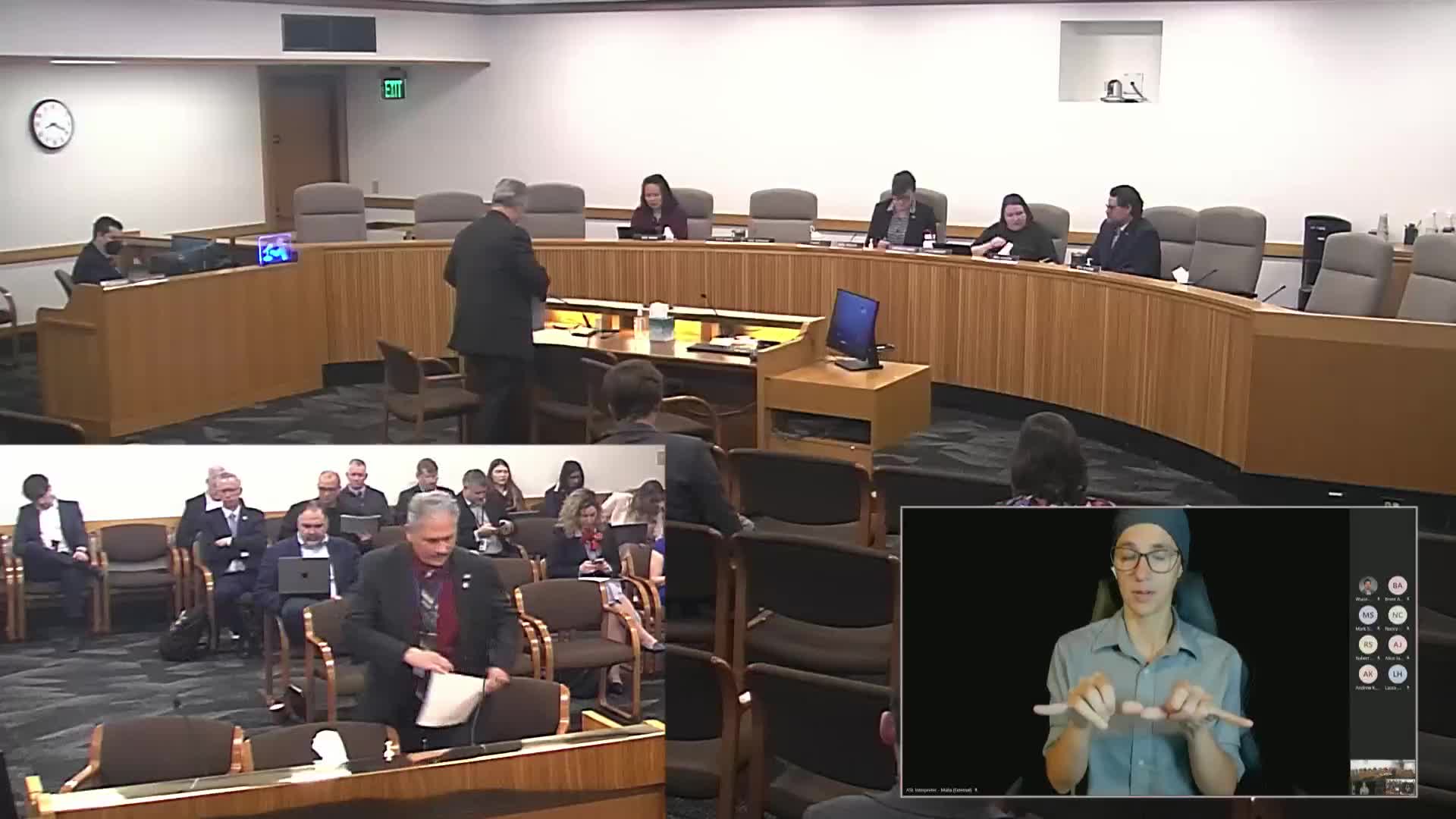
The Senate Committee on Labor and Business took public testimony Feb. 4 on Senate Bill 87, sponsored by Senator Mark Meek, which would allow the Electrical and Elevator Board to enter agreements with municipalities to establish local electrical licensing enforcement programs and would adjust penalty and revenue shares tied to building-code enforcement.
Senator Mark Meek, sponsor of SB 87, told the committee the bill has three parts: permit intergovernmental agreements for electrical license enforcement, increase the maximum civil penalty for building-code violations (he and proponents said the statutory maximum would be raised from $5,000 to $7,500), and increase the share of penalty monies collected to the Construction Contractors Board from 20% to 50% to support field inspections.
"Ensuring an equal playing field for construction businesses is important," Meek said. "Out of state companies that don't follow Oregon state laws create a competitive disadvantage for honest business in our state." Meek and trade associations described the measure as a way to promote compliance and to provide local officials tools and incentives to cooperate with the state on enforcement.
Representatives of the National Electrical Contractors Association (NECA) and unionized contractors supported the bill at the hearing. Nathan Phillips, testifying for the Oregon chapters of NECA, said the bill would encourage voluntary cooperation and resource sharing between state and local regulators and that increased penalties help deter unscrupulous competitors. "This bill is designed to encourage increased cooperation and incentives among all of the electrical program regulators," Phillips said.
Sarah Young, a journeyman electrician who testified for NECA and identified herself as a member of the International Brotherhood of Electrical Workers (IBEW), described field enforcement shortages since the pandemic and urged tools to increase field checks: "We support increased innovation in our regulations and how those regulations are administered, but we also want to make sure that we are innovating with how we ensure that there is field enforcement for those professional licensing and education laws," she said.
Chris Carpenter of the Oregon State Association of Electrical Workers also expressed support for SB 87, describing the agreement model and increased penalties as "a creative new way to go about trying to increase enforcement."
Why it matters: supporters argued the bill gives regulators flexibility to share staff, fund more field enforcement through existing penalty revenue, and update penalty levels that have not been changed in decades. Meek described the proposed penalty increase as intended to discourage contractors who treat fines as a cost of doing business and said the change is meant to be revenue‑neutral in the sense fees would still be industry‑funded.
Questions from the committee focused on implementation details and on preserving statewide standards while enabling local cooperation. No formal vote was taken during the Feb. 4 hearing; the public hearing closed after testimony and the sponsor said he would continue to work with stakeholders on language if needed.
Ending: Committee members thanked witnesses and the sponsor said he would continue consultation with stakeholders before further action.