Get Full Government Meeting Transcripts, Videos, & Alerts Forever!
Get email alerts on the Gambling Regulation topic
No spam. Unsubscribe anytime.
Oregon Racing Commission seeks narrow exception to wagering ban for auditors
Summary
The Oregon Racing Commission testified to the Senate Committee on Labor and Business that a drafted bill would let commission auditors place tiny, controlled wagers as part of compliance and IT audits; committee members asked for clarity in the bill description and possible amendment to limit the exception to specific auditing positions.
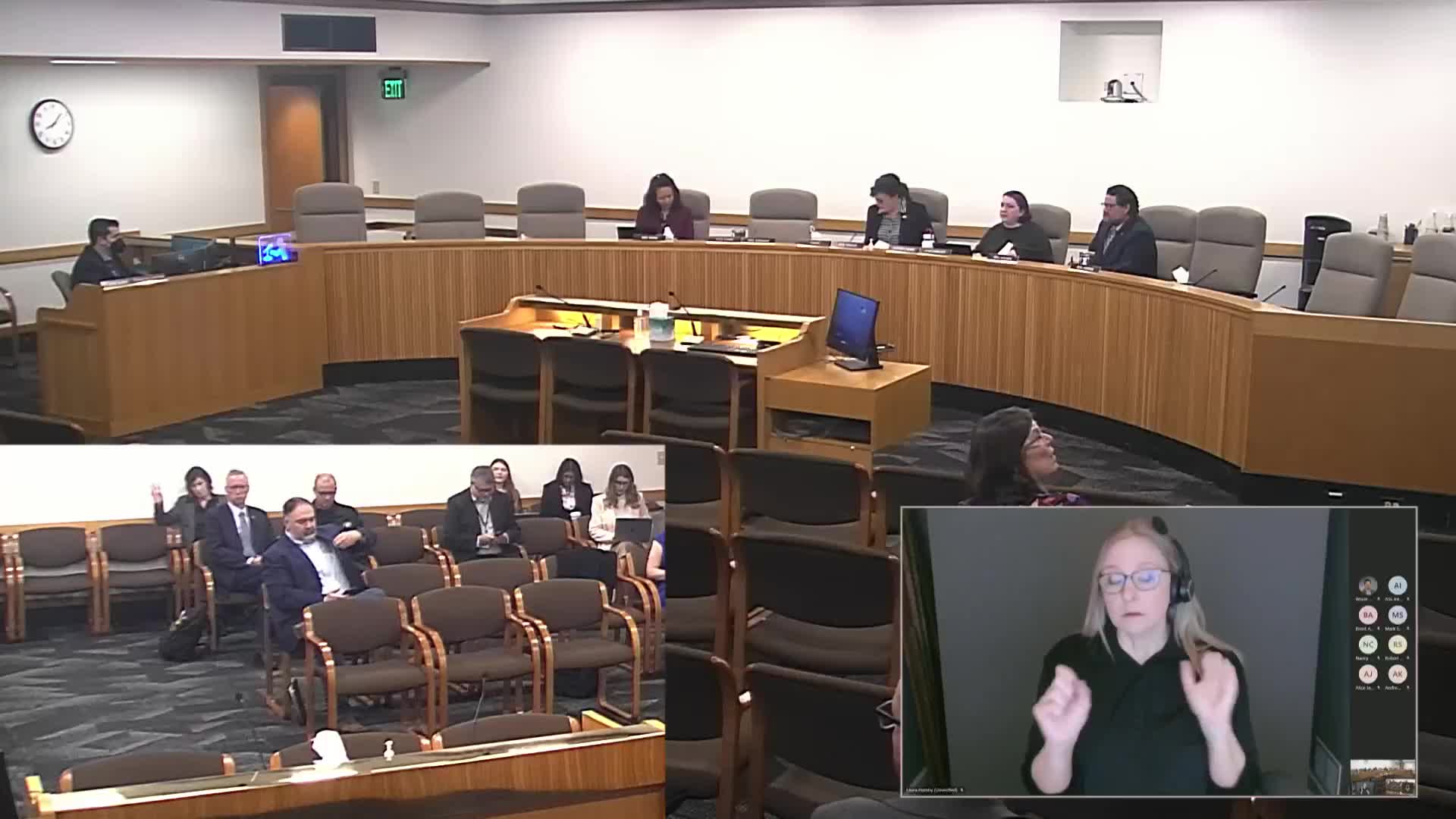
The Senate Committee on Labor and Business heard testimony on Senate Bill 856 on Feb. 4, 2025, from the Oregon Racing Commission seeking a limited exception to the state's prohibition on wagering by commission-affiliated persons.
The measure, introduced for first public hearing, would create an exception allowing certain commission auditors to place minimal bets while conducting official auditing duties to test ticketing, cancellation, pool calculation and self‑exclusion features in wagering systems, the commission's executive director said.
The exception is narrow, Connie Wynne, executive director of the Oregon Racing Commission, told the committee: "First, I'd like to, correct the definition of the bill. I'll go through this, here in a bit, but it's far narrower than what the description of the bill states." Wynne and agency staff explained the proposed language would allow only auditors acting in the course of official auditing duties to place wagers and would not allow commissioners or family members to bet as part of the exception.
Why it matters: the commission regulates in-person meets, off‑track betting locations and multijurisdictional online wagering providers that route wagers through Oregon. Wynne said the agency needs the ability to place small test wagers — sometimes only 10¢ — to verify ticket data, cancellation functionality and that pooled odds and IT compliance operate correctly. She said staff would cancel test tickets so the wagers do not affect results.
Committee members pressed for clearer bill text and a clearer public summary. Senator Hayden noted the bill analysis on OLIS appeared broader than the testimony and asked how the public can rely on an accurate summary. Whitney, staff to the committee, confirmed the bill text refers to auditing positions but said the bill summary could be revised. Wynne and committee staff discussed drafting an amendment to explicitly limit the exception to specific auditing positions and adding guardrails: written approval by the executive director for any test wager, limits to the minimum amount necessary, and rulemaking describing how proceeds and canceled wagers are handled.
Wynne described operational guardrails the commission is preparing: written approval from the executive director before any wager, caps on wager size, instructions to cancel test wagers before races when feasible, and rules to govern any proceeds (she said the most feasible option would be returning any de minimis proceeds to the wagering operator). Wynne also explained Oregon receives revenue from regulated multijurisdictional wagering routed through Oregon, roughly "about $3,000,000 a year," and that the state's share is small — "one eighth of one percent" of handle.
Committee members agreed that clarifying the bill text and the publicly posted summary would reduce uncertainty about scope. Senator Hayden suggested an amendment to limit the exception to the named auditing positions; Wynne and committee staff signaled willingness to work on that amendment.
The committee closed the public hearing on SB 856 and moved to the next item on the agenda.
Ending: The committee did not take a recorded vote on SB 856 during the Feb. 4 hearing. Staff and the bill sponsor indicated they would work on an amendment and to clarify the bill summary prior to further committee action.