Get Full Government Meeting Transcripts, Videos, & Alerts Forever!
Get email alerts on the Paid Leave Employer Debt topic
No spam. Unsubscribe anytime.
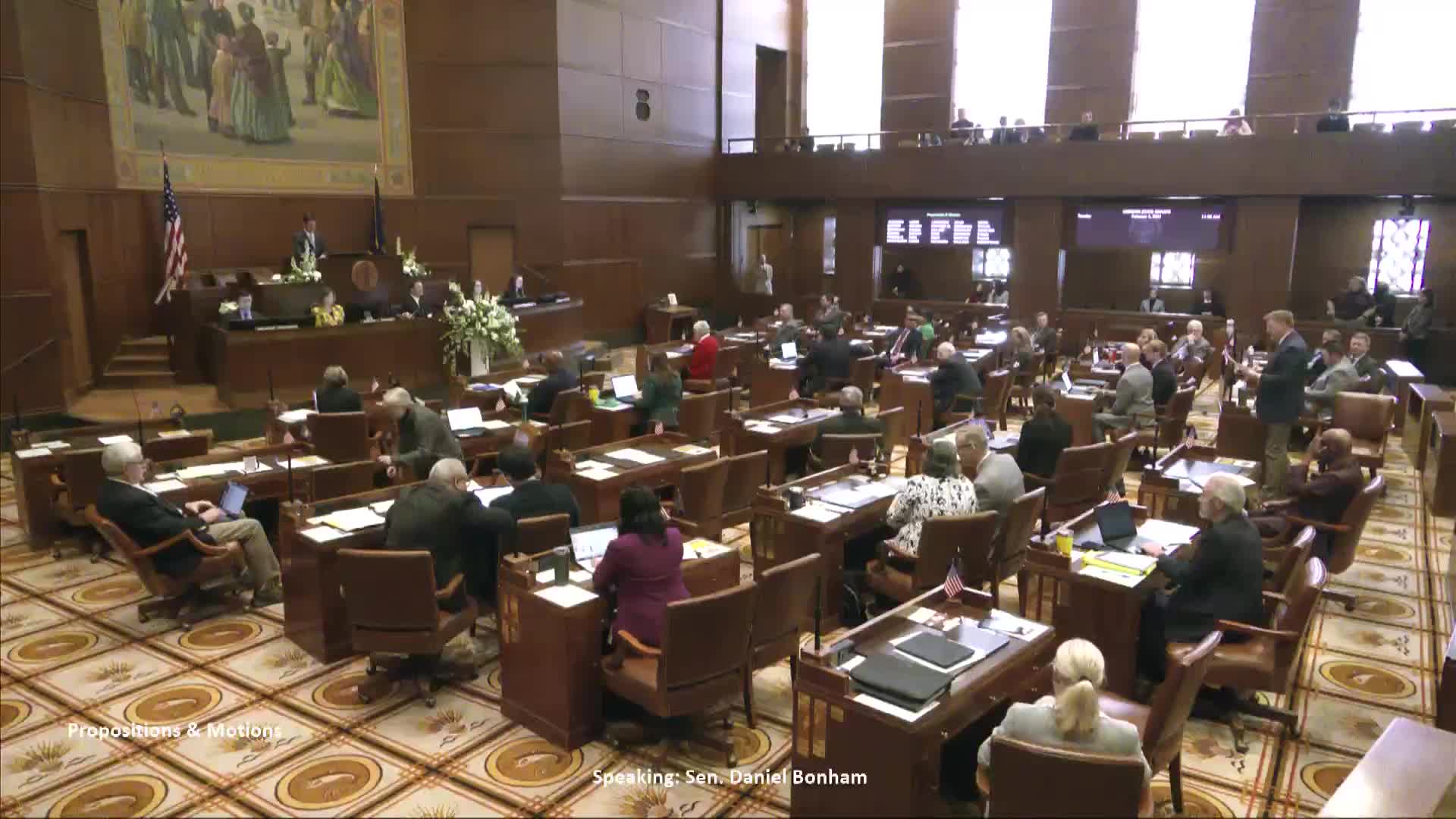
Senate narrowly passes bill letting Employment Department waive or reduce employer paid-leave debt
Summary
The Senate passed Senate Bill 859 to allow the Oregon Employment Department director to waive, reduce or compromise employer debt and related penalties for Paid Leave Oregon, aligning procedures with unemployment insurance authority; senators questioned reporting and safeguards.
Senator Taylor brought Senate Bill 859 to the floor and the Senate approved the bill on third reading, clearing a measure that lets the director of the Oregon Employment Department adjust or write off employer debt tied to Paid Leave Oregon.
The bill "give[s] the director of the employment department the ability to waive, reduce, or compromise employer debt for paid leave Oregon," Senator Taylor said on the floor, describing the change as an administrative alignment with how the department manages employer debt for unemployment insurance.
Supporters said the change will reduce administrative burden and confusion for employers and allow the Employment Department to use the same compliance tools across programs. Taylor told colleagues the authority would allow the director to "adjust interest and penalties on various Paid Leave Oregon related payments and write off uncollectible debts on delinquent accounts," which he said would improve operational efficiency and reduce administrative costs.
Senator Anderson asked whether adjustments would be reported in aggregate to the legislature. Taylor replied, "I do not know whether or not there is going to be a formalized report on that," and added that records of waived fees would exist through the budget process even if a dedicated aggregated report was not specified.
Taylor and other lawmakers said the department would exercise the waiver authority on a case-by-case basis rather than by industry, and that the department intends to track repeat errors by employers so waivers are not open-ended. "It'll be on a case by case basis," Taylor said, adding that if a company repeats a mistake within the first year an earlier waiver covered, the department could apply the penalty on a later incident.
The bill advanced after a motion earlier in the day to suspend the constitutional requirement that bills be read section by section; that procedural motion carried on the floor before the bill was taken up. On final passage the clerk declared Senate Bill 859 passed; the journal recorded the bill as having received a constitutional majority and the floor announced the motion carried with 22 ayes and the bill declared passed.
The measure does not itself require a new appropriation in the floor debate, and lawmakers directed questions about formal aggregate reporting and tracking mechanisms to follow up through the committee and budget processes. There was no amendment on the floor and no change to the bill text during final passage.
What happens next: Having passed the Senate, the bill will follow the standard legislative process toward enrollment and transmittal if it has not already come from the House. The bill contains administrative changes to program enforcement; the transcript did not specify an effective date beyond the bill text shown on the clerk's reading.