Get Full Government Meeting Transcripts, Videos, & Alerts Forever!
Get email alerts on the County Fair Funding topic
No spam. Unsubscribe anytime.
Senate committee hears push to restore 1% lottery share for county fair accounts (SB 780)
Summary
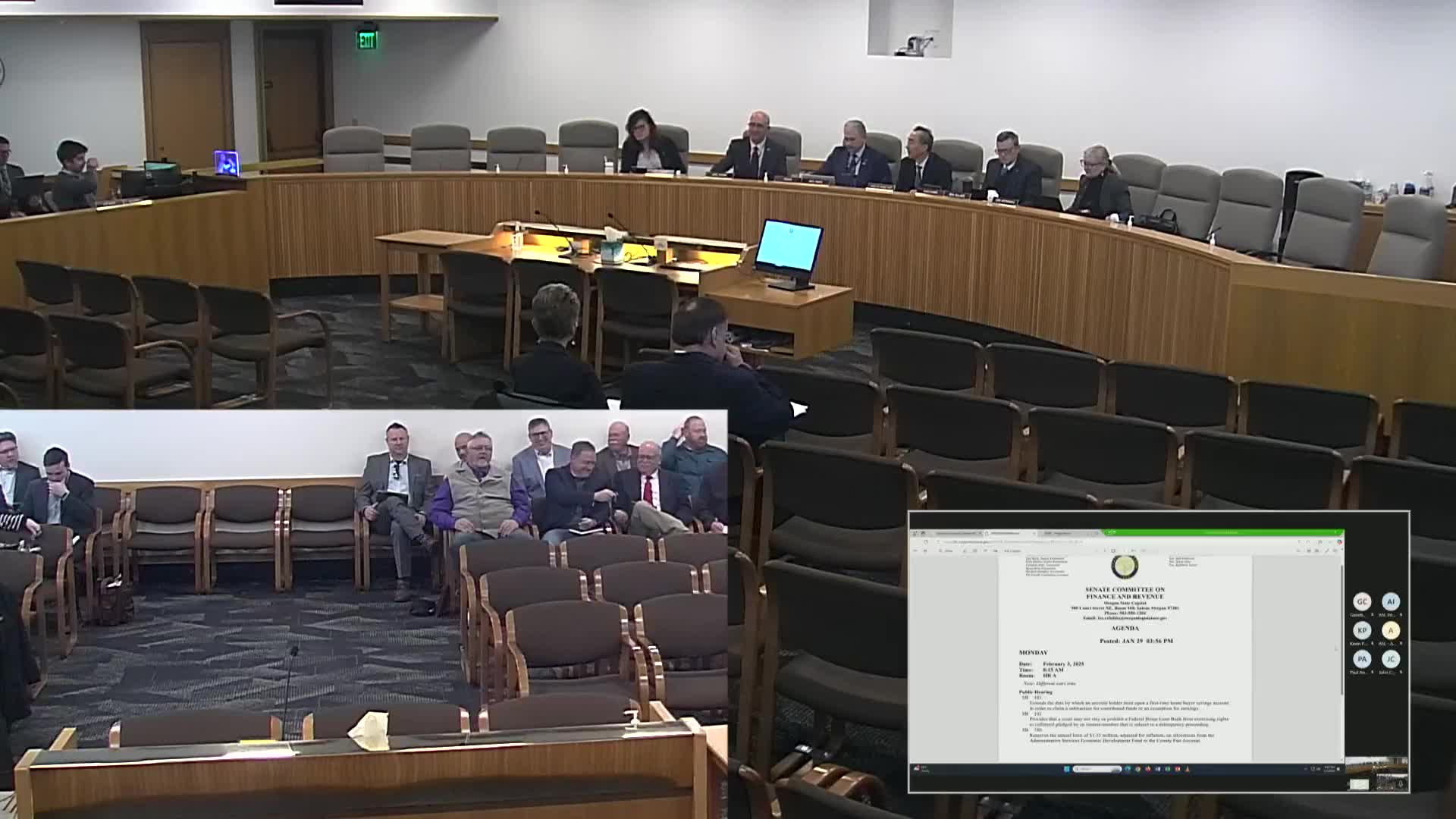
Senate Committee on Finance and Revenue members held a public hearing on Monday, Feb. 3, on Senate Bill 780, which would ensure the county fair account receives an amount equal to 1% of Oregon video lottery net proceeds by removing a statutory cap and an inflation‑adjustment clause.
Senate Committee on Finance and Revenue members held a public hearing on Monday, Feb. 3, on Senate Bill 780, which would ensure the county fair account receives an amount equal to 1% of Oregon video lottery net proceeds by removing a statutory cap and an inflation-adjustment clause.
Supporters told the committee that county fairgrounds now serve year-round roles — providing emergency shelter for people and animals, training sites for state agencies, vaccine and testing clinics and centers for wildfire response — and that the current capped funding has not kept pace with those demands. "Our fairgrounds, serves as a backup for a hospital. It's the emergency center in times of disaster," said Senator Todd Nash, who introduced the measure.
The bill would remove a long-standing cap ($1,530,000) on the amount deposited to the county fair account and restore distribution of a true 1% share of video lottery net proceeds. Witnesses said the current cap results in each county receiving roughly $53,000 in state baseline support. Committee staff told members that a full 1% in the most recent year would have produced roughly $251,000 per county, according to testimony.
County commissioners from across Oregon provided repeated, concrete examples of expanded fairground duties. Dan Dorn, Marion County Commissioner, described a decades‑long partnership and said fairgrounds have been used for trainings ranging from evasive driving to hazardous‑materials response. "We supplied them. No charge," Dorn said of resources fairgrounds provided to state and federal response agencies during recent fires. Jefferson County Commissioner Kelly Simulink told the committee the baseline payment "is super simple and super clean" and that the 1% reinstatement would let fairgrounds meet public‑health and emergency needs.
Other commissioners offered site‑level details: Wallowa County Commissioner Lisa Collier said parts of her fairgrounds date to 1907 and face a heavy maintenance burden with a small local tax base; Lake County officials described fairground buildings more than 80 years old; Columbia County Commissioner Casey Garrett said many fairs rely on seasonal staff and an aging volunteer base; and Jeff Hines, director of the Deschutes County Fair and Expo Center and president of the Oregon Fairs Association, said fairgrounds were used as testing and vaccination sites during the pandemic and as shelters during wildfires.
J. L. Wilson, representing the Oregon Fairs Association, summarized how the statutory cap reduces the effective share of lottery revenue to roughly two‑tenths of 1%: "That cap has the effect of putting fairs at about two tenths of 1% of lottery revenues," Wilson said, noting that restoring 1% would materially increase per‑county baseline funding. Several committee members asked witnesses to submit written testimony listing uses and historical agreements; Vice Chair McLean asked the association to provide the list for circulation to other legislators.
No committee vote took place during the hearing. Chair Meek closed the public hearing on SB 780 and moved to the next item on the agenda.
Ending: The committee took testimony but recorded no final action on SB 780. Members said they would review submitted written materials and the bill language before further committee work.