Get Full Government Meeting Transcripts, Videos, & Alerts Forever!
Get email alerts on the Wheelchair Right To Repair topic
No spam. Unsubscribe anytime.
Committee hears testimony for bill to extend OregonRight-to-Repair to wheelchairs
Summary
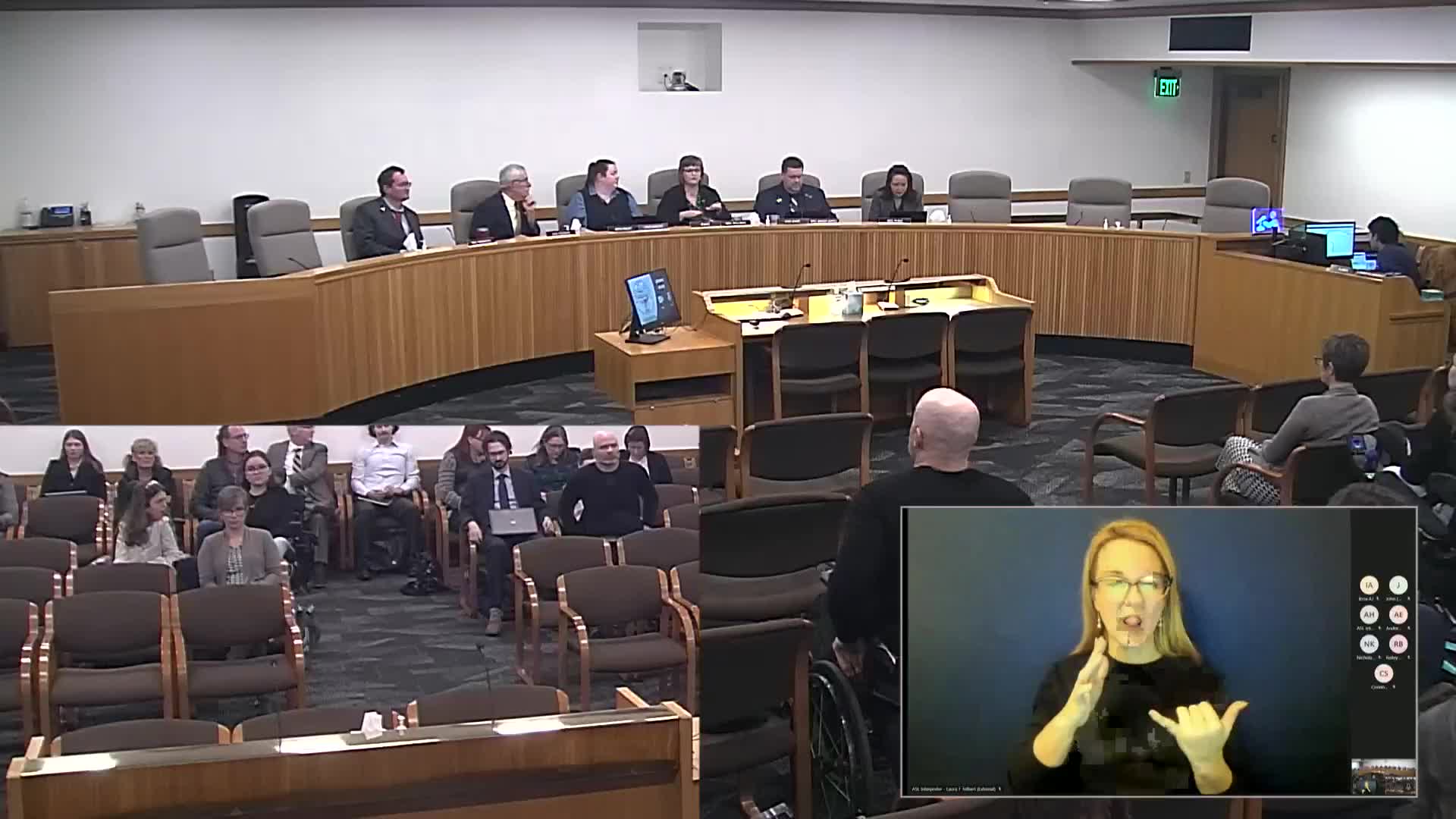
Senate Energy and Environment Committee members heard testimony Feb. 3 on Senate Bill 550, a proposal to extend Oregon—s Right to Repair law to electric wheelchairs and complex rehabilitation technology to require makers to provide parts, tools and diagnostic information to owners and independent repair providers.
Senate Energy and Environment Committee members heard more than a dozen witnesses Feb. 3 supporting Senate Bill 550, which would amend Oregon—s Right to Repair Act to require original equipment manufacturers of electric wheelchairs and complex rehabilitation technology to make parts, tools, diagnostic software and documentation available to wheelchair owners and independent repair providers on fair and reasonable terms.
The bill—s sponsor, Sen. Janine Solmon, told the committee the delay in repairs threatens people—s health, safety and independence. "The problem is Oregonians are waiting too long for costly repairs for their wheelchairs and complex rehabilitation equipment," Solmon said. "This bill is about the health, the safety, and the independence of Oregonians. Colleagues, I urge your support of Senate Bill 550."
Advocates and users gave specific examples and numbers. Charlie Fisher, state director of OSPIRG, cited a national survey showing 93% of respondents needed service in the prior year and 68% waited four weeks or more; some respondents reported waits exceeding 24 weeks. "That is a serious issue for folks who need their wheelchair to get around," Fisher said. Fisher also noted the bill is intended as a narrow extension of last year—s right-to-repair law to cover mobility equipment.
West Leviday, executive director of Oregon Spinal Cord Injury Connection, described the group—s wheelchair maintenance workshops in Medford, Klamath Falls, Eugene and Portland and said organizations are harvesting parts from retired chairs to keep users mobile. "Durable medical equipment companies in Oregon are not reimbursed to provide preventative maintenance," Leviday said. "They—re not getting paid. It—s not profitable for them to provide these repairs that would keep someone moving."
Several users described long waits and safety concerns. Ren Grama, a mechanical engineering student and power-chair user, said a recurring controller error forced her to rely on others to reset her chair while on vacation; the chair was not fully repaired for six months. "It took six months to get my chair fixed," Grama said. "I was using a manual chair that I was unable to push or an older chair that did not fit me properly." Magdalena Miller and her mother, Bridal Miller, described a simple LED light destroyed in airline travel that was not available for direct purchase and required scheduling a service visit to the authorized provider.
Disability Rights Oregon emphasized broader system effects. Corinne Schram said Medicare rules generally allow replacement of complex wheelchairs only once every five years and most commercial plans do not cover preventative maintenance. "Consumers often spend weeks in a virtual queue to get their wheelchairs fixed," Schram said, adding that extended outages can leave users bedridden and unable to work or attend appointments.
Committee members asked about the technical capacity of independent repair shops. Leviday and Fisher said skilled technicians exist and that the bill could create small-business opportunities to expand repair capacity. Fisher added that diagnostic software and embedded passcodes often block even simple repairs: "Just the diagnostic software to figure out what's wrong with your chair... is not accessible," he said. The companion bill, SB 549, addresses Medicaid prior-authorization delays advocates said contribute to long waits for repairs.
Committee members also asked about consumer protections if independent providers perform repairs. Sponsor Janine Solmon and witnesses said consumer protections would operate much like in other sectors: business reputations, warranties, and state consumer protection laws would apply. No witnesses testified in opposition during the hearing.
The committee closed the public hearing on SB 550 without taking further action that day. Advocates and several legislators, including Vice Chair Brock Smith, signed on as sponsors and asked the committee to advance the bill in subsequent steps so affected Oregonians would have faster access to repairs and parts.
Ending: The hearing consolidated lived-experience testimony, national survey data and industry context about parts, tools and diagnostics. Witnesses asked the legislature to pair SB 550 with SB 549—s Medicaid prior-authorization language to reduce repair timelines; the committee did not take a vote on SB 550 during the Feb. 3 meeting.