Get Full Government Meeting Transcripts, Videos, & Alerts Forever!
Get email alerts on the Homelessness Services topic
No spam. Unsubscribe anytime.
Tooele County hears progress report from Switchpoint on Harris Village shelter and services
Summary
Switchpoint and county staff told the Tooele County Commission that Harris Village and associated services are operating near capacity, serving hundreds weekly, and face housing, health-care and transportation barriers; commissioners asked about public-safety calls and mitigation funding.
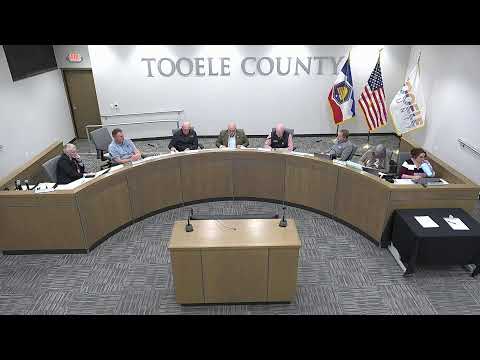
The Tooele County Commission on an evening meeting heard a progress report from Switchpoint, the local nonprofit that operates the Harris Community Village shelter, detailing occupancy, services and operational challenges.
Switchpoint and county staff presented numbers showing the shelter and associated services have been heavily used since opening. “We do have some entry criteria for those who are seeking shelter. We're not your traditional, you know, everybody-in type shelter,” said Wiramu Baylis of Switchpoint, explaining intake checks, random drug testing and restrictions that exclude individuals on certain offender registries. Baylis and Switchpoint staff said the program also allows non-residents to access laundry, meals and pantry services even if they do not qualify for a bed.
The presentation laid out capacity and utilization figures: the men's shelter is an 18-bed facility (11 of the current occupants identified as from Tooele County), the women's dorm has 12 fixed beds (8 identified as local), and family rooms (three small and four larger) were at full occupancy at the time of the briefing. Switchpoint reported an average length of stay of about 60 days. The food pantry reported serving just over 1,900 unduplicated families between September 2023 and September 2024; Switchpoint said weekly in-house meals average about 1,200 and that since opening the in-house meal total is roughly in the tens of thousands.
The group described several operational supports and constraints: volunteer medical services (a volunteer primary-care provider attends weekly and helps with prescription refills), extensive volunteer engagement (one MLK Day project supplied more than 100 volunteers), and a small on-site child care center used by families. At the same time, presenters said the shelter faces obstacles placing residents in long-term care or higher-level medical facilities because of limited openings across the state, and that low-wage employment often leaves clients unable to afford initial move-in costs such as security deposits.
Commissioners pressed Switchpoint about public-safety calls originating from the Harris complex. “From the shelter itself, our calls that we're making is, 'Hey, we have drugs or we found a weapon or someone has a warrant,'” Baylis said, adding that a bulk of calls recorded in prior reports came from the apartment side of the complex rather than the shelter. Councilman Wardle noted earlier discussions about mitigation funds and whether those dollars would flow to Tooele City or to entities covering policing costs; Switchpoint said mitigation funds for shelter cities are being discussed at the state level and would be the route for addressing community policing impacts.
Switchpoint described client engagement practices — a mix of accountability and services that include case management, job search help, workshops and in-house responsibilities for residents — and said exits to housing have occurred, including placements at the adjacent Harris Apartments and other community housing. Presenters emphasized data limitations: occupancy origin is captured as the “last permanent ZIP code,” which can misrepresent a person's actual recent locality.
Commissioners and Switchpoint staff also discussed volunteer and community supports, food-distribution metrics and the organization's wish for continued county engagement. The Commission did not take formal action on the presentation; the item was for information and follow-up questions about safety planning and state mitigation funding for shelter-related policing demands.