Get Full Government Meeting Transcripts, Videos, & Alerts Forever!
Get email alerts on the Education topic
No spam. Unsubscribe anytime.
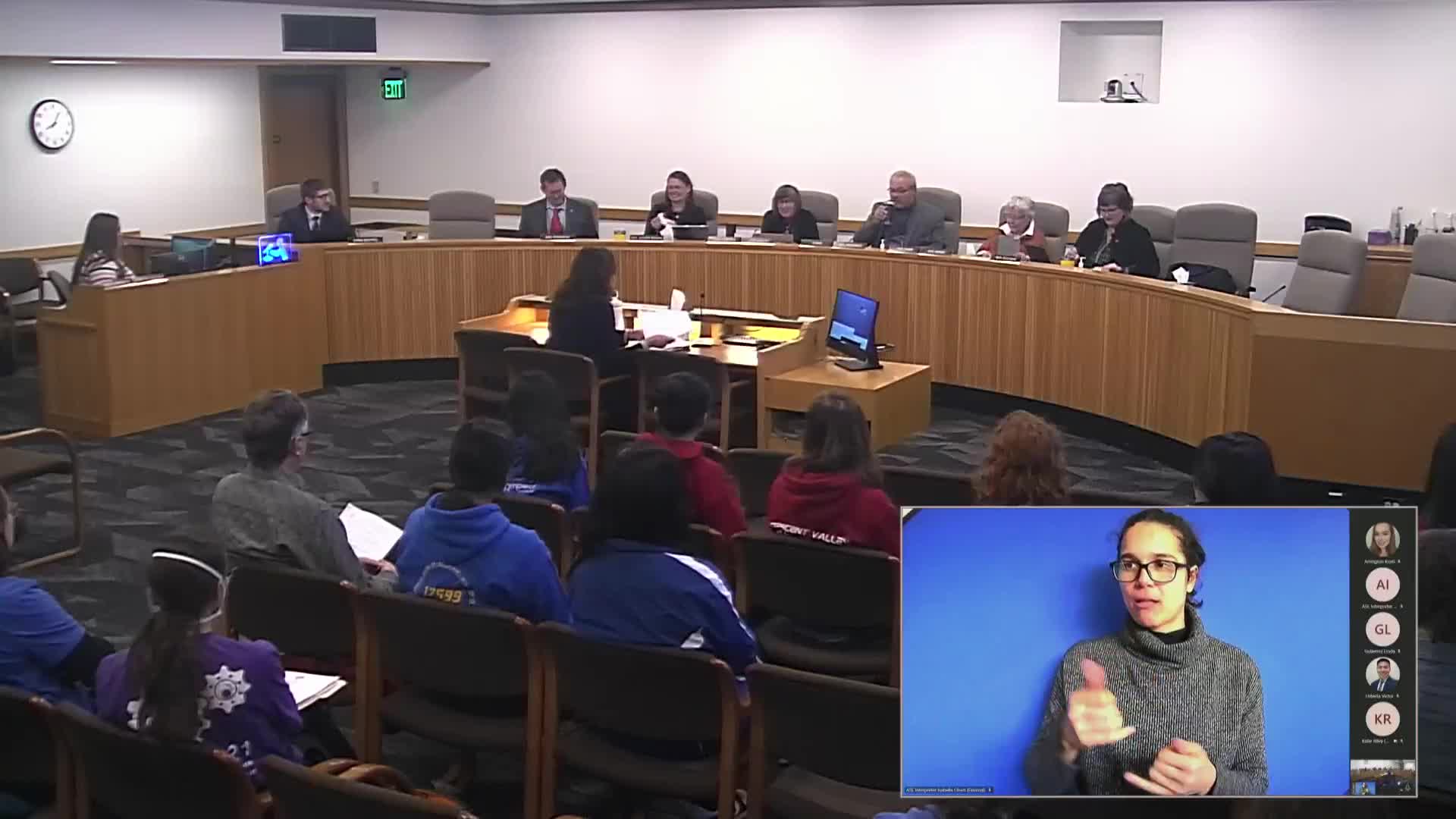
Oregon senators hear push to publish annual report cards for talented and gifted students
Summary
Supporters told the Senate Education Committee that Senate Bill 933 would require the Oregon Department of Education to publish district and state-level report cards showing talented and gifted (TAG) student growth, services and funding; some education groups warned of added local reporting burden without funding.
Sen. Kathleen Taylor, State Senator for District 21, told the Senate Education Committee that Senate Bill 933 would require the Oregon Department of Education to issue annual report cards describing talented and gifted education for each school district and for the state.
"This measure ... requires the Oregon Department of Education to issue annual report cards that describe talented and gifted education in each school district and throughout the state of Oregon," Taylor said in opening testimony. She said the bill would also require reporting of test-score gains, not just attainment, so the state can show how much students learn year to year.
The bill’s proponents said the change would fill a gap in accountability. Margaret DeLacy, president of the Oregon Association for Talented and Gifted, said current public reporting focuses on test scores and not student growth. "We are not tracking student growth," DeLacy said. She told the committee the bill would ask the Department to publish growth by grade, ability level and demographic group and to compile district TAG plans and service information in one place rather than forcing interested parties to consult dozens of separate district reports.
Karen Fish, a Cove Beach resident testifying in support, said districts lack mechanisms to track how TAG services affect student performance over time. "We just don't have the information to know how well the new rules are being applied, how consistently children are receiving services, and how those services are impacting their performance over time," Fish said.
School governance organizations urged caution about unfunded reporting. Stacy Michaelson of the Oregon School Boards Association said districts face a statewide conversation about reducing and streamlining reporting and that the association opposed adding new reporting mandates without funding. "We will just flag the potential concerns of additional workload at the district," Michaelson said. Morgan Allen of the Coalition of Oregon School Administrators said districts already submit more than 320 data collections and reports and urged the committee to consider system capacity before adding new collections.
Allen said the issue of student growth should be part of broader accountability redesign rather than a separate layer of program-level reporting. He and others noted the governor’s ongoing review of K-12 accountability and urged alignment so districts are not asked to submit duplicative data.
Committee members expressed support for addressing gaps in services to gifted students while acknowledging the resource concerns. One senator described seeing a long-term lack of support for gifted learners and urged progress "We can no longer ... continue to have the same approach," the senator said, adding a desire to see concrete changes for students.
The bill, as presented, would direct ODE to publish TAG-specific report cards, include growth measures, report TAG services and spending and allow the State Board of Education to adopt related rules. Proponents told the committee most of the requested data are already collected by districts or by ODE; the bill would reorganize and publish the material in a consolidated form.
No formal committee action on SB 933 was taken at the hearing. Testimony and questions focused on the value of student-growth reporting and on whether the measure would create an unfunded workload for districts.
Supporters offered to work with districts and the department on implementation if the committee advances the bill. The committee will consider the measure in further work sessions.