Get Full Government Meeting Transcripts, Videos, & Alerts Forever!
Get email alerts on the Dogami Budget Hb5010 topic
No spam. Unsubscribe anytime.
Oregon agency seeks fee increase, staff and pilot funding in HB 5010 budget briefing
Summary
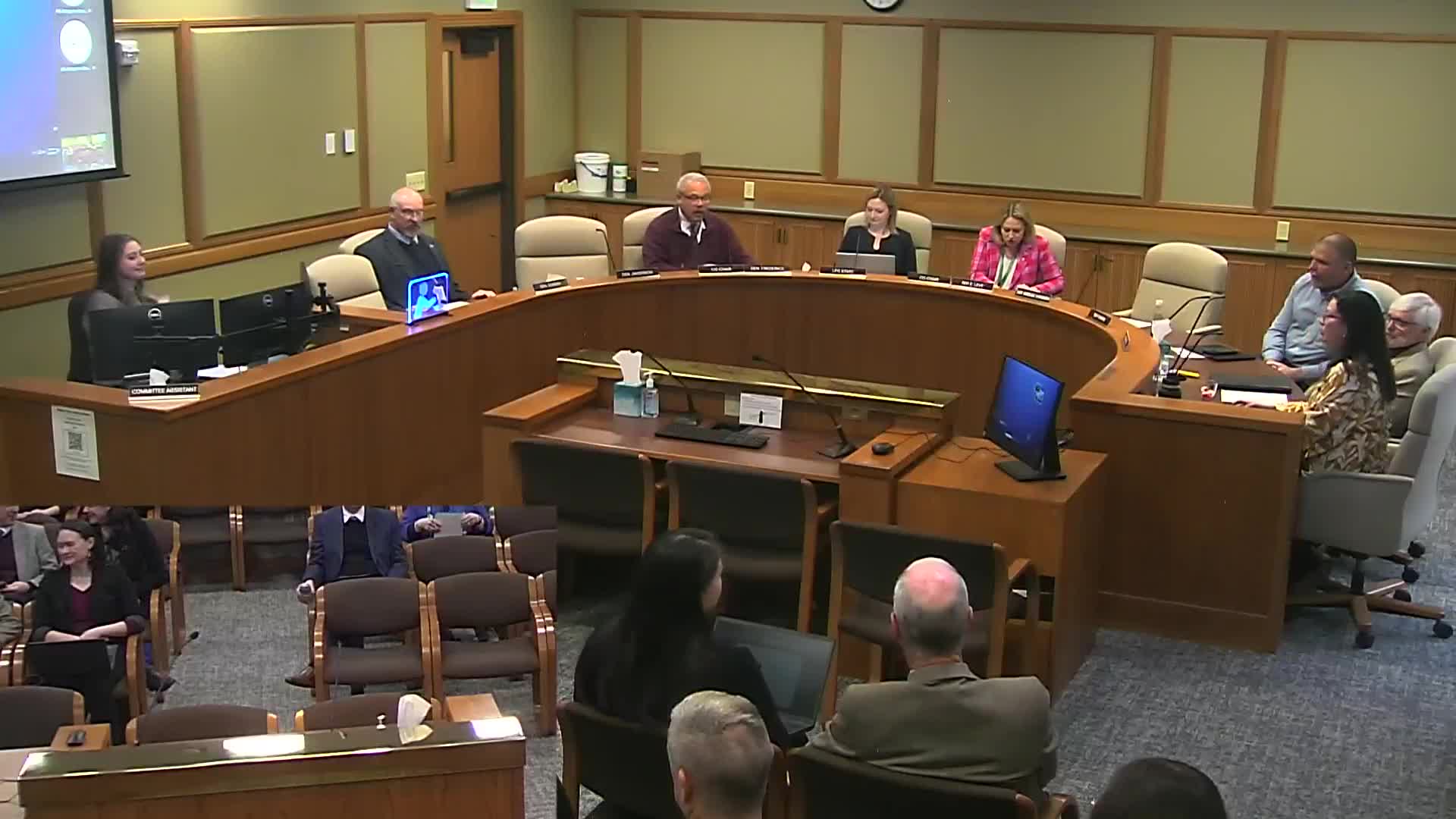
House lawmakers heard from the Department of Geology and Mineral Industries (DOGAMI) on Feb. 5 that the agency's governor‑recommended budget, carried in House Bill 5010, would largely rely on fee revenue and federal grants while asking for targeted investments to address permitting backlogs and a subsurface carbon sequestration pilot.
House lawmakers heard from the Department of Geology and Mineral Industries (DOGAMI) on Feb. 5 that the agency's governor‑recommended budget, carried in House Bill 5010, would largely rely on fee revenue and federal grants while asking for targeted investments to address permitting backlogs and a subsurface carbon sequestration pilot.
The briefing, presented by Kendra Beck of the Department of Administrative Services Chief Financial Office and Rory Day Stewart, DOGAMI director and Oregon State Geologist, focused on three priorities: increasing capacity in the Mineral Lands Regulation and Reclamation (MLRR) program, completing an electronic permitting system, and funding a subsurface geology and mapping pilot for potential carbon sequestration in partnership with the Department of State Lands (DSL).
Why it matters: DOGAMI regulates surface mining, chemical process mining, oil and gas and geothermal drilling and produces geological maps and hazard assessments used by emergency managers and communities. Lawmakers were briefed that permit workloads and inspection demand have outpaced staff capacity, producing long customer wait times and a decline in the agency’s customer‑service key performance measure.
Key details from the briefing
- Fee increase and MLRR capacity: DOGAMI said the Mineral Lands Regulation and Reclamation program is almost entirely funded by permit fees and has seen sustained demand since 2019. The agency proposed a fee increase to align revenue with workload and to fund new positions intended to reduce permit turnaround time and raise inspection rates. Director Day Stewart described the program as "in a hole" where inflow of permit applications has exceeded outflow, and said the agency last raised fees in 2019.
- Staffing request: The agency asked for permanent funding for existing limited‑duration positions and new hires in MLRR, including four field inspectors and three reclamation specialists, plus supervisory and administrative support. Day Stewart said the request is modest compared with neighboring states and intended to separate inspection work from permitting processing.
- ePermitting: DOGAMI asked to roll over previously appropriated general fund for development of an electronic permitting system that was delayed while piggybacking on a DEQ platform. The agency said $1.3 million in general fund included for ePermitting is a one‑time rollover from the current biennium and that vendor contract costs increased about 4 percent; DOGAMI expects cost mitigation through a cost‑recovery arrangement with DEQ and requested an additional $500,000 in the current biennium to finish the work.
- Carbon sequestration pilot and regulatory work: The governor’s recommended budget includes an other‑fund, DSL‑funded $10,000,000 project for subsurface geology and mapping to evaluate rocks’ suitability for CO2 injection several thousand feet below potable aquifers. Day Stewart described the pilot as an initial exploration drill and said Oregon would need to consider the federal Underground Injection Control Class VI regulatory pathway and potential state primacy under EPA rules if it pursues commercial projects.
- Performance and workload metrics: DOGAMI reported it was above target on some mapping and lidar goals but below its target for surface mine inspections and customer service. The director said the agency’s average permitting time is "around 11 months" versus the statutory expectation of six months and that improvements would be gradual because new hires require training.
Quotes
"MLRR has seen continuous increases in demand since 2019 and staff capacity is not adequate to meet the workload," Kendra Beck said.
"We are in a hole, basically, where it's really hard to get out of," DOGAMI Director Rory Day Stewart said of the agency’s permitting backlog.
Meeting context and next steps
Lawmakers were told the governor’s package will be accompanied by an agency budget bill and a fee bill. DOGAMI staff asked the subcommittee to allow rollover of existing ePermitting funds and signaled they will bring a fee bill to adjust MLRR revenues to match workload. The agency also said it intends to pursue federal grants and partner grants (USGS, DOE) to stabilize geological mapping funding.
No formal votes or committee actions were taken during the informational hearing; the subcommittee scheduled a public hearing on the budget bill for the following day.
Ending
Presenters posted the briefing materials and additional agency documents to the committee's materials list and said they will return with more detailed policy option packages and technical briefings as the budget and any fee legislation move through the legislative process.