Get Full Government Meeting Transcripts, Videos, & Alerts Forever!
Get email alerts on the Education.grow Your Own topic
No spam. Unsubscribe anytime.
Educator Advancement Council details Grow Your Own grants, data collection and outcomes
Summary
The Educator Advancement Council told the Joint Ways and Means Subcommittee on Education that its Grow Your Own grant partnerships have expanded statewide, outlined grant models, early outcome measures and proposed statewide key performance measures to report program completion and licensing outcomes.
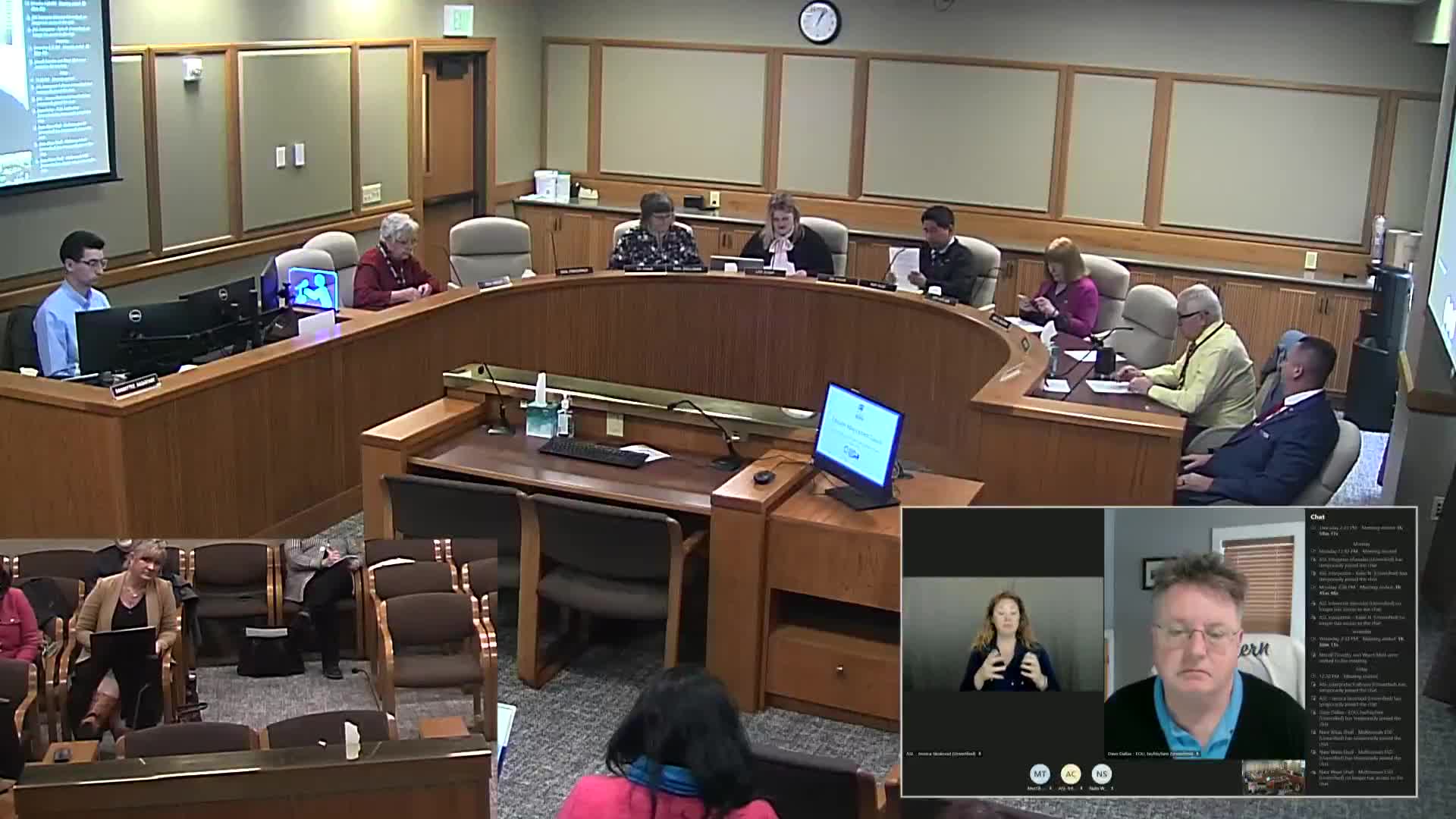
The Educator Advancement Council (EAC) told the Joint Ways and Means Subcommittee on Education on Feb. 5 that its Grow Your Own grant partnerships have moved from startup to broader implementation and that the council will submit key performance measures this session to track program completion and licensing outcomes.
The presentation explained Grow Your Own as a retention-focused, community-based strategy that funds local partnerships to recruit and support future educators from within school communities, including high-school pathways, district-to-university cohorts and programs for current classified staff. EAC staff said they will include draft key performance measures in the 2023–25 grant program report and, if approved this session, those measures would be reported in the 2025–27 grant programs report.
Dr. Karen Perez, executive director of the Educator Advancement Council, said the council’s goal is “an educator workforce that’s equity driven and more reflective of the pre k–12 student demographic of Oregon.” Perez described Grow Your Own as focused on “retention, the preparation, and recruitment efforts” and emphasized the council’s partnership work with regional education networks, tribes, community colleges and universities.
EAC described three common Grow Your Own pathway designs: pre-collegiate programs for high school students (dual enrollment and career exploration), school-and-community programs that support current district staff and community members to earn licensure while working, and university–district programs that coordinate educator preparation coursework and clinical experience targeted to local needs.
The presentation included examples: Jefferson County School District’s bilingual-language emphasis and partnerships with the Confederated Tribes of Warm Springs; Multnomah Educators Rising (MER), a coalition coordinated by Multnomah Education Service District; 3 Rivers School District’s support for classified staff and emergency-restricted educators to advance toward licensure; and David Douglas School District’s post-licensure hiring supports and induction mentoring.
EAC staff said grantee programs vary by design, serving high-school students, community members, classified staff, and university teacher candidates. The council said it has worked with REL Northwest to develop a statewide logic model and evaluation plan centered on three outcomes: pathways, partnerships and retention. Perez said the EAC is drafting statewide key performance measures with support from the Legislative Fiscal Office and will collect preliminary findings from the current biennium’s reporting.
Budget and program figures presented by EAC included the following, as reported by grantees: some tribal Grow Your Own development received $3,400,000 in the 2023–25 biennium; the average biennial grant cost for programs supporting adult participants pursuing a license or endorsement was reported as $601,799, with an average cost per adult participant of $6,818; the average biennial cost of programs supporting high-school participants earning transferable credits was reported as $763,000, with an average cost per high-school participant of $914. EAC said those budget figures come from executive grant agreement quarterly expenditure reports provided by grantees.
On participant outcomes, the presentation reported that during the 2023–24 academic year, 624 adult Grow Your Own participants received a license, certificate or endorsement. EAC said 280 (reported in slides as recipients of TSPC licenses) received initial teaching licenses and that many participants received endorsements including multiple-subject and special education endorsements; additional exact counts were presented in slides and will appear in the EAC’s 2023–25 grant program report.
Presenters and grantees described program supports that extend beyond tuition: cohort-based coursework, navigators who meet participants on-site, tuition assistance, mentoring through the first years of teaching, priority hiring interviews with districts and affinity/induction groups intended to improve early-career retention. Nate Washall of Multnomah Education Service District told the committee: “We are focused on making progress toward Oregon’s educator equity goal of building a teaching workforce that reflects the diversity of the students in our classes.”
Committee members asked about how Grow Your Own interacts with subject-area shortages (for example special education or early literacy). Perez said local partnerships identify their communities’ needs and the council coordinates with TSPC, the Higher Education Coordinating Commission and the Office of Teaching, Learning and Assessment to align preparation and professional learning.
The EAC presentation noted ongoing implementation questions—standardized metrics, cross-agency alignment and long-term funding—and said draft key performance measures will be part of the legislature-facing report. Perez asked the committee to consider the importance of sustaining investments that support both recruitment and long-term retention.
EAC closed by saying its March Ways and Means presentation will provide more EAC budget detail and the 2023–25 report will include demography and the draft key performance measures for committee review.
Ending: The EAC presentation closed after roughly an hour of testimony and two grantee videos; committee co-chairs then opened the next informational session (Department of Early Learning and Care provider workforce).