Get Full Government Meeting Transcripts, Videos, & Alerts Forever!
Get email alerts on the Public Safety topic
No spam. Unsubscribe anytime.
Bill to let community corrections centers receive jail-based MOUD funds draws lifesaving arguments from clinicians and corrections staff
Summary
House Bill 3009, and mirror language in SB 236 section 17, would expand the definition of local correctional facility under the jail-based medications-for-opioid-use-disorder grant program so community corrections centers can receive funds and provide MOUD and transition planning.
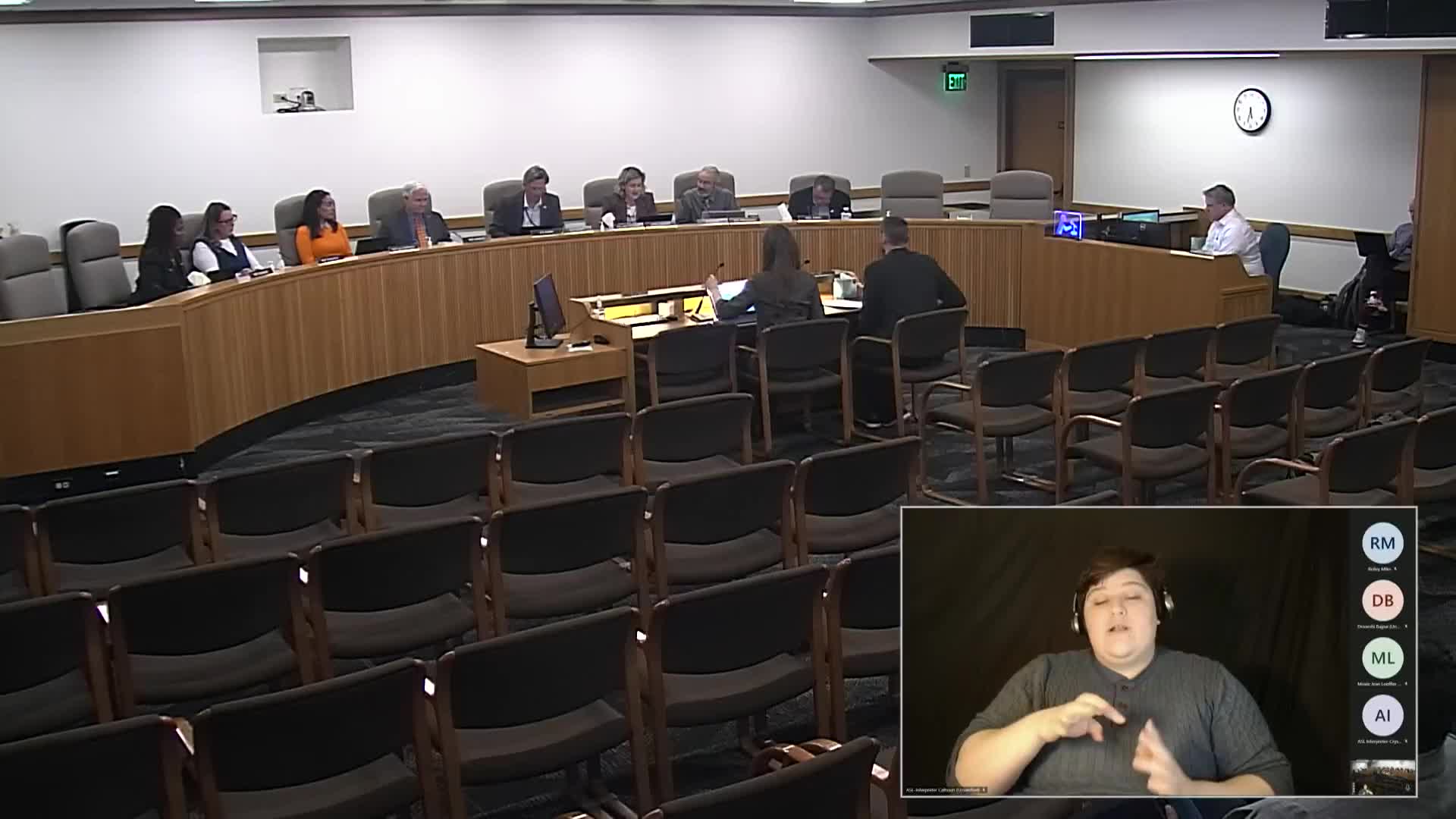
Representative Courtney Neron and witnesses told the Joint Committee on Addiction and Community Safety Response on Feb. 5 that House Bill 3009 would let some county community corrections centers receive funds under the jail-based medications-for-opioid-use-disorder grant program created by House Bill 4,002. Supporters said the change is narrow, evidence‑based and likely to reduce overdose risk in the high‑risk period after release from custody.
Representative Courtney Neron, sponsor of HB 3009, said the change ‘‘has the potential to save lives in Washington County,’’ and described the Community Corrections Center (CCC) in Washington County as a setting that offers structured housing, employment assistance and behavioral‑health services for people transitioning back to the community. Neron told the committee the bill mirrors section 17 of SB 236 and can proceed either as a standalone bill or as part of that package.
Lonnie Keller, manager of the Washington County Community Corrections Center, described the facility as a “215‑bed transition facility” that serves people on short sentences, sanctions and those transitioning from jail or prison, and said the center needs access to MOUD to safely stabilize people before community reentry. “Heroin, fentanyl and prescription pain killers have had an increasingly negative impact on the health, safety, and motivation of our client population,” Keller said, and he urged the committee to allow funding through the jail‑based grant to support treatment and transition planning at the CCC.
Dvarshi Bajpai, chief executive officer of Fora Health, testified that research shows overdose risk is concentrated after release from custody. He told the committee that his prior work with Oregon Health & Science University found people leaving prison were about 10 times more likely than the general population to die of an overdose, with risk especially high in the first two weeks after release. “This is a really, really important technical fix that we’re looking at. We will continue to work with the Washington County Community Corrections Center to make sure that people have a transitional plan,” Bajpai said.
Dr. Loeffler, an addiction medicine and internal medicine physician, said clinicians see patients harmed most often during transitions and urged the committee to approve HB 3009 and consider extending funding across ages. “When patients are harmed, that often occurs at the time of transition … We would really like to seal up all these gaps and help patients preserve the progress that they’ve made while they were incarcerated,” she said.
Witnesses and sponsors emphasized that HB 3009 is a narrow, targeted expansion of an existing, evidence‑based grant program (created in HB 4,002) and that the committee’s oversight of implementation and funding formulas will be important. The committee closed the public hearing and entered a period of continued oversight and scheduled deeper dives on deflection and program standards at future meetings.