Get Full Government Meeting Transcripts, Videos, & Alerts Forever!
Get email alerts on the Compliance And Regulation topic
No spam. Unsubscribe anytime.
OLCC highlights compliance work: minor decoy operations, Metrc contract and hemp registry under HB 4121
Summary
OLCC presented its enforcement and compliance portfolio to the committee, reporting a 78% alcohol minor-decoy compliance rate in 2024 and 90% for marijuana; the agency flagged Metrc contract timing, testing challenges, and a new hemp product registration from House Bill 4121 with an effective date of January 2026.
At a Feb. 4 hearing, the Oregon Liquor and Cannabis Commission outlined enforcement and compliance activities for alcohol, cannabis and hemp, telling the Transportation and Economic Development Subcommittee that the agency is ramping up operations after COVID disruptions and that several regulatory changes are coming.
Minor decoy program and compliance rates
OLCC Director Craig Prins explained the minor decoy program and reported a 78% compliance rate for alcohol in 2024, up from the low 70s in earlier years but below the agency target of 90 percent. For regulated cannabis retailers, OLCC reported a roughly 90% compliance rate. Prins described minor decoy operations: OLCC recruits under-21 volunteers (typically 20-year-olds) who are accompanied by an inspector and present a valid ID; if alcohol is sold, the inspector takes compliance action. Prins said the number of alcohol minor-decoy operations increased from zero during COVID to 1,459 in 2024.
Age verification and fake IDs
Committee members asked about age-verification equipment and whether it is required to scan barcodes or detect serial over-service. Prins said most equipment scans the barcode but that he would check whether scanning is a rule requirement and report back to the committee. He said fake IDs are increasingly sophisticated and that training staff to verify the person pictured on an ID is an ongoing challenge.
Metrc cannabis-tracking contract
Prins told the panel that the contract with Metrc, the cannabis seed-to-sale tracking vendor, expires Aug. 31, 2025. He said OLCC plans to extend the contract in one-year intervals while conducting an RFI and subsequent RFP to seek a replacement or updated terms. OLCC cited Metrc’s public criticism and licensee frustration while saying the tracking system remains valuable for recalls and diversion investigations: the agency can use Metrc to locate and surgically recall products and to trace discrepancies in inventory.
Hemp registration and testing
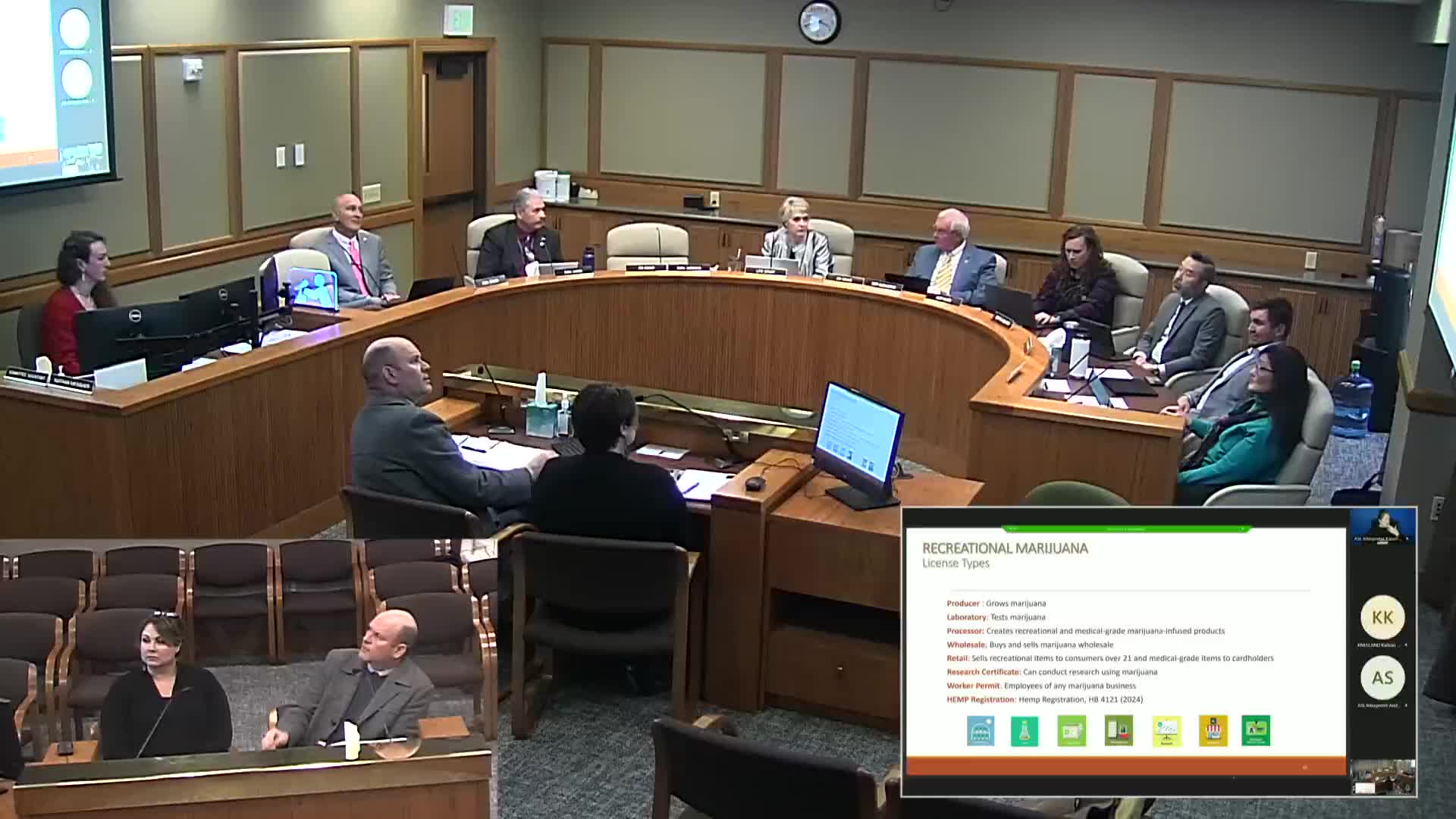
OLCC said it will implement the hemp-product registration program created by House Bill 4121 (2024 session) for hemp products intended for human and animal consumption. The law requires product labeling, dosage and potency information, and age restrictions; OLCC said the effective date for that registry is January 2026 and that it will include testing and labeling enforcement. Prins noted the agency’s partners include the Oregon Health Authority, the Oregon Department of Revenue and the Oregon Department of Agriculture.
Testing protocols and recalls
On testing, Prins discussed potency, pesticides, heavy metals and recalls; he said mold testing (aspergillus) had been litigated and was on hold as an OHA rule matter. He also noted past recalls for edibles due to undeclared dairy allergens and said OLCC uses a reference lab to check private-lab results.
Why it matters: Compliance actions and tracking affect public safety, youth access and consumer protection for regulated products. HB 4121 establishes the hemp registry that will create new enforcement responsibilities for the agency beginning in 2026.