Get Full Government Meeting Transcripts, Videos, & Alerts Forever!
Get email alerts on the Opioid Response Measure110 topic
No spam. Unsubscribe anytime.
OHA describes expanded opioid response: harm reduction, naloxone distribution and new treatment capacity
Summary
OHA officials told the subcommittee their cross-agency opioid response has reversed more than 21,000 overdoses, funded harm reduction and expanded treatment capacity including additional residential beds and opioid treatment programs, while acknowledging fentanyl demands adaptation of strategies.
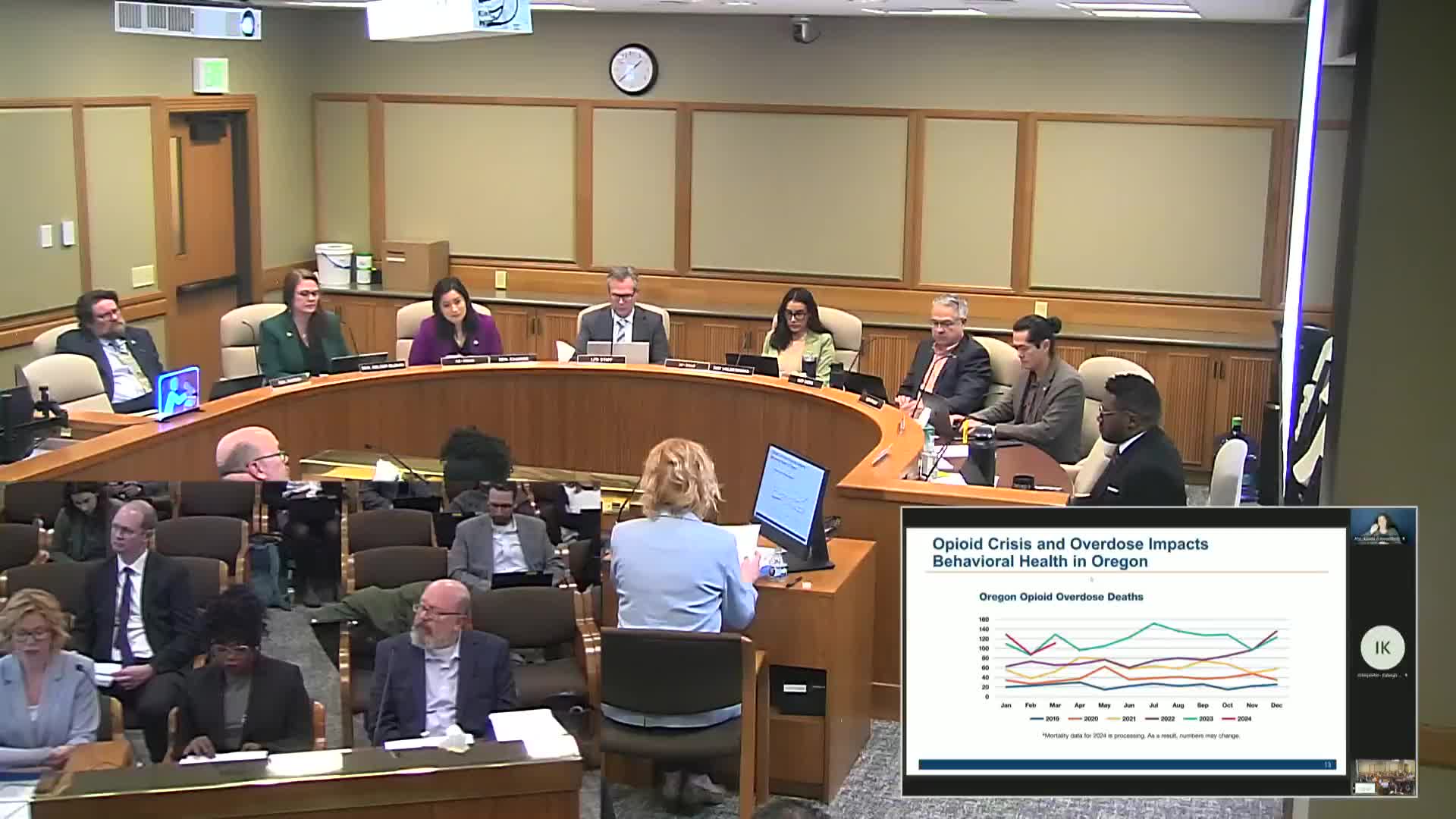
OHA officials described a cross-agency response to the opioid and fentanyl crisis that combined community engagement, naloxone distribution, harm reduction investment, expanded treatment capacity and Measure 110 integration.
Krista Jones said OHA led a 90-day response (Nov. 2023–Jan. 2024) with four goals: engage communities for action, adjust naloxone distribution, enhance public education and outreach, and expand harm reduction and treatment access. Jones said the agency’s substance use disorder (SUD) strategy has five pillars, including Measure 110 integration, expanded naloxone and harm reduction, increased equitable access to services, expanded service capacity and strategic partnerships.
Jones reported several measurable impacts: more than 21,000 overdoses were reversed; rule changes removed barriers to treatment; workforce bonuses and housing stipends were implemented; SUD residential beds and crisis stabilization centers were expanded with funding that will increase capacity by 73 beds (earliest projects expected online September 2025); expansion of medications for opioid use disorder (MOUD) included five new brick-and-mortar facilities, three expanded mobile opioid treatment programs and telehealth expansions and removal of prior authorization for MOUD.
John Collins highlighted Measure 110-funded behavioral health resource networks (referred to in the presentation by the transcript as “burns”), noting there are 42 resource networks across the state and a public dashboard tracks quarterly activity and funding. Jones said harm reduction investments include wound care, basic needs (food, clothing) and naloxone distribution and that funds have been provided through opioid settlement and federal grants.
OHA officials emphasized that fentanyl’s prevalence requires adjusting prior approaches; they noted emerging evidence that methadone may be more effective than other medications for some fentanyl-impacted populations and said OHA has rapidly expanded opioid treatment program access statewide. Presenters pointed to tribal set-asides in funding distribution to improve equity.