Get Full Government Meeting Transcripts, Videos, & Alerts Forever!
Get email alerts on the Olcc Budget topic
No spam. Unsubscribe anytime.
Subcommittee reviews OLCC budget: new Canby warehouse, IT modernization, hemp regulation and surcharge cited as key fiscal issues
Summary
On Feb. 3 the Transportation Economic Development Subcommittee of the Ways and Means Committee held an information hearing on House Bill 1519, the Oregon Liquor and Cannabis Commission’s governor‑recommended budget, centering on a planned new distilled‑spirits warehouse in Canby, a multi‑year IT modernization, staffing needs and industrial hemp regulation.
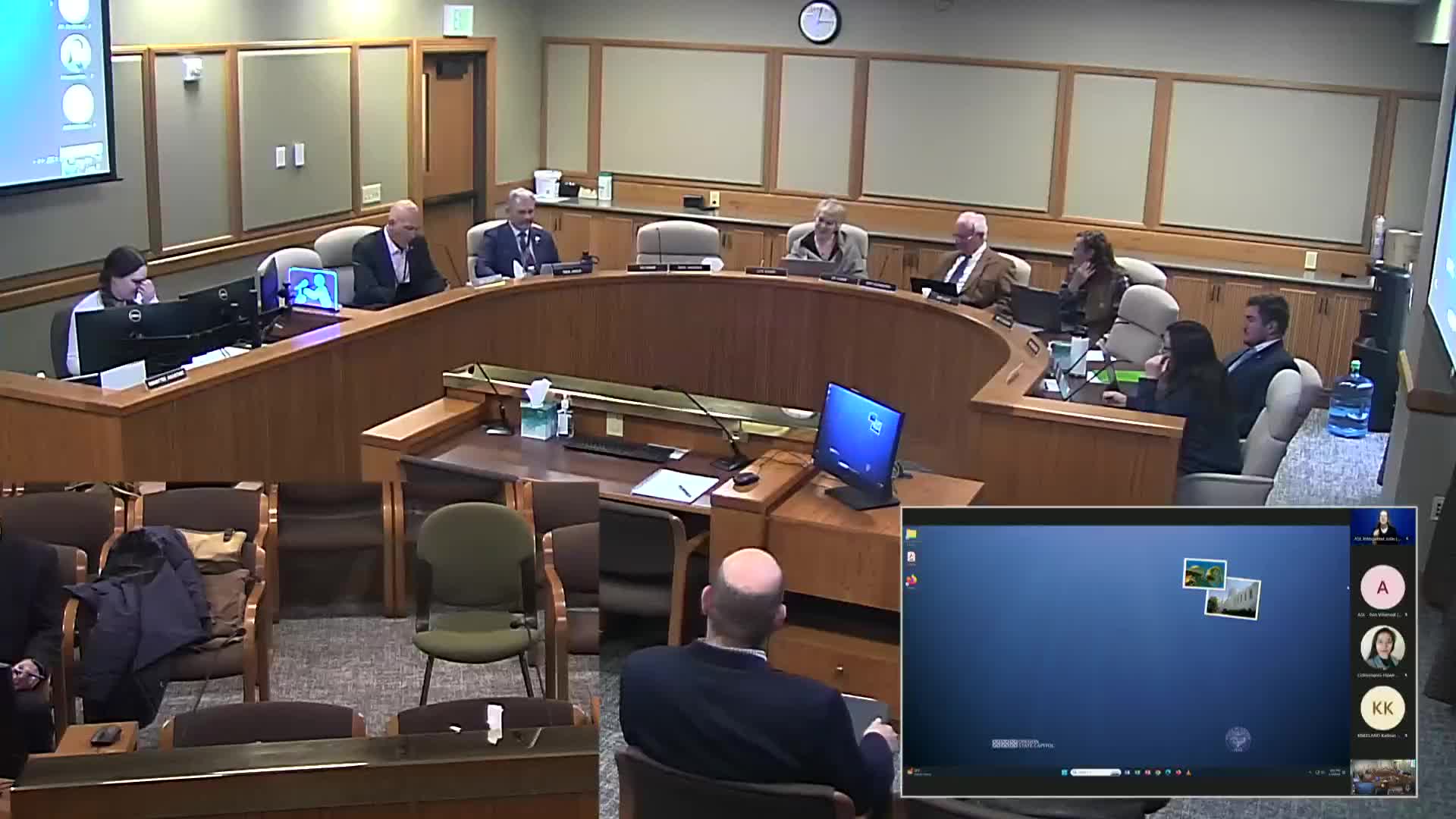
PORTLAND, Ore. — On Feb. 3 the Transportation Economic Development Subcommittee of the Ways and Means Committee held an information hearing on House Bill 1519, the Oregon Liquor and Cannabis Commission’s governor‑recommended budget, centering on a planned new distilled‑spirits warehouse in Canby, a multi‑year IT modernization, staffing needs to run both projects, and new responsibilities for regulating industrial hemp.
The budget matters because OLCC’s operations fund a large share of state and local revenue and the agency is carrying bond debt tied to warehouse and IT projects. How the commission manages the warehouse move, repays bonds and implements new hemp rules will affect distributions to the general fund, cities and counties as well as the agency’s ability to regulate alcohol and cannabis.
Craig Prince, executive director of the Oregon Liquor and Cannabis Commission, framed the presentation around the agency’s “build, move, modernize, and keep it rolling” plan and said the next biennium will be a heavy lift for staff to complete the warehouse and IT work. “We have confidence that we can do that with our strategic plan, but we need the staffing resources that are in the governor’s budget to do that work,” Prince said.
Department of Administrative Services policy and budget analyst Stacy Chase told the committee the governor’s budget funds continued work on the warehouse and the IT modernization and creates capacity for industrial hemp regulation required by House Bill 4121. Chase said the 2021 legislative assembly authorized $174,400,000 in bonds to buy land, design and construct a new warehouse, acquire a conveyor/material‑handling system and modernize legacy IT systems.
Key budget and program details discussed during the hearing included:
- Warehouse and material‑handling project: OLCC has signed a guaranteed‑maximum price contract with JE Dunn to build a new warehouse in Canby and to install a conveyor/material‑handling system. The agency showed a rendering of a large facility the presentation described as a long‑term operating location for distilled spirits distribution; slides cited an estimated 347,000 square feet for the build. OLCC said it will operate both the existing Milwaukee warehouse and the new Canby facility for a transition period to avoid supply disruptions, then sell the Milwaukee property and apply proceeds toward debt service mitigation.
- Bonding and one‑time costs: Chase told the committee the 2021 bonding authority covers the warehousing and IT work. OLCC also identified one‑time expenditures in the current biennium that were removed from the baseline, including $3,200,000 of preordered equipment for the new warehouse and issuance costs tied to bond proceeds.
- IT modernization: The governor’s budget includes maintenance and services funding for the agency’s IT overhaul to move alcohol licensing and permitting from paper to an online platform and to support the distilled‑spirits supply chain systems.
- Industrial hemp regulation and fees: Following passage of House Bill 4121 in 2024, OLCC said it will expand regulatory activity around industrial hemp. The agency recommended, in administrative rule, an annual registration fee of $420 beginning Jan. 1, 2026, to offset the cost of regulating hemp in Oregon.
- Ballot Measure 119 implementation: The agency noted voter‑approved Measure 119 requires certain cannabis licensees to provide either a signed labor peace agreement or an attestation to abide by one; OLCC said the governor’s budget provides resources to implement that requirement.
- Revenue, surcharge and distributions: Officials told the committee OLCC is an other‑funded agency that relies primarily on liquor sales and license fees. Presenters said liquor‑related activities represent roughly 80% of the agency’s budget while marijuana‑related activities are about 15%. The presentation noted liquor sales have flattened since pandemic levels and that a 50¢ liquor surcharge is set to sunset on June 30, 2025; OLCC staff estimated that surcharge produces about $40,000,000 for the general fund per biennium and said the commission will vote on whether to extend it prior to the end‑of‑session forecast.
- Staffing and operations: The governor’s budget request includes positions to support the warehouse move, expanded cannabis staffing, vehicle purchases and hemp enforcement staffing. Prince said the distilled‑spirits program and related warehouse staff will face a significant operational lift during the transition and that the agency expects to run two shifts in the new warehouse.
Committee members asked about cross‑agency issues and local impacts. Representative Kate asked whether OLCC’s mission to regulate access runs at odds with public‑health campaigns such as Oregon Health Authority’s Rethink the Drink; Prince and other witnesses described the difference between regulating a legal market and public‑health messaging and emphasized enforcement to keep products out of minors’ hands. Senator Meek asked about the planned sale of the Milwaukee property; OLCC staff said no sale price has been set and that the agency expects to pursue a sale through DAS during the next biennium, with proceeds available near the end of the 2025‑27 biennium.
Agency leadership also told the committee it plans to relocate office staff to the Portland State Office Building in downtown Portland rather than build a new headquarters in Canby, citing existing vacant office space, hybrid work models and cost savings.
The hearing concluded with the committee pausing the presentation for the day and continuing additional slides and public testimony on subsequent days. The record shows no formal motions or votes were taken at the Feb. 3 information hearing.
Next steps: OLCC staff will return to the committee for the remainder of the presentation; a public hearing and testimony were scheduled later in the week and the commission will vote before the end of session on whether to continue the 50¢ surcharge.