Get Full Government Meeting Transcripts, Videos, & Alerts Forever!
Get email alerts on the General Government topic
No spam. Unsubscribe anytime.
Employment Relations Board requests one new mediator in HB 5008 as caseloads and strikes rise
Summary
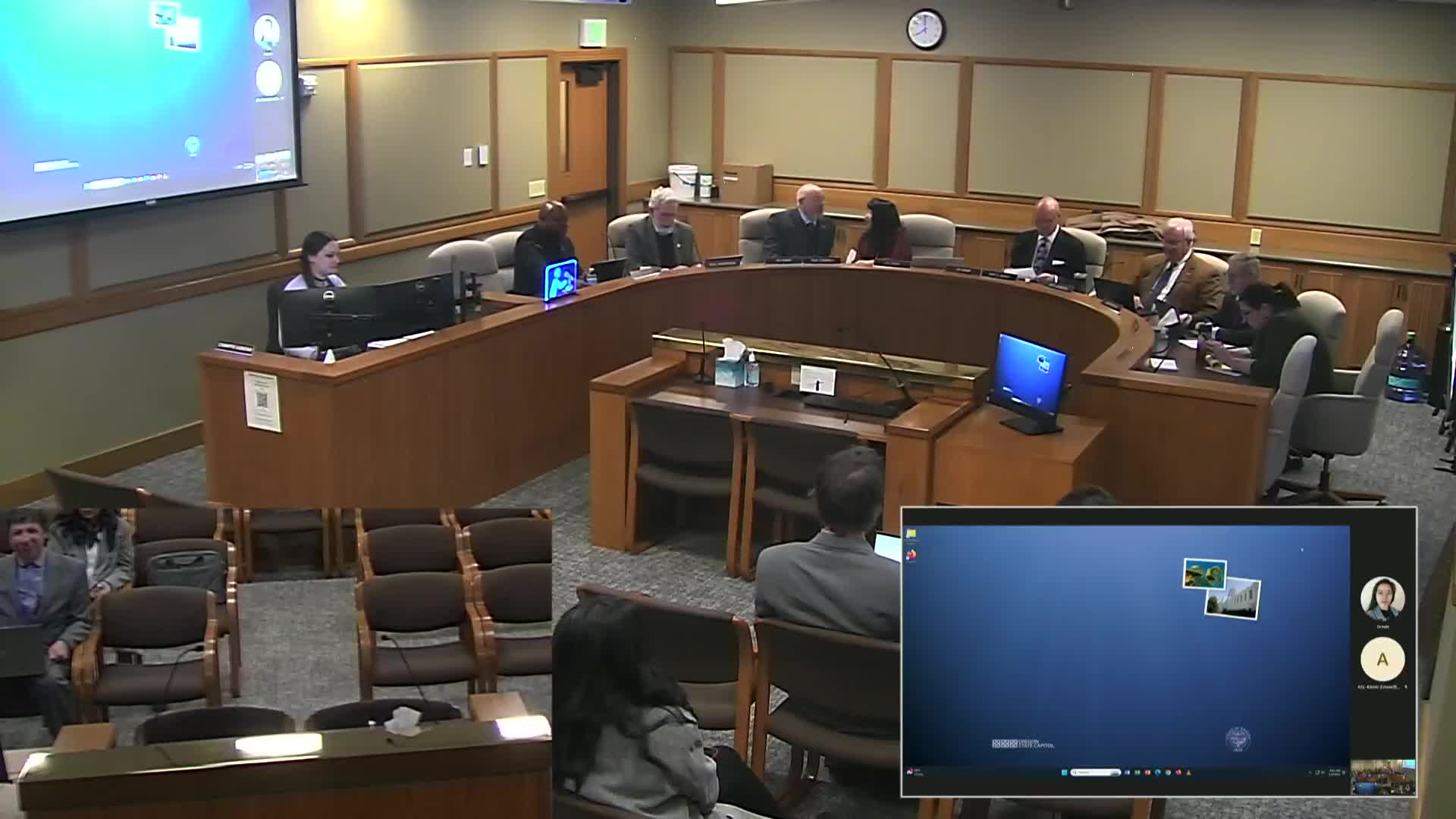
The Employment Relations Board told the General Government subcommittee on Feb. 3, 2025, that the governor’s proposed budget in House Bill 5008 would add one permanent mediator to help manage increased caseloads, declarations of impasse and a recent spike in strikes.
PORTLAND, Ore. — The Employment Relations Board told the General Government subcommittee on Feb. 3, 2025, that the governor’s proposed budget in House Bill 5008 would add one permanent mediator to the agency’s staff to help handle rising case filings, declarations of impasse and a recent spike in strikes.
“We are 13 FTE,” Board Chair Adam Reinard said. “As Miss Chase mentioned, the governor's budget includes an additional mediator position that'll make it 14.”
The board described three core programs — administration, mediation/conciliation and hearings — and said mediation resources have been stretched by a marked increase in high‑conflict collective bargaining disputes. Stacy Chase of the Department of Administrative Services’ Chief Financial Office, who presented the governor’s budget overview, told the committee the budget “invests in 1 additional permanent full time mediator position” and noted other standard adjustments for personal services and statewide price list items.
Why it matters: Employment Relations Board mediators help prevent or resolve disruptions to public services such as school operations, transit and emergency response. Board leaders said prolonged disputes and multiple strikes occurring at once increase pressure on the agency’s limited staff and on local communities.
Rising workload and service mix
Reinard told committee members the board’s workload has increased in recent years across hearings, representation petitions and mediation. He said hearings and election case filings rose from the 60s–70s range in earlier years to about 100 in the 2020–21 period, and that filings later rose again (the presentation showed a further increase in 2024). He said the agency historically averaged roughly 7–8 declarations of impasse per year; in recent years that average rose to about 14.25. “Those are pieces…where the parties haven't been able to resolve their contract in a hundred and fifty days,” Reinard said.
The board reported an unprecedented cluster of strike activity in the current biennium: the agency logged multiple strikes that overlapped in time, and Reinard said the current fiscal year included five strikes that together produced 84 lost days of public services. He said mediators logged more than 500 hours on one Portland Public Schools mediation alone, requiring long periods away from home for mediators based elsewhere.
How disputes proceed under state law
Reinard described the statutory dispute pathway under the Public Employee Collective Bargaining Act (PECPA) and related laws: parties must bargain for a minimum of 150 days, then are required to participate in a 15‑day mediation window; if impasse is declared, each side has seven days to submit a final offer and cost summary and a 30‑day “cooling off” period follows. For strike‑permitted employees, the employer may implement its final offer after the cooling‑off period or employees may give 10 days’ notice and strike. For groups prohibited from striking, the cooling‑off period is followed by a petition for binding interest arbitration; Reinard explained the arbitrator must choose one party’s final offer in its entirety (often described as “baseball arbitration”) rather than crafting a mixed award.
Funding and staff
Chase summarized the board’s funding mix: roughly 56% general fund and about 39–40% other funds derived from a state assessment on covered state employees and fees for specific services. The board uses an estimated base of 40,000 state employees to calculate the assessment. Reinard said the agency currently has 13 FTE and that the governor’s policy option package would add one permanent mediator to bring staffing to 14.
Fees and other details noted during the hearing included a $300 filing fee for unfair labor practice complaints and statutory mediation fees for local governments; the state itself pays an assessment rather than per‑service mediation charges.
Performance measures and requests
Reinard walked the committee through several key performance measures (KPMs). He said the agency has generally met many targets but warned the spike in strike activity will prevent meeting the mediation effectiveness target for strike‑permitted employees (the agency’s internal target was 95%). Committee members asked the board to review KPMs and historical trends.
Committee questions and follow up
Members pressed on several topics: whether the Janus v. AFSCME U.S. Supreme Court decision (2018) contributed to increased filings; Reinard said the uptick is multifactorial, noting recent legislative changes that expanded bargaining rights for certain police sergeants and other pressures. Representatives asked about public awareness of state personnel appeal rights; Reinard said the board posts guidance and disciplinary notices to state employees typically alert them to a 30‑day appeal right.
Lawmakers also asked about scheduling and capacity during simultaneous strikes; Reinard said mediators travel statewide, sessions often run long, and the agency sometimes must postpone scheduled mediations so staff can respond to strikes. He said parties can jointly request mediation earlier than the 150‑day minimum, but the agency cannot compel unilateral mediation before the statutory threshold.
No final action recorded
The Feb. 3 hearing was a public presentation and Q&A on HB 5008 and the Employment Relations Board’s budget and workload; the transcript shows no vote or final action on the bill during the session. The committee requested additional data on trends (for example, counts of declarations of impasse and the frequency with which impasse leads to strikes) and asked the board to review KPMs and customer survey methods.
Next steps: HB 5008 remains before the subcommittee as an appropriation measure; the board and DAS staff said they would provide follow‑up data requested by members.