Get Full Government Meeting Transcripts, Videos, & Alerts Forever!
Get email alerts on the Commercial Vehicle Enforcement topic
No spam. Unsubscribe anytime.
CCD proposes omnibus changes to commercial vehicle statutes; committee reviews enforcement and penalty adjustments
Summary
The Commerce and Compliance Division proposed an omnibus bill to align state law with federal motor carrier rules, reduce prosecutorial burden for weigh‑scale bypass, expand enforcement authority to medium‑duty commercial vehicles, and increase penalties for unlicensed household goods advertising.
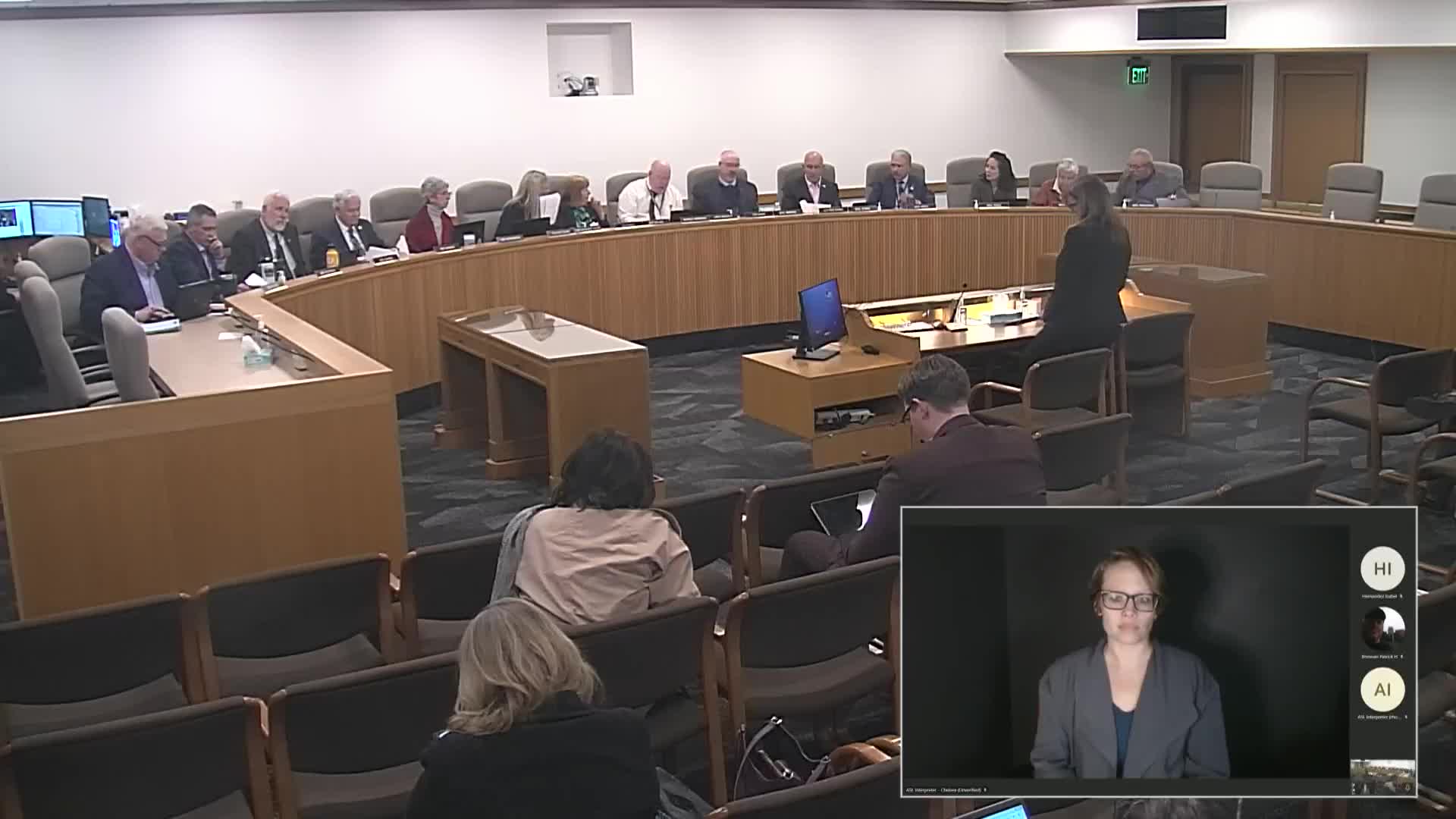
Senate Bill 839, the Commerce and Compliance Division’s omnibus commercial vehicle bill, would make multiple statutory changes intended to align Oregon law with federal motor carrier rules, adjust enforcement tools and penalties, and reduce administrative burdens on courts, the division told the Joint Committee on Transportation.
Why it matters: CCD said the bill addresses growing roadside noncompliance (including illegal bypassing of weigh scales), aligns statute with federal grant and safety requirements, and expands enforcement reach to medium‑duty commercial vehicles to address rising accident rates associated with e‑commerce growth.
Carla Phelps, interim division administrator for CCD, outlined five major components: removing weight‑mile tax violations from driver record reporting to reduce unnecessary court filings; making illegal bypassing a class A traffic violation with a presumptive $440 fine (instead of a class B misdemeanor); forwarding convictions for certain commercial vehicle enforcement failures to driver records; aligning state statute with FMCSA rules so charitable transport is not treated as exempt from federal motor carrier safety regulations; and expanding enforcement authority to commercial vehicles operating over 10,000 pounds (rather than the previous 26,000+ pound threshold).
Phelps told the committee that 2024 saw about 9,300 weight‑mile tax violations issued at the roadside and that many scale bypass incidents involve vehicles with safety violations; prosecutors have been dismissing some misdemeanor cases due to constrained judicial resources. Reducing the offense to a class A traffic violation is intended to produce a presumptive fine, enable consistent enforcement, and avoid mandatory appearances that strain court resources.
CCD also proposed increasing penalties for businesses that advertise household‑goods moving services without a license; testimony said licensed movers are frustrated by unlicensed operators undercutting compliant businesses. CCD proposed elevating the civil penalty for advertising without a license to $3,000 to deter unlicensed movers and better protect consumers.
Representative Mannix asked whether reclassifying bypassing as a traffic violation would avoid providing public defense in misdemeanor cases; Phelps confirmed that traffic offenses generally avoid mandatory public defender expenses. CCD said partners in law enforcement asked for narrower language on some provisions and that CCD intends to bring technical amendments to preserve officers’ ability to issue misdemeanors in appropriate cases.
CCD said the changes would primarily affect non‑compliant carriers and would not impose new fiscal obligations on the agency; the division also said the proposed expansion to cover 10,001‑pound vehicles aligns state enforcement with federal inspection authority and reflects accident trends involving medium‑duty vehicles.
The committee closed the public hearing on SB 839; CCD said it would work with law enforcement and stakeholders on targeted amendments.