Get Full Government Meeting Transcripts, Videos, & Alerts Forever!
Get email alerts on the K 12 Education topic
No spam. Unsubscribe anytime.
Oregon Department of Education highlights graduation gains, staffing and reporting reforms in committee briefing
Summary
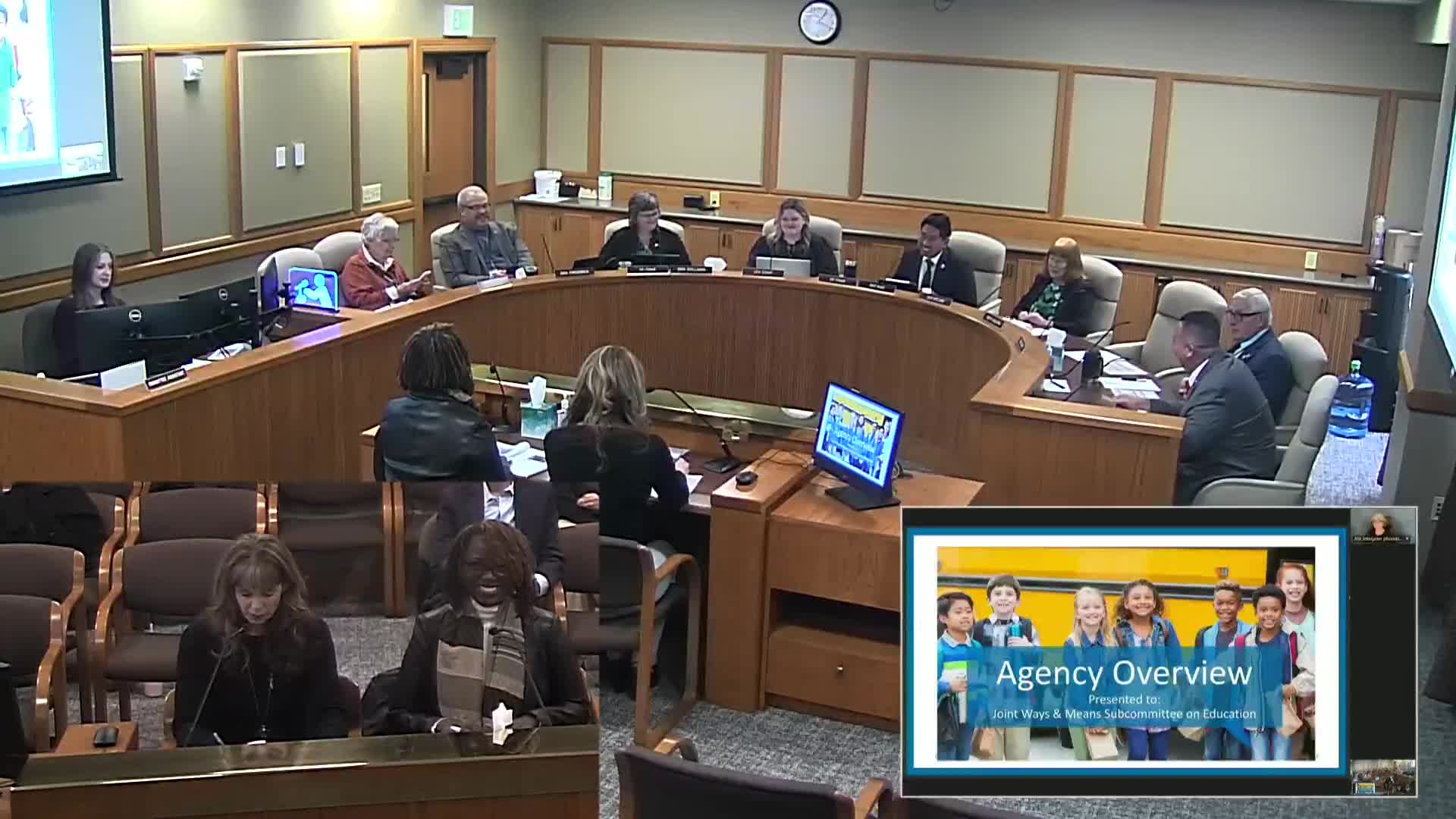
Dr. Charlene Williams and Chief of Staff Taneal Weatherall told the Education Subcommittee that ODE serves about 547,000 students, has expanded grants and staffing in recent years, is prioritizing early literacy and attendance, and is working to reduce district reporting by 50 percent.
Dr. Charlene Williams, director of the Oregon Department of Education, told the Education Subcommittee on Feb. 3 that ODE oversees K–12 policy, supports 547,000 students in 197 districts and is prioritizing academic excellence, belonging and wellness, and reimagining accountability.
Williams said ODE was established under state statute (referenced in her presentation) to oversee public education and is led by the superintendent of public instruction, with a governor-appointed state board of education. She said ODE employs more than 600 staff and has grown the number of grant-in-aid programs from 34 to over 141 since 2013; the agency budget (excluding the state school fund) has increased as a result.
Williams highlighted current challenges for school districts: the expiration of federal COVID relief funds, resulting budget shortfalls and staffing shortages; declines in student enrollment; and increased social-emotional needs. She said ODE is expanding early literacy grants, summer learning, attendance-awareness resources and school-based mental-health supports. Williams identified the Early Literacy Success initiative—passed by the legislature in June—as a priority to provide consistent, research-aligned literacy instruction in elementary schools.
On accountability and administrative burden, Williams told the committee ODE is trying to “reduce reporting requirements by 50%” and to align reporting to five named student success areas; she said the goal is to allow school leaders to focus more on teaching and learning rather than paperwork. She also said the state’s on-time graduation rate stands at 81.8 percent and that several historically underserved student groups showed gains in recent data.
Committee members asked for additional detail and follow-up. Representative Scott Juncker pressed for clarity on what accountability will look like in practice; Williams said the work is focused on narrowing and clarifying the department’s “North Star” and aligning supports. Representative Anna Plank and others requested more information on the equity report and “growing your own” teacher pipelines. Representative David Wright and several senators asked how proficiency targets will be set and how the system will prepare students for future jobs; Williams said ODE will work with partners and bring more detail to later briefings.
The presentation was informational; no committee votes or formal actions were taken during the ODE overview.