Get Full Government Meeting Transcripts, Videos, & Alerts Forever!
Get email alerts on the Ports Containers topic
No spam. Unsubscribe anytime.
Committee hears bill to create Port Capital Improvement Fund to support container service
Summary
Business Oregon and port leaders urged creation of a state fund to support ports that move containers, focusing near-term support on Port of Portland’s Terminal 6 while allowing other ports to access funds as they establish active container service.
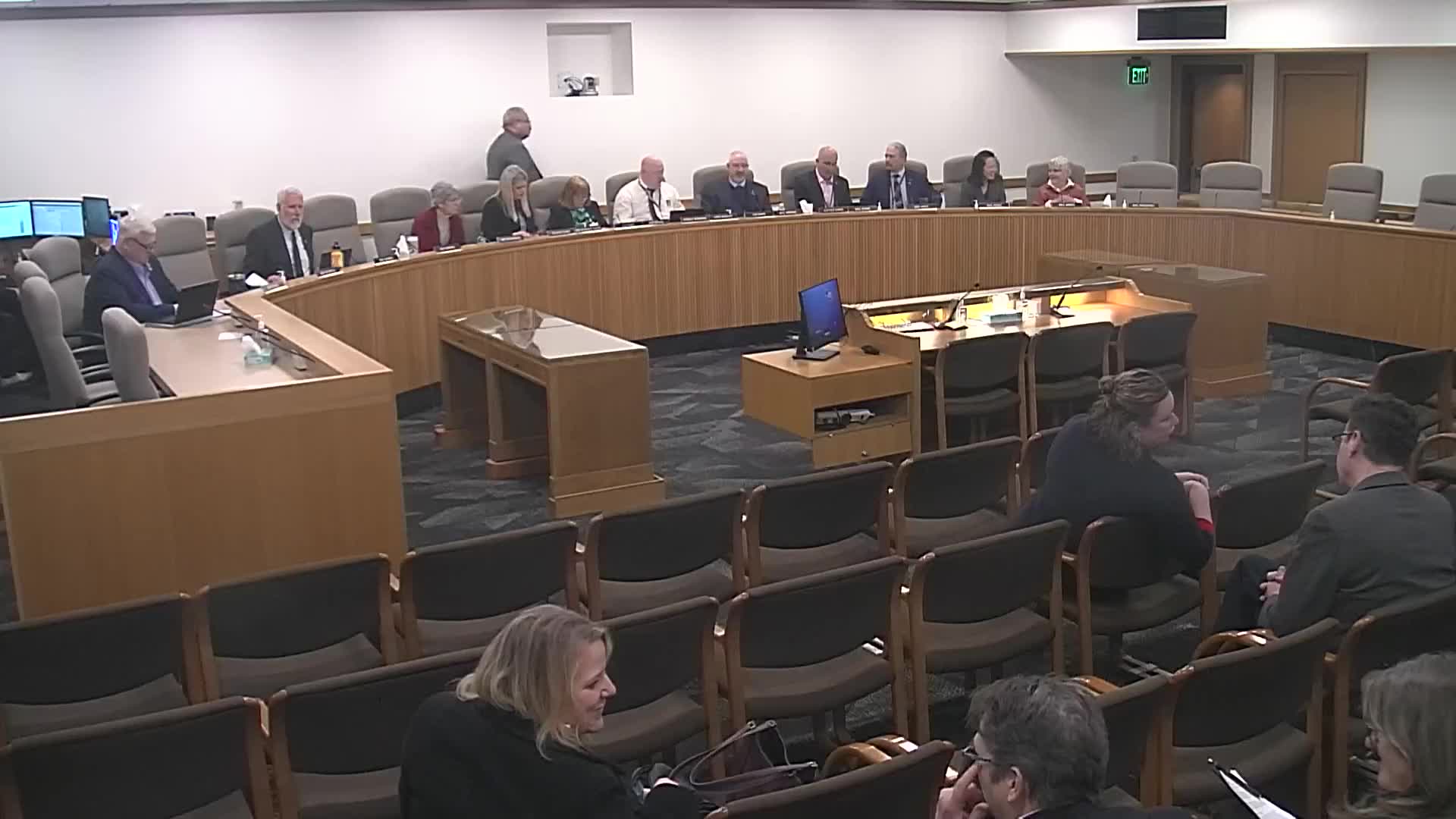
House Bill 3050 would create a Port Capital Improvement Fund to provide loans and grants for Oregon ports that move containerized cargo, lawmakers heard Monday during the Joint Committee on Transportation.
The measure, presented by Business Oregon and backed by public ports and industry groups, would set up a fund within Business Oregon’s infrastructure finance section to prioritize funding for ports with active container service and enable the state to invest in capital repairs, dredging and other infrastructure needed to keep container operations running.
Why it matters: Ports and their marine terminals connect Oregon exporters and importers to international markets. Witnesses told the committee that maintaining container service preserves trade routes for agricultural exporters and a wide range of Oregon businesses and that several smaller ports are struggling with rising maintenance costs.
Chris Cummings, deputy director at Business Oregon, said the agency would adopt rules to prioritize projects once the fund exists and noted the bill’s short-term intent to help keep Port of Portland container service operational. “Oregon is a trade‑dependent state,” Cummings said, “so therefore, it’s important that we have the ability to move cargo … in containers.”
Mark Landauer, testifying for the Oregon Public Ports Association, said Oregon’s 23 public ports collectively support broad employment and local revenues and that many smaller ports face higher dredging and maintenance costs. “Many of our smaller ports are struggling to keep up with basic maintenance of their facilities,” Landauer said, adding that the fund could help other ports in the future.
Representatives of the Port of Portland and Terminal 6 operator Harbor Industrial described recent volume gains and operational commitments. Kimberly Branham, the Port of Portland’s chief trade and economic development officer, said Terminal 6 handled about 60,000 container lifts in the past year and that public investment paired with a third‑party operator agreement is needed to sustain and grow service. “The bill establishes the Port Capital Improvement Fund, which would provide critical infrastructure funding for Oregon ports that move containers,” Branham said.
Mike Feudrick, general manager for Harbor Industrial Services, told the committee Terminal 6 is operational and that weekly services have returned; he estimated Terminal 6 handles roughly 30% of the cargo it handled prior to a 2015 shutdown and said volumes have increased since the operator agreement. Harbor Industrial’s monthly container lifts were described as roughly 4,500 for a recent February.
Port of Coos Bay noted the port is developing a Pacific Coast intermodal project that would include containerized freight and expects to seek access to the fund in the future as service becomes active. Matt Friesen, director of external affairs for the Port of Coos Bay, said the port sees the fund as “another potential tool we can utilize in the future.”
Committee members questioned the bill’s current prioritization language, which focuses on ports with active container service. Representative Evans and others suggested broadening eligibility so ports that are building toward container service would not be excluded; Business Oregon and port witnesses said current wording reflects an initial, near‑term focus on preserving existing service while leaving rulemaking to determine prioritization.
Several witnesses and committee members discussed the level of investment needed at Terminal 6. Port witnesses said the port expects to invest roughly $5 million per year under the framework agreement with Harbor Industrial and estimated total capital investment needs in the range of $25 million to $30 million over the next seven years; the governor’s recommended budget includes $20 million for the port. Witnesses said additional federal funds have also been or could be used for upgrades.
The testimony emphasized that public investment in marine terminals is common in competing West Coast regions and that state support helps leverage further federal and private investment. Speakers repeatedly framed the measure as a tool to preserve and grow containerized shipping capacity for Oregon exports and imports.
The committee closed the hearing on HB 3050 with no immediate action taken; Business Oregon said it would write rules to prioritize funds if the bill becomes law.
See also: testimony from business and port trade groups that supported the measure and described statewide economic links to container service.