Get Full Government Meeting Transcripts, Videos, & Alerts Forever!
Get email alerts on the Planning Commissions topic
No spam. Unsubscribe anytime.
Bill would remove special two-person limit for real estate professionals on planning commissions, proponents say it restores expertise
Summary
House Bill 3136 would remove a 50-year-old restriction that limited to two the number of planning commission members principally engaged in buying, selling or developing real estate; proponents say the change increases access to expertise, while some lawmakers warned it could enable industry majorities on quasi-judicial bodies.
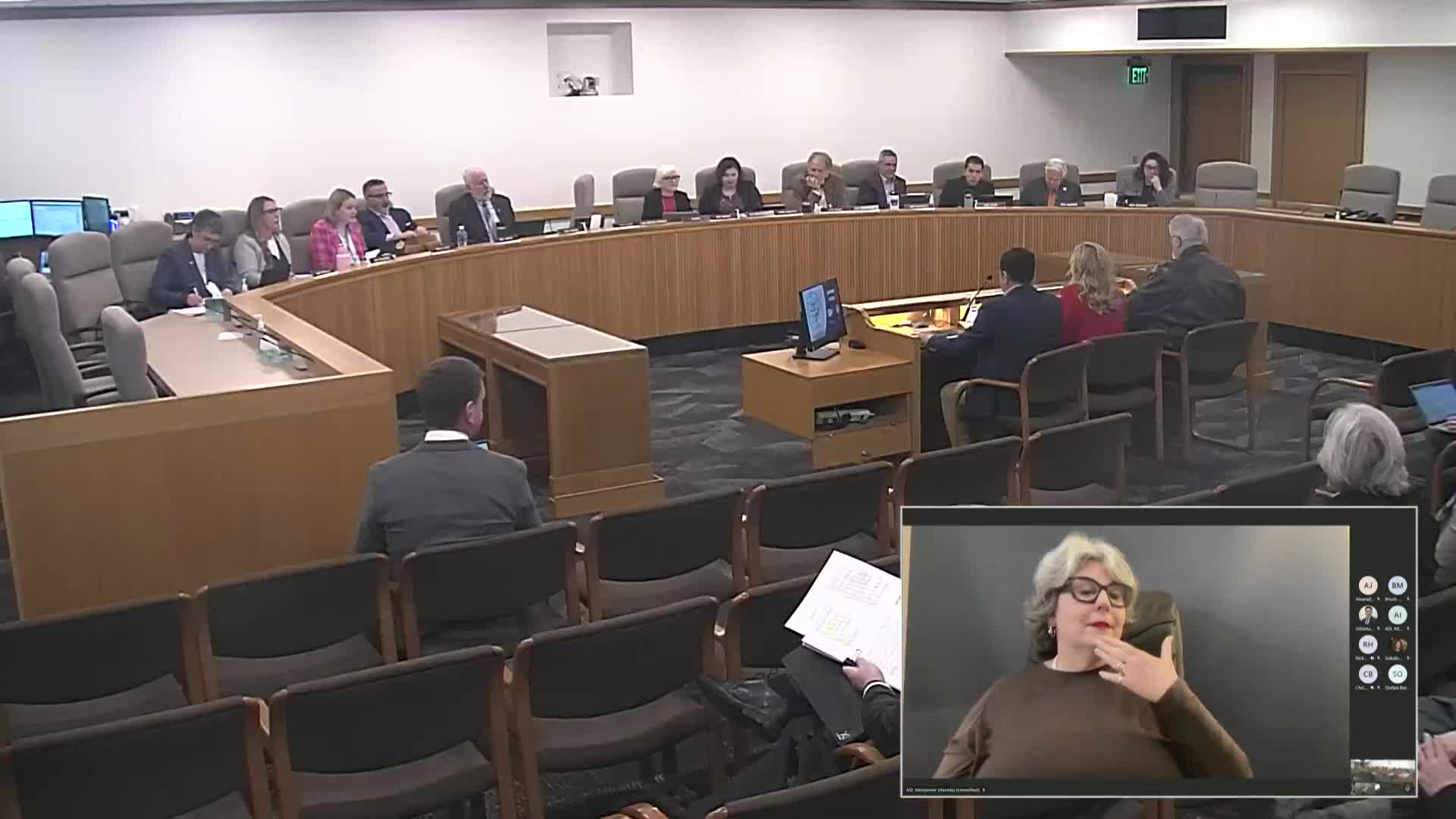
House Committee on Housing and Homelessness members heard Feb. 5 testimony on House Bill 3136, which would repeal a provision that specifically limited to two the number of voting members on a city or county planning commission who are principally engaged in buying, selling or developing real estate for profit.
Representative Vicki "Brie" Siverson, sponsor of the bill and herself a licensed realtor, framed the change as removing an outdated restriction that singularly targeted real property professionals while retaining the statute’s broader requirement that planning commissions contain occupational diversity. "By retaining the provisions that ensure occupational diversity while removing the provisions that singularly limit the number of individuals who are principally engaged in real property development and transactions, planning commissions will be better able to utilize the full expertise within their communities," Siverson said.
George Grabenhorst, a principal broker and chair of the Marion County Planning Commission, testified in support and said the restriction excludes professionals with relevant experience and that commissions benefit from a range of perspectives. "The restrictions harm our communities by excluding professionals who understand the complexity of the Oregon land use system and laws," Grabenhorst said.
Members of the committee pressed proponents on consequences and safeguards. Representative Anderson asked how removing the restriction would increase occupational diversity, questioning whether easing that specific cap could lead to a planning commission dominated by a single profession. Proponents replied that the statute’s broader rule limiting "no more than two members shall engage in the same kind of occupation, business, trade or profession" (the standard occupational-diversity rule) would remain in place and guide appointments. Staff referenced an Attorney General opinion interpreting the occupational-diversity rule as requiring classification around "genuine and substantial differences" in occupation to meet legislative intent.
Representative Gamba cautioned that planning commissions are often quasi-judicial bodies and recounted historical examples in which proportionate industry representation produced poor outcomes; he asked how the bill would prevent similar problems. Proponents pointed to existing conflict-of-interest rules and appeal pathways and argued the occupational-diversity requirement, properly interpreted, can provide the necessary guardrails.
Representative Mannix noted that the existing special restriction can be interpreted broadly—potentially counting employees of real-estate-related corporations toward a single cap—and said the proposed change could actually increase participating expertise by letting communities define occupations more granularly. Committee members asked whether the League of Oregon Cities or Association of Counties had objections; sponsors said they had briefed both but were not aware of formal opposition.
No vote was taken at the hearing. The committee closed public testimony after questions and pledged to consider written follow-up materials.
Why it matters: Planning commissions advise and often make quasi-judicial land-use decisions that affect housing supply, zoning and development approvals. Supporters say the current restriction, enacted after county-level conflicts in the 1970s, can exclude professionals who could inform planning deliberations; opponents warn of the risk that a narrow industry group could come to dominate a decision-making body.