Get Full Government Meeting Transcripts, Videos, & Alerts Forever!
Get email alerts on the Tourism And Travel Oregon topic
No spam. Unsubscribe anytime.
Travel Oregon outlines programs, grants and $14 billion in 2023 visitor spending to House committee
Summary
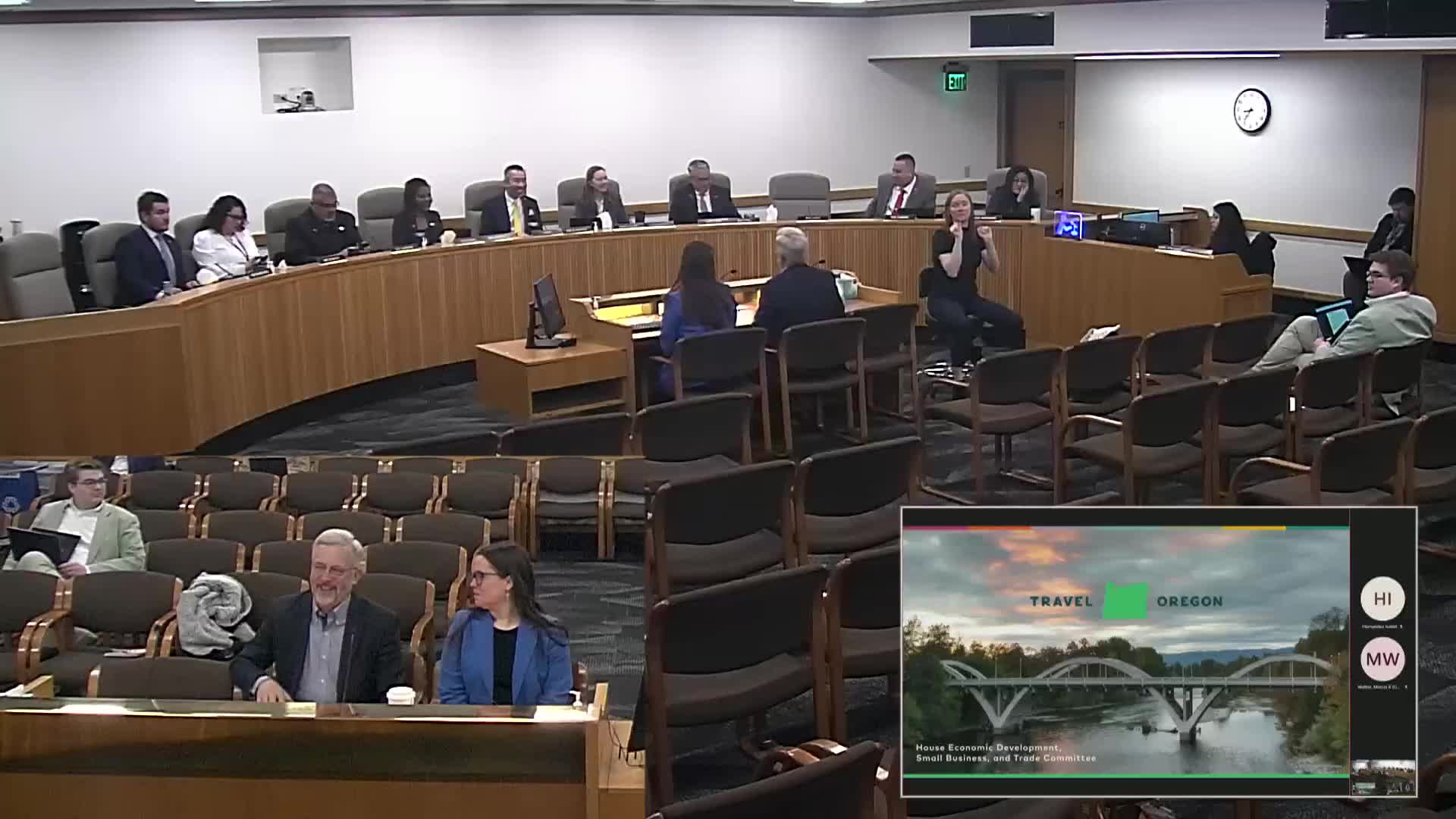
Travel Oregon officials briefed the House Committee on Economic Development, Small Business and Trade on Feb. 3 about the agency's role, its grant and regional programs, and data showing $14 billion in direct visitor spending and recovery of jobs to pre-pandemic levels in 2023.
Todd Davidson, chief executive officer of Travel Oregon, and Kate Baumgartner, public affairs director, presented an overview of the state agency's mission, funding and programs to the House Committee on Economic Development, Small Business and Trade on Monday, Feb. 3.
Davidson and Baumgartner said Travel Oregon is the state's destination management organization and that a statewide transient lodging tax created as part of legislation in 2003 funds agency work. "Our mission is to inspire travel that uplifts Oregon communities," Baumgartner said.
Travel Oregon explained its funding mix and programs: 30% of the agency's funding is returned to communities through competitive grants (10% statutory) and a regional cooperative tourism program (20%), the agency said. Examples included grants for trail infrastructure, wildfire recovery and accessible recreation projects; a regional program that supported new air service and designation of dark-sky sanctuary status; and event sponsorships such as the Portland Winter Lights Festival.
The agency described marketing campaigns and industry support. "Our current campaign is our travel Oregon with travel Oregon campaign, which is a year round marketing campaign that's active across 15 different markets in The US and Canada," Baumgartner said. Travel Oregon also runs programs that support small tourism and guide businesses (Y Guides), food-trail promotion of agritourism and technical assistance for online visibility.
On economic impact, Travel Oregon told the committee that direct visitor spending in 2023 was $14 billion, supporting roughly 180,000 jobs across the state and generating about $650 million in state and local tax revenue. The agency said international visitor spending remains below pre-pandemic levels (about 4% in 2023 versus about 10'12% previously), representing roughly a $1 billion gap in international spending.
The agency traced its funding authority to House Bill 2267 (2003) and cited ORS 320.300 as the statute governing the statewide transient lodging tax. Baumgartner said the tax rate at the statewide level is 1.5% and local transient lodging taxes are cumulative, so a visitor may pay state and local taxes together.
Committee members asked about Travel Portland and coordination with local destination marketing organizations, international market selection, and partnership with Sport Oregon and regional planning ahead of major events such as the 2026 World Cup and the Los Angeles Olympics. Davidson said international market choices are guided by air service and market potential, citing Portland's nonstop service to Amsterdam as a reason for activity in The Netherlands market. He said Travel Oregon maintains staff and contract representatives in several key markets and works with partners including the Port of Portland, Business Oregon and the Department of Agriculture on trade and air service development.
Ending: Travel Oregon officials offered to share additional budgeting and regional recovery data with the committee and said they look to collaborate with the legislature and local partners on shoulder-season campaigns, international recovery and community-focused tourism investments.