Get Full Government Meeting Transcripts, Videos, & Alerts Forever!
Get email alerts on the Liquor Business Loss Compensation topic
No spam. Unsubscribe anytime.
Liquor agents push for stronger business-loss compensation in HB 2123, cite privatization risk
Summary
Owners of Oregon contract liquor stores testified in support of House Bill 2123, which would change the formula for business-loss compensation if the state control system were altered. Witnesses said the bill is intended as an insurance policy that would apply only in the event of privatization and argued current buyout rules do not reflect the …
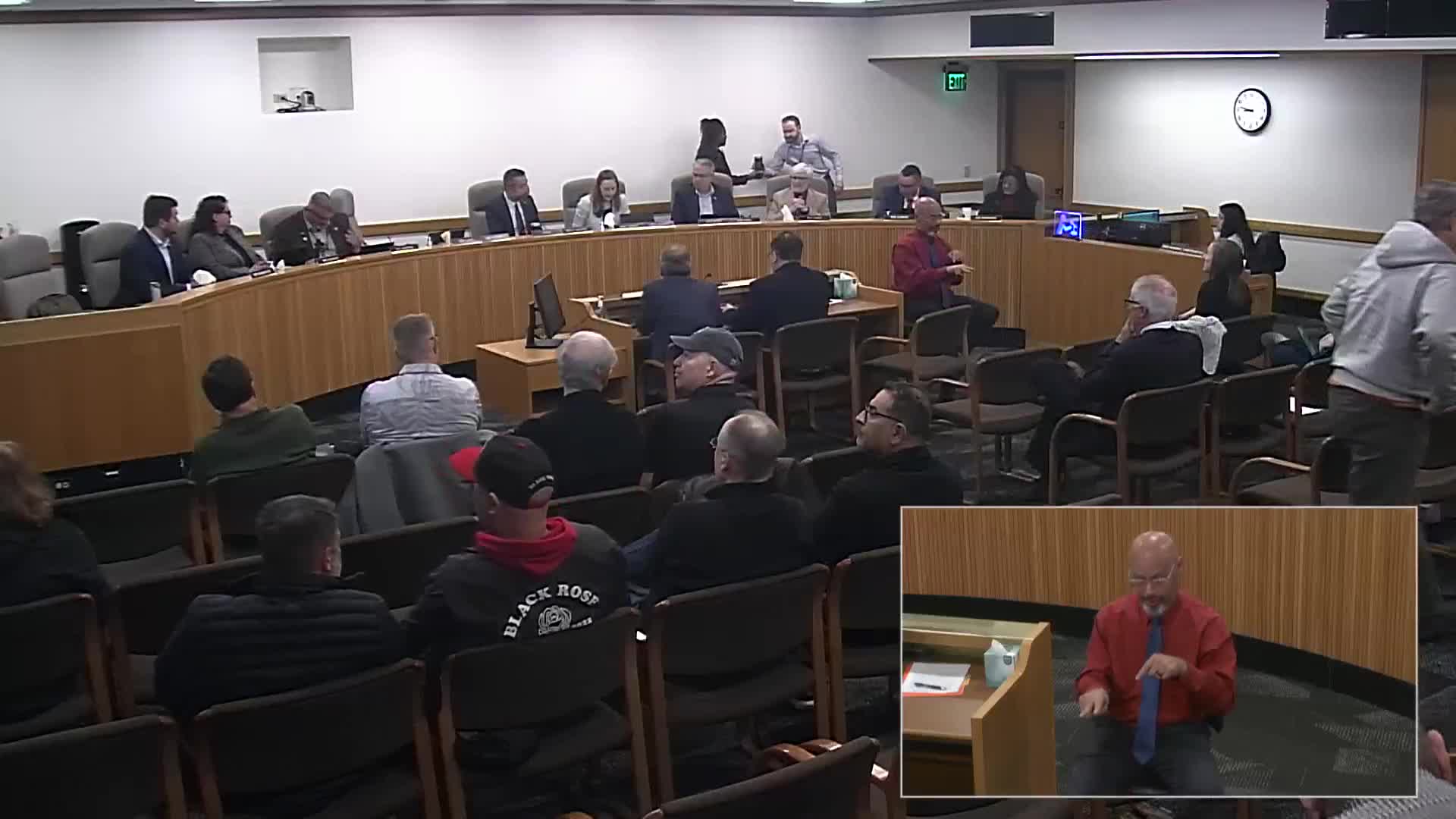
Owners and representatives of Oregon state-contracted liquor stores urged support Feb. 5 for House Bill 2123, which changes how business-loss compensation would be calculated if the state's control system were altered.
Committee staff summarized HB 2123 as directing the Oregon Liquor and Cannabis Commission (OLCC) to determine a formula for calculating compensation for stores that have operated at least five years and changing the compensation for stores that have operated less than five years from 4% to 10% of average annual gross distilled-liquor sales in the five years preceding the change. Staff said the change would apply only if there is a change to the state’s current system for selling distilled spirits, and the bill declares an emergency effective on passage.
Oliver Coker and Salim Noorani, leaders of the Associated Liquor Stores of Oregon and longtime agents, framed the measure as a protection should privatization occur. Noorani said, "This bill would only and only go into effect if there was a change in the current system of retailing in Oregon," and witnesses emphasized they do not support privatization but want an insurance mechanism to protect owners' investments if privatization were enacted.
Witnesses told the committee that many stores have modernized since earlier statutes and that non-liquor sales now account for an average of about 25% of overall store sales; they urged a valuation process that recognizes market value instead of measuring compensation solely by distilled-liquor sales. Owners described scenarios where appraisals were used by incoming buyers and noted cases where prior policy discussions and OLCC rulemaking on market value were not completed as expected.
Multiple store owners testified that the absence of a market-based valuation for buyouts can leave retiring agents without compensation reflecting their investment in non-liquor inventory, fixtures and customer goodwill. Several witnesses said they had expected OLCC to finalize market-value rule changes in late 2024 but that process had not concluded; one testifier said that two recently sold stores captured market prices while others remained uncertain.
No committee vote was recorded on HB 2123 in the transcript excerpt. Members asked questions about whether the bill is intended to block privatization (witnesses said they do not want privatization) and about the basis for the 10% figure; witnesses described the bill as a contingency for an unlikely but consequential policy change.
Why it matters: Owners described the bill as protecting long-term investments and retirement assets for small-business operators who contract with OLCC in a state control system that could be materially altered by future policy changes.