Get Full Government Meeting Transcripts, Videos, & Alerts Forever!
Get email alerts on the Wastewater Billing topic
No spam. Unsubscribe anytime.
Westgate representative asks Mount Vernon Utilities Commission for wastewater-billing leniency after January pipe bursts
Summary
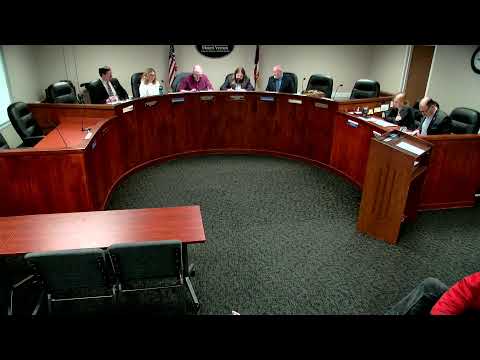
William Ostermiller, representing Westgate mobile home park, asked the Mount Vernon Utilities Commission on Feb. 6 to consider leniency on the wastewater portion of the park’s January bill after repeated frozen-pipe breaks and repair work.
William Ostermiller, representing Westgate mobile home park, asked the Mount Vernon Utilities Commission on Feb. 6 to consider leniency on the wastewater portion of the park’s January bill after repeated frozen-pipe breaks and repair work.
Ostermiller said the park experienced multiple leaks during an arctic cold spell in January and that some tenants left for vacation without winterizing units, which led to burst lines. “We had a leak on January 4, which we addressed and got fixed, then another on January 5, then another on January 6… then right after that arctic blast went through,” Ostermiller said. He told commissioners he purchased a 50,000 BTU heater, paid out of pocket for emergency repairs and that much of the water “ended up going onto the ground,” increasing wastewater billing for the account.
The request was for “a little bit of leniency, possibly a waving of the wastewater, their portion of the bill for this month,” Ostermiller said. Commissioners and utility staff discussed options for calculating a credit rather than forgiving the entire bill.
An unnamed utility billing staff member reviewed the account with commissioners in detail and proposed basing any sewer credit on the account’s historical average usage. “If we would take it back to the average — forgive the wastewater fee back to the average of the $4.833” (average consumption across earlier months), the staff member said, and estimated that the credit would likely be on the order of “about 2 or $3,000.” The staff member also walked commissioners through meter-size and rate calculations during the meeting and noted confusion about the account’s meter size (discussion ranged between a 2-inch and 4-inch meter); staff ultimately explained that the system charges an initial tier (the first 400 ccf) at $10.44 per hundred cubic feet and recommended applying the historical-average method only to the wastewater portion, not to water that was actually used.
Commissioners did not take a formal vote on Ostermiller’s request at the Feb. 6 meeting. Commissioner Reinhart agreed to meet with Ostermiller to discuss the matter further; the commission said staff would prepare the account-specific calculations and bring a proposal back. When the chair asked whether the meeting should take action immediately, the clerk repeated that the item was for review and follow-up rather than for immediate formal action.
Separately, the commission approved two routine administrative items earlier in the meeting: the Jan. 9, 2025 meeting minutes (approved by voice vote) and an adjustment journal containing two customer adjustments. The adjustment journal included a $894.02 credit for Mr. Detloff (a grant payment returned to the state) and a $798.22 credit for Mr. Klein for a wastewater leak; commissioners corrected the journal’s date notation to reflect January 2025 before approving it by roll call.
What happens next: Commissioners asked staff to prepare a specific credit calculation and to meet with Ostermiller; no formal credit or forgiveness was adopted on Feb. 6. The commission said it would readdress the account after staff computes the proposed sewer credit based on the historical-average method and after clarifying the account’s meter size and applicable rate tier.