Get Full Government Meeting Transcripts, Videos, & Alerts Forever!
Get email alerts on the Levee Timber Harvest topic
No spam. Unsubscribe anytime.
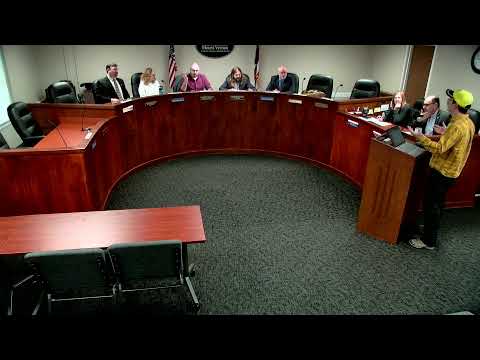
Utilities commission discusses levee timber harvest, possible equipment purchase and reinvestment of proceeds
Summary
Commission members and staff reviewed estimates for selling timber removed from the West End levee, discussed using proceeds for levee repairs and a possible purchase or rental of a forestry head (skid-steer attachment), and agreed to pursue follow-up conversations with city divisions and potential partners.
A commission member said the community’s preference was to use money from harvesting timber removed from the West End levee to help pay for dike repair and maintenance.
The discussion centered on estimated revenue and costs: a staff member said the July timber report values the timber at up to $44,000 and that the city’s removal quote is $20,000, leaving roughly $24,000 if the highest price is realized. That staff member also estimated about 16,700 board feet of walnut in the removal area. The staff member added, “we're left with about $24,000,” and said a more current (January) timber report is not yet available.
Commission context: the area under consideration runs roughly from High Street south to Main Street along the southwest side of the levee system. Staff cautioned the group must act quickly because cutting riparian trees is limited by a seasonal restriction that begins after March 31, and environmental studies may be required before cutting.
Why it matters: commissioners and participants framed proceeds from a timber sale as a modest but practical way to support levee maintenance and stormwater needs. Members raised options—including reserving some lumber for civic uses such as trim or furniture—and discussed how to pay for equipment needed to manage the cleared material.
Equipment and operations: commissioners discussed purchasing or partnering to obtain a skid-steer forestry head (mulching attachment). One commissioner suggested a purchase-price planning figure of about $35,000 for an attachment, noting the final cost depends on the skid steer’s hydraulic flow specifications. Staff and commissioners also discussed renting such equipment and partnering with local organizations that currently rent the attachments. A staff member warned that forestry heads are high-maintenance and that a single pass through a fence row can take multiple days of untangling and maintenance.
Planting and follow-up work: staff emphasized that the amount the city can mulch successfully each year depends on its capacity to replant and treat invasive species afterward. Current planting and revegetation rely heavily on volunteers (the Bee City Commission), donated stock, and limited staff capacity; staff said the city can water roughly 300 trees per year with existing resources. Commissioners noted that without aggressive herbicide treatment and replacement plantings, invasive honeysuckle tends to regrow and require repeated mulching.
Funding mixes and next steps: commissioners discussed splitting costs and benefits between the stormwater enterprise and the general fund. As an example, commissioners said if 25% of harvested trees were reserved for future city projects, that portion of the harvest cost could be borne by the general fund while 75% would be paid from the stormwater utility and later reimbursed from timber sales. The group agreed to take the proposal offline for more detailed conversations with the safety/service director, public works divisions (including Tom Hinkle, who was specifically named), and potential partner organizations to determine feasibility, cost sharing, and any needed environmental review. One commissioner said, with committee consent, “why don't we go ahead and start moving forward on this?” and the group agreed to begin follow-up work rather than taking a formal vote on a purchase that day.
Votes and formal actions: there was no formal vote on harvesting or equipment purchase during the meeting. The group did hold and pass a motion to adjourn at the meeting's close.