Get Full Government Meeting Transcripts, Videos, & Alerts Forever!
Get email alerts on the Liquor Policy Compensation topic
No spam. Unsubscribe anytime.
Liquor agents urge rollback of CPI adjustment to store classifications in HB 2120
Summary
Owners and representatives of Oregon contract liquor stores told the House Committee on Economic Development, Small Business and Trade that HB 2120 would prevent CPI adjustments from changing store classification thresholds, which they say has lowered compensation for some stores despite steady sales.
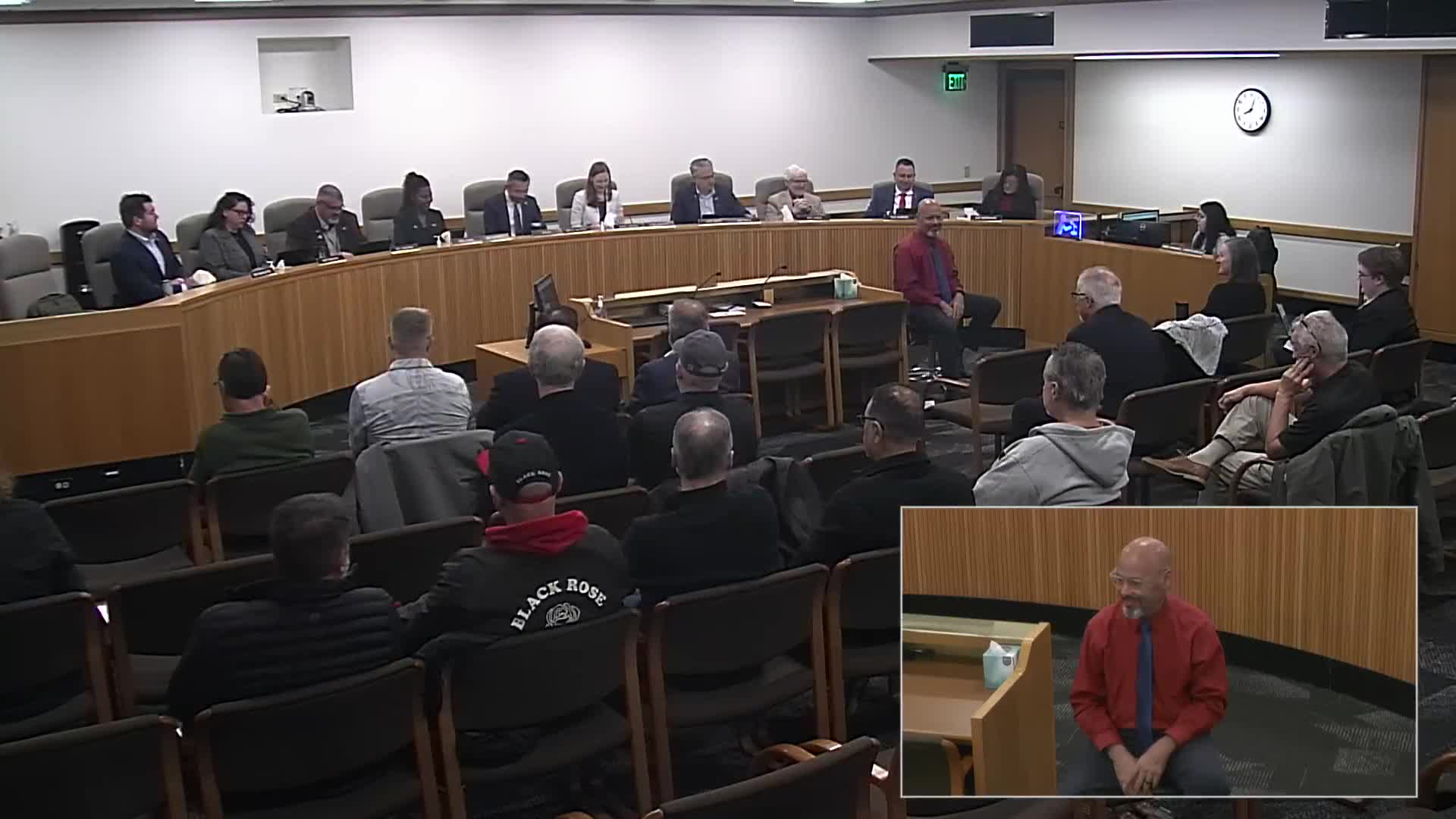
Representatives of the Associated Liquor Stores of Oregon testified Feb. 5 in favor of House Bill 2120, asking the Legislature to remove the Consumer Price Index (CPI) adjustment from store classification thresholds so CPI affects only the small monthly base payment rather than a store’s classification.
Marshall Koba, representing the Associated Liquor Stores of Oregon, said the control-state system "is working well for every sector of the distilled liquor industry, and we look forward to the continuation of this highly efficient and effective system." He described owners as independent small-business operators who rely on the state warehouse and commission structure to support operations.
Oliver Coker, president of the Associated Liquor Stores of Oregon and a retail owner, told the committee that "Our sales commissions of 9.02% must cover payroll, taxes, maintenance, theft charges, and various other business costs." He said the commission-based portion of compensation is not adjusted by CPI and that applying CPI to store-class thresholds has reduced some stores’ classified levels even when sales remained steady.
Testimony and examples presented by store owners argued the CPI’s application to store-class thresholds produced unintended downgrades: one example described a retailer dropping a class because a CPI-adjusted threshold rose above the store’s unchanged sales level, producing an estimated monthly base compensation loss in the written example. Witnesses said their analysis showed 35 stores were affected in 2023, and they estimated a cumulative impact in 2023 of about $392,000 across those stores (figures provided by witnesses; committee staff said data could be provided to members on request).
Committee members asked whether alternative indexing methods could be used and whether removing CPI from class thresholds would create a windfall if retail prices rose sharply; witnesses responded the change would keep classifications fixed while CPI would continue to apply to the small base payment only.
No formal action was taken; the committee held a public hearing to receive testimony and questions. Committee members asked to receive additional data from OLCC and the witnesses to better understand retail pricing history and the magnitude of the effect described by agents.
Why it matters: Witnesses said the CPI adjustment to store classifications can reduce monthly compensation for some contracted liquor agents even when their sales are stable, which they said impairs small-business budgeting and operations.