Get Full Government Meeting Transcripts, Videos, & Alerts Forever!
Get email alerts on the Beaver Coexistence topic
No spam. Unsubscribe anytime.
Lawmakers consider $1.5M grant program to help landowners use nonlethal beaver coexistence tools
Summary
House Bill 3143 would create a $1,500,000 grant program to support private landowners implementing nonlethal beaver coexistence strategies; proponents said devices such as flow-control culvert protectors and fencing are low-cost compared with engineered alternatives and increase landscape water security and wetland benefits.
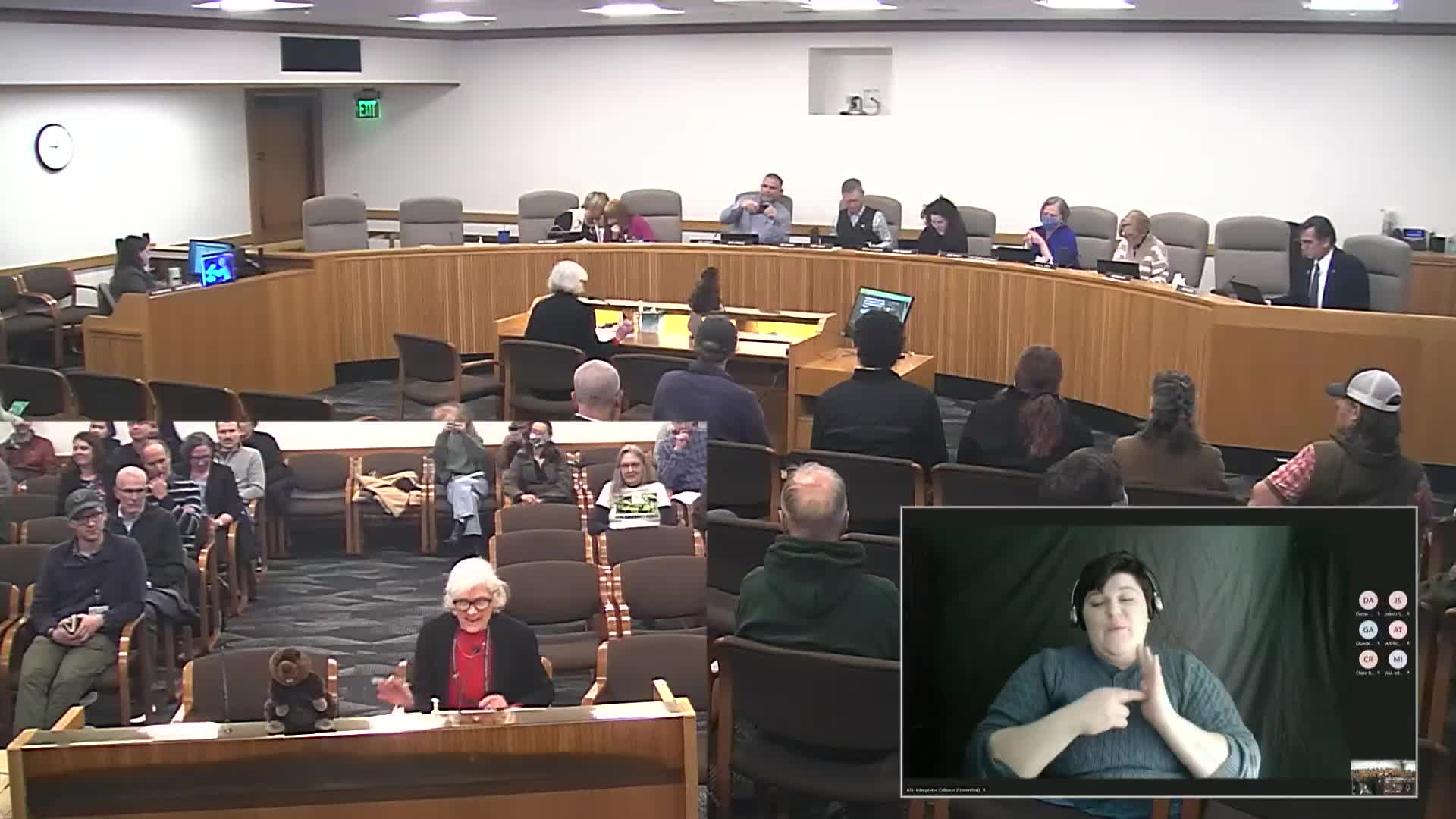
Representative Pam Marsh opened a public hearing on House Bill 3143, a proposal to create a $1,500,000 grant program to support private landowners who adopt nonlethal beaver coexistence strategies.
Why it matters: Supporters said beavers provide low-cost, natural solutions to water storage, wetland creation and habitat resilience, and that nonlethal options (flow devices, culvert protection, tree fencing and electric fences for orchards) are far less expensive than engineered alternatives. They said the 2023 legislative change that removed beavers’ predatory-animal status and moved management to the Oregon Department of Fish and Wildlife created a need for tools and funding to help landowners implement coexistence practices.
Pam Marsh, the bill sponsor and state representative for House District 5, said the proposal builds on 2023 legislation (House Bill 3464) that changed the state’s beaver-management approach and that the grant program is “the next logical step.”
Jacob Shockey, founder of Project Beaver and owner of Beaver State Wildlife Solutions, told the committee that “if we want to look at dollar-for-dollar what we get for increasing water security and habitat resiliency, I think this is the most efficient use of funds we can make.” Shockey described typical costs for common devices: he said protecting a culvert on a large road can cost about $5,000, whereas constructing mitigation wetlands can run into millions; nonlethal devices, he said, are durable and cost-effective.
Sally Compton, executive director of Think Wild, described on-the-ground work in Eastern Oregon and said that removal is not a lasting solution because beavers recolonize good habitat. “Proven coexistence strategies like flow devices and culvert protection offer a more cost-effective and sustainable approach,” Compton said. A Washington County landowner who installed a nonlethal device described receiving a nearly $5,000 conservation-district grant for the initial installation and ongoing maintenance and said continued state funding would be helpful.
Lauren Kinsey of the Oregon Farm Bureau said the Farm Bureau supports state programs that offer technical and financial assistance to landowners and emphasized retaining options for depredation management when necessary.
No formal vote occurred at the hearing. Supporters urged appropriation passage and said the program would help landowners implement mitigation and avoid lethal removal in many cases.