Get Full Government Meeting Transcripts, Videos, & Alerts Forever!
Get email alerts on the Nonprofit Low Income Rental Exemption topic
No spam. Unsubscribe anytime.
Committee hears support for extending nonprofit low‑income rental property tax exemption
Summary
House Bill 2,077 would extend the property tax exemption for nonprofit low‑income rental housing; LRO summarized eligibility and program usage and Tax Fairness Oregon voiced support.
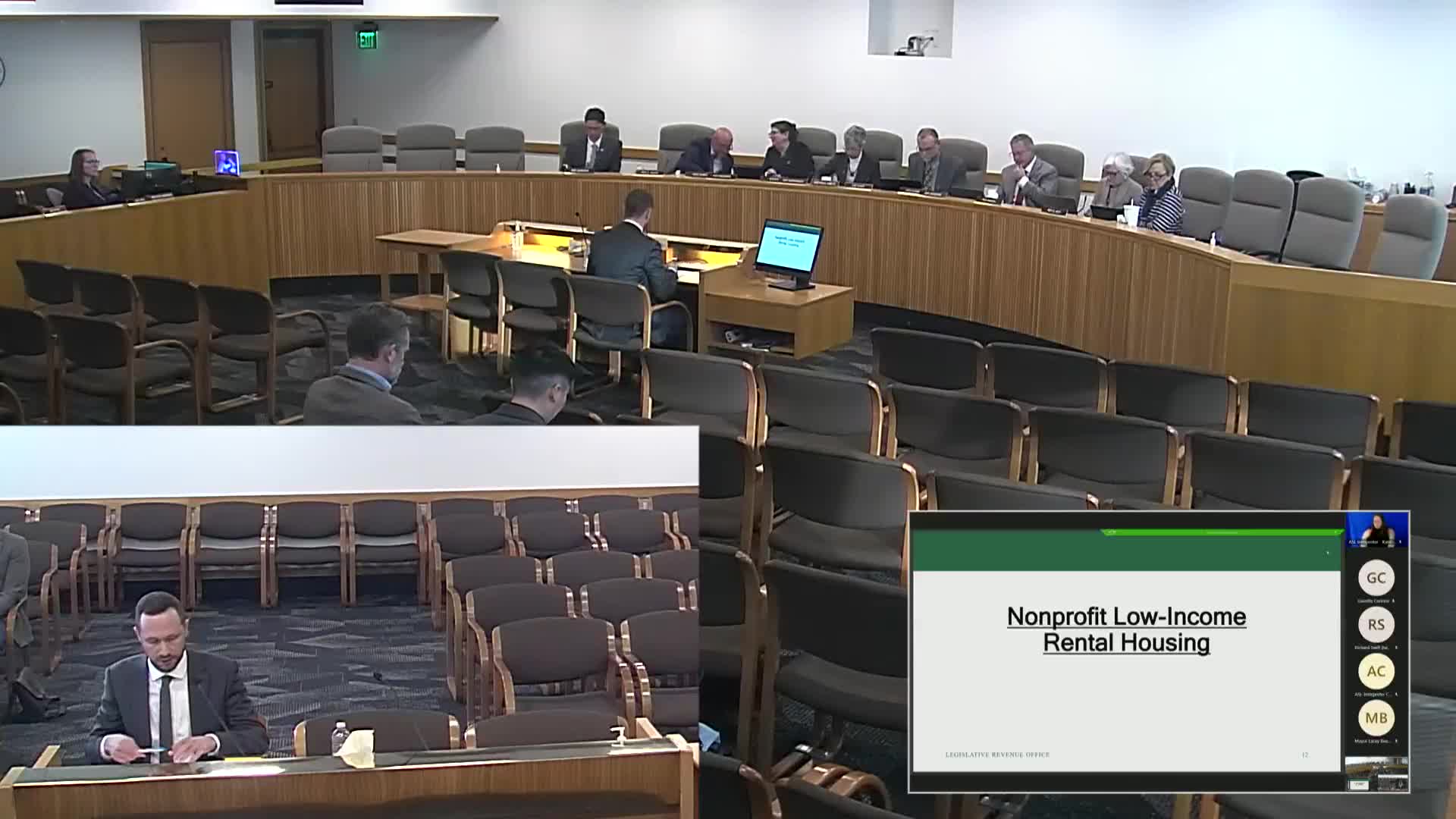
Chair Nathanson opened the public hearing on House Bill 2,077, which would extend the sunset for the property tax exemption available for nonprofit low‑income rental housing from June 30, 2027 to June 30, 2033. LRO presented the exemption’s policy purpose, eligibility criteria and program usage data.
LRO said the policy purpose—while not spelled out in statute—has been to increase the supply of low‑income rental housing and that the exemption applies to properties owned or held for development by qualifying nonprofit entities. The exemption structure allows initial year income limits that average to 60% of area median income (AMI) and permits up to 80% AMI in certain tax‑credit‑qualified units; after the first year the overall income limit for tenants can be up to 80% AMI.
Richard Swift, for Tax Fairness Oregon, testified in support of extending the sunset dates for this and related housing exemptions, saying the legislation “has resulted in a net positive regarding low income and workforce housing.” LRO reported nearly 900 current accounts in the program with average assessed values per account around the figures presented in committee materials.
Committee members asked technical questions about the 51% taxing‑rate threshold that allows an exemption to apply to all taxing districts in an area. LRO clarified the opt‑in calculation is based on the weighted share of tax rates rather than the number of taxing districts. The committee closed the hearing and did not take action during the meeting.