Members urge quick extension of 2017 tax cuts, small-business provisions
Get AI-powered insights, summaries, and transcripts
SubscribeSummary
House members at a Ways and Means "member day" hearing pressed to extend core provisions of the 2017 Tax Cuts and Jobs Act — from lower individual rates to small-business expensing — arguing immediate action is needed to avoid widespread tax increases for families, farms and Main Street businesses.
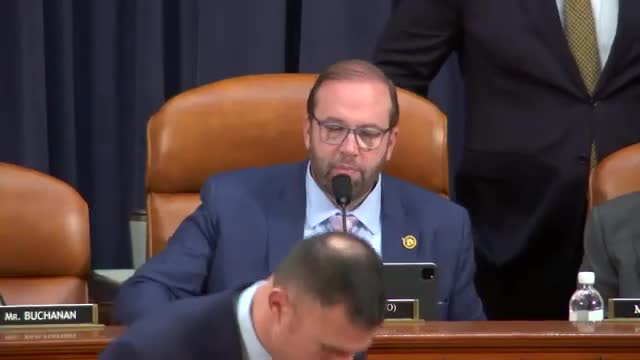
Chairman Smith opened the House Ways and Means Committee member-day hearing by framing the panel’s work as urgent: “The committee has been preparing itself for this moment for 2 years, and we are immediately getting to work to advance the agenda of the American people.”
Members across the majority and a number of Republicans who testified told the committee that provisions of the Tax Cuts and Jobs Act (TCJA) signed in 2017 must be extended so families and businesses do not face steep tax increases. They repeatedly cited possible expiration this year of individual rate reductions, the expanded child tax credit elements, the pass-through deduction (section 199A), and immediate expensing for businesses.
Why it matters: Several members warned that letting the 2017 provisions lapse would raise taxes for most households and for Main Street small businesses while undercutting near-term investment decisions. Representatives from farm states and manufacturing districts said uncertainty is already constraining hiring and capital spending.
Several speakers invoked statistics and local impacts. Representative Tom Barrett said if the tax cuts expire, “for a family of 4 earning the median household income in my district, that would equate to over $1,600 in taxes every single year.” Representative Andy Clyde and others pressed to make the 20% pass-through deduction and full expensing permanent to preserve small-business competitiveness. Representative Brad Finstad and other farm-state members cited stepped-up basis, the death-tax exemption and expensing rules as essential to keeping family farms viable and encouraging investment.
What members proposed and cautioned: - Make permanent or extend TCJA rate cuts and the section 199A pass-through deduction to avoid large tax increases for small businesses and sole proprietors (advocated by Representatives Clyde, Davidson, Finstad, Nunn and others). - Restore or preserve immediate expensing for R&D and equipment and consider making full expensing permanent to encourage capital investment (advocated by Representatives Davidson, Houchin and others). - Use reconciliation to deliver a single, comprehensive package rather than incremental or piecemeal fixes (several Republicans urged a single “big” bill). - Some members paired calls for tax relief with pay-fors and deficit control: Representative Marjorie Taylor Greene and others emphasized fiscal restraint and targeted offsets; Representative William Timmons urged using fraud recovery and other offsets to pay for provisions.
Differences of emphasis: While many Republicans called for broad permanence of TCJA features, several witnesses who emphasized targeted expansions also urged caution about deficit impacts and urged using offsets or program cuts to pay for changes. Ranking Member Neal (in his opening) noted the scale of past debt growth and urged balancing tax policy goals with fiscal responsibility.
Ending note: Members said they expect Ways and Means to move quickly to write reconciliation language that will be the vehicle for many of these extensions. No formal committee action or vote was recorded at the hearing; members primarily offered testimony and legislative priorities.