Get Full Government Meeting Transcripts, Videos, & Alerts Forever!
Get email alerts on the Auto Franchise topic
No spam. Unsubscribe anytime.
Dealers, manufacturers negotiate revisions to auto‑franchise rules in HB 21‑27
Summary
Dealership and manufacturer trade groups told the House Commerce and Consumer Protection Committee they are close to a negotiated rewrite of House Bill 21‑27, which would revise franchise relations, allocation formulas, vendor choice, public EV charging responsibilities and warranty labor‑time reimbursement.
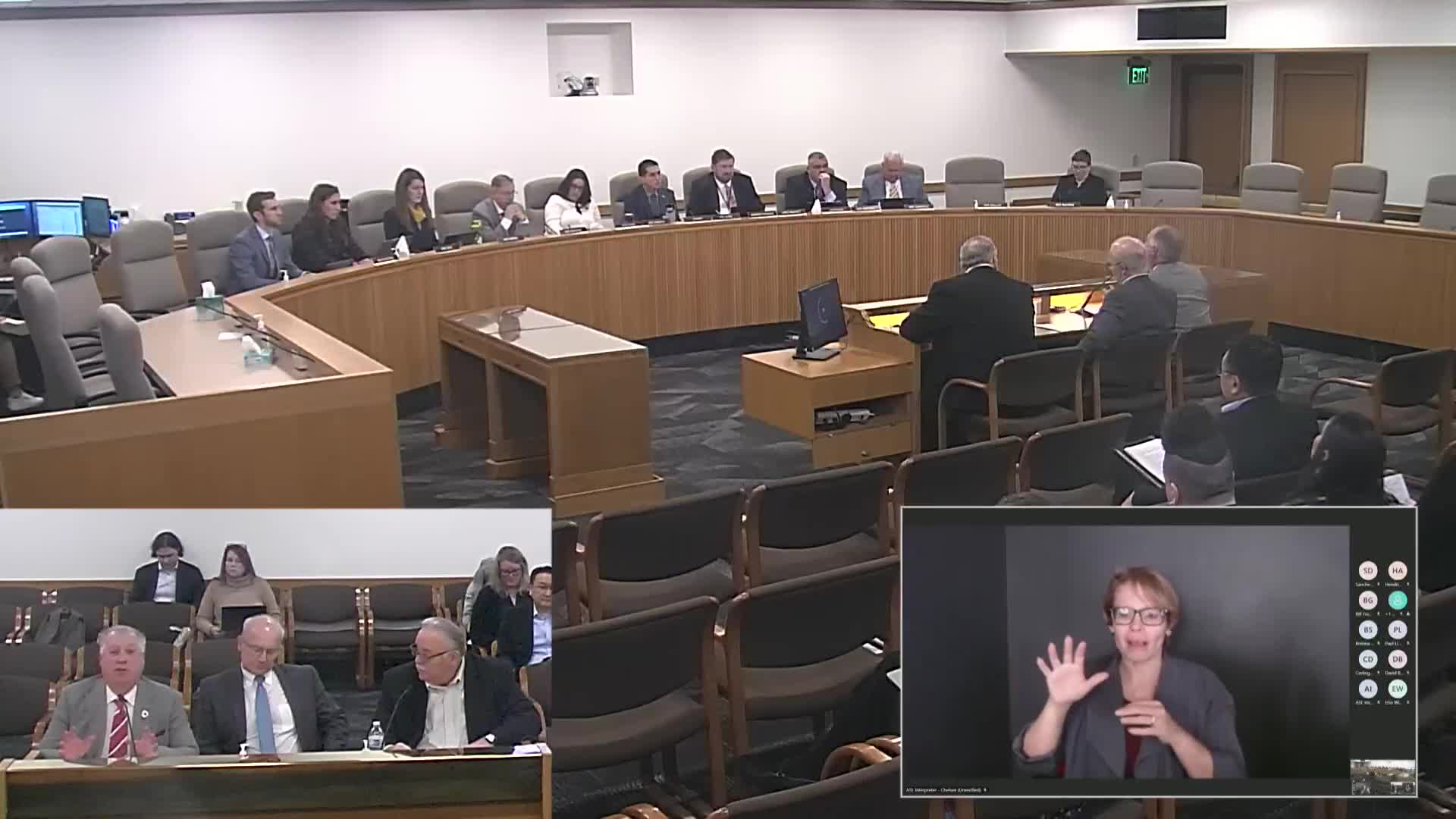
Greg Remensberger, executive vice president of the Oregon Auto Dealers Association, told the House Committee on Commerce and Consumer Protection on Feb. 4 that the association submitted House Bill 21‑27 and has been negotiating extensively with vehicle manufacturers represented by the Alliance for Automotive Innovation.
"We think we are very close," Remensberger said, describing multiple provisions the bill would address: dealer choice and manufacturer preferred vendors; vehicle allocation formulas and reservation programs; indemnification; forced public charging; and warranty service time reimbursement.
Remensberger said the bill would give dealers more option in vendor selection when manufacturers currently require use of specific vendors, and require manufacturers to demonstrate fairness in allocation formulas and reservation systems used to allocate vehicles, parts and service across dealers. He said the bill would permit consumers to choose the dealer for vehicle delivery rather than having manufacturers decide when the consumer orders online.
On public charging, Remensberger said some manufacturers had pushed dealers to install public fast‑charging stations at dealer locations and that the bill moves the cost of those installations to manufacturers if they require the infrastructure. On warranty labor rates, he said the bill includes language to ensure manufacturers reimburse dealers for labor at rates consistent with customer‑pay times; where parties cannot agree the bill would default to a nationally recognized published labor time manual.
Drew Hagedorn and David Bright, attorneys for the Alliance for Automotive Innovation, said the manufacturers oppose the bill as introduced but are negotiating and expect to reach a compromise soon. "We do oppose the bill as it's currently composed, but I'm confident ... we'll get to a mutual compromise and a meeting of the minds in pretty short order," Hagedorn said. David Bright said the Alliance appreciates the spirit of negotiation with OADA.
Tesla attorney Dan Jarman said Tesla had not been party to the negotiations and asked to be included because the company is an impacted stakeholder, particularly on provisions governing subscriptions.
Remensberger said representatives from Daimler raised concerns about how the bill's language might affect their ability to comply with truck‑specific rules; he said one subsection clarifies that a manufacturer is not coercing a dealer when it requires compliance with reasonably necessary standards to fulfill sales and service obligations.
Committee members took no vote on HB 21‑27 during the Commerce and Consumer Protection hearing; parties told the committee they expect an amendment to be filed and that negotiations were ongoing.