Get Full Government Meeting Transcripts, Videos, & Alerts Forever!
Get email alerts on the Maritime Autonomy topic
No spam. Unsubscribe anytime.
Industry urges Coast Guard collaboration, training for autonomous maritime systems
Summary
Manufacturers and advocacy groups told the House subcommittee that uncrewed and autonomous maritime systems are advancing faster than the current regulatory framework, and they asked for closer Coast Guard engagement, additional pilot programs, and clearer standards for testing and cybersecurity.
Witnesses at a House Transportation and Infrastructure subcommittee hearing asked for closer coordination between industry and the U.S. Coast Guard to develop standards for uncrewed and autonomous maritime systems, saying the technology is advancing more rapidly than rulemaking.
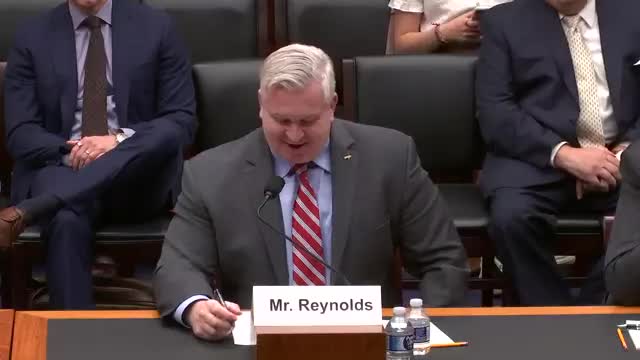
Tom Reynolds, chief strategy officer at CSATs and a representative of AUVSI, told the committee that the United States lags some competitors in development and deployment because the regulatory framework has not kept pace. "Our current regulatory framework has not kept up with this advance in technology," Reynolds said, and he added that the Coast Guard "operates no robotic or autonomous ships or boats or underwater vehicles of its own," which he said reduces the service's firsthand experience to regulate the technology effectively.
Reynolds and other witnesses recommended several steps: closer interagency collaboration (including leveraging Department of Defense and NOAA investments), Coast Guard pilot programs that put systems in the hands of operators and guardsmen for operational familiarity, and development of standards for safety certification and updated "rules of the road." They also highlighted cybersecurity as a cross‑cutting requirement and said industry groups such as AUVSI are ready to support standards development.
Members raised practical questions about interoperability with crewed vessels, emergency response and how captains of the port apply local authority for test operations. Witnesses described current testing approvals as a localized, patchwork process that sometimes rests on individual port or Coast Guard captain judgments rather than a consistent national standard. Tom Reynolds said putting systems into operational use on platforms that already host contractor‑operated unmanned systems (for example, the Coast Guard's use of small unmanned aircraft on some cutters) can help the service learn and refine regulatory needs.
The hearing generated no regulatory changes. Members and witnesses agreed on next steps: increased testing collaboration, pilot projects, and targeted investment in Coast Guard operational experience to inform future rulemaking.