Lifetime Citizen Portal Access — AI Briefings, Alerts & Unlimited Follows
Ports warn grant pause threatens projects, jobs and shore‑power upgrades
Loading...
Summary
Witnesses at the House Transportation and Infrastructure subcommittee hearing said a recent pause or review of federal infrastructure grants has left ports unsure whether projects funded by the Bipartisan Infrastructure Law and other programs can proceed, affecting projects from shore power to channel deepening.
At a House Transportation and Infrastructure Subcommittee hearing on maritime infrastructure, port leaders and members of Congress warned that a recent pause or review of federal infrastructure grants is disrupting port projects and putting jobs at risk.
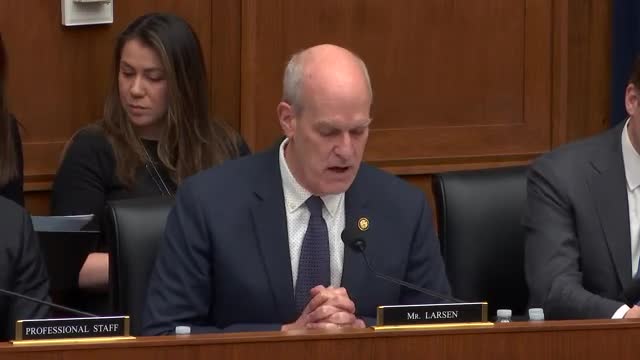
Representative Larson, ranking member of the full committee, told the subcommittee that "the president's executive order to pause infrastructure funding from the Bipartisan Infrastructure Law and Inflation Reduction Act is putting billions of dollars, hundreds of thousands of jobs, and tens of thousands of projects at risk." The concern echoed across witnesses, who said ports built near‑term plans around federal grants that now face uncertainty.
The uncertainty matters because federal programs helped fund a wave of port investments after the supply‑chain problems of 2021. Representative Larson said more than $2,180,000,000 in Port Infrastructure Development Program grants have been awarded to ports since the Bipartisan Infrastructure Law took effect. Paul Anderson, president and CEO of Port Tampa Bay, said the pause has immediate operational effects: "There is a lot of uncertainty. In fact, just last week, we had an emergency board call of many of our members representing the West Coast, Great Lakes, East Coast, and the Gulf Ports," and added that ports planned projects on the assumption of federal co‑investment.
Port Tampa Bay cited specific local impacts: Anderson said the port holds a $1,800,000 planning grant under the relevant program and relies on federal grants that commonly fund 50 percent of major projects. He also described hurricane damage to aids to navigation that has reduced nighttime operations for some vessels and urged congressional consideration of authority that would allow faster public‑private repairs after declared disasters.
Ranking Member Carbajal raised the pause of grants administered by the Environmental Protection Agency’s Clean Ports Program, noting a $63,000,000 grant to the Port of Anacortes that he said has been paused despite a signed grant agreement. Multiple witnesses told the committee they were awaiting agency guidance on whether previously awarded or signed grants will be executed, delayed, or rescinded.
Witnesses urged Congress and federal agencies to restore certainty and speed disbursement. Anderson recommended reviewing administrative processes that delay grant execution, saying he had seen awards take two years from announcement to payment, during which time inflation increased costs. Subcommittee members and witnesses also discussed the larger strategic consequences: ports say the U.S. faces intensified competition from foreign ports that benefit from heavier subsidization.
The hearing produced no formal votes or directives. Members repeatedly called for prompt clarifications from the administering agencies and for congressional oversight to ensure grants approved under the Bipartisan Infrastructure Law and related programs proceed as planned.
Looking ahead, members said they will press agencies for updates and consider legislative steps to reduce bureaucratic delays in grant delivery and to give the Coast Guard and port partners clearer authority to respond faster after major storms.