Get Full Government Meeting Transcripts, Videos, & Alerts Forever!
Get email alerts on the Worker Confidentiality Osha topic
No spam. Unsubscribe anytime.
Committee hears bill to keep worker identities confidential in Oregon OSHA investigations
Summary
The House Committee on Labor and Workplace Standards heard testimony on House Bill 2,570, which would require the director of the Department of Consumer and Business Services to keep personally identifiable information of workers confidential in Oregon OSHA investigations and consultations and direct the director to adopt implementing rules.
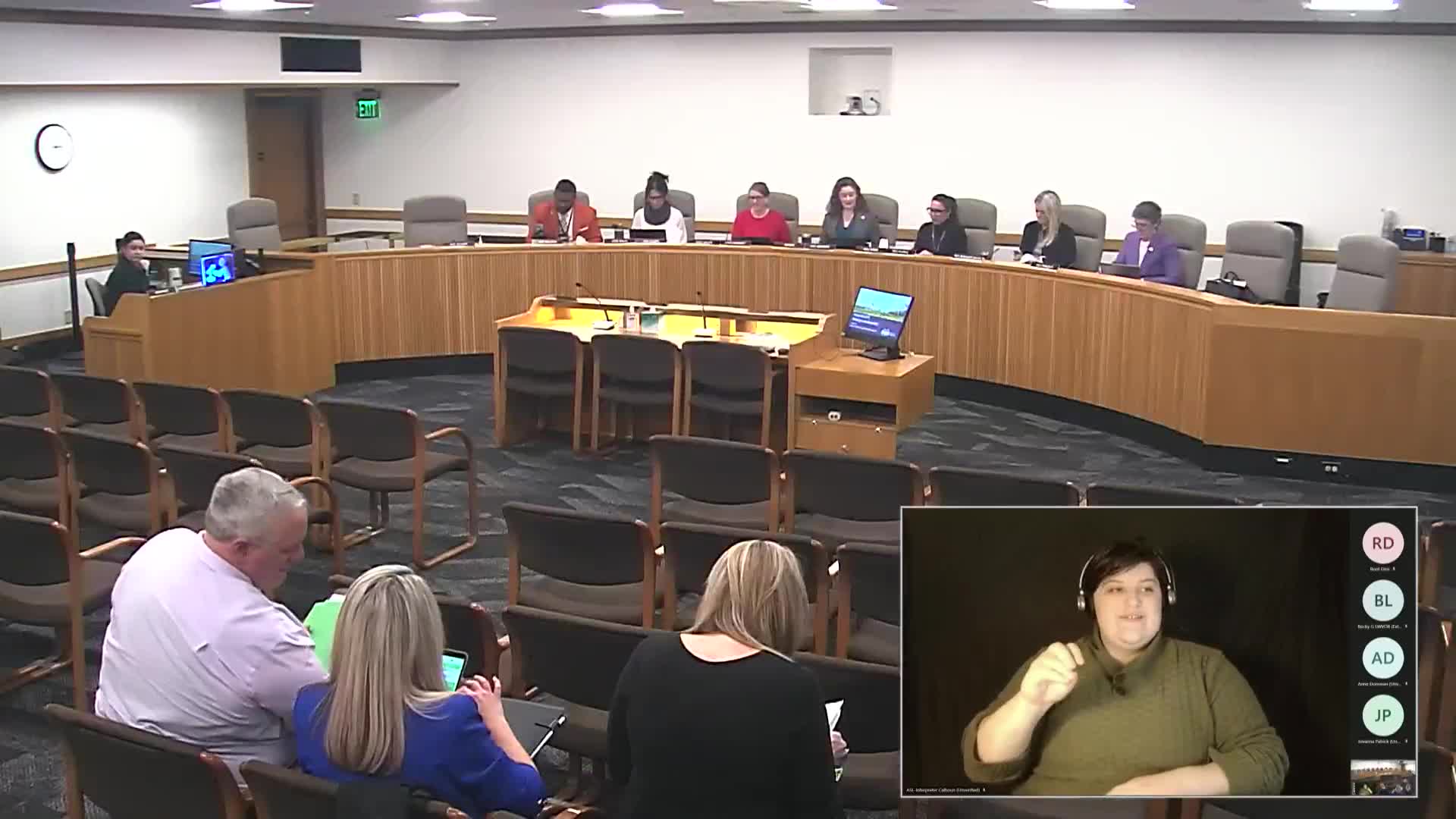
MADAM CHAIR GRABER — The House Committee on Labor and Workplace Standards heard public testimony on House Bill 2,570 on Feb. 23, a measure that would require the director of the Department of Consumer and Business Services to keep personally identifiable information of employees confidential when those employees participate in Oregon OSHA inspections, investigations or consultations.
The bill would amend ORS 654.067 and require the director to adopt procedures and rules to implement the confidentiality requirement. "Oregon OSHA's mission is to improve workplace safety and health for all workers in Oregon," Renee Stapleton, administrator of the Occupational Safety and Health Division at DCBS, told the committee. Stapleton said the change responds to federal OSHA monitoring that repeatedly flagged Oregon's practices for returning unredacted witness information to employers.
Why it matters: Federal OSHA requires state plans to be "as effective" as the federal program. Testimony said federal monitoring identified disclosure of unredacted witness information as a deficiency; state officials said failure to fix it could jeopardize Oregon's state-plan status. Kate Sussman, an attorney with the Northwest Workers Justice Project, told the panel the issue dates at least to 2019 and said "information was being given in a way that was... putting workers' identities at risk." Rebecca Gladstone of the League of Women Voters of Oregon said the League supported the bill, citing privacy positions and the need to protect employees from retribution.
Key details: The introduced bill as explained by Oregon OSHA would remove personally identifying information from public disclosure while preserving current discovery channels in contested cases. Stapleton said a dash-1 amendment would correct drafting errors in the introduced bill, clarify that confidentiality protections apply to consultation witnesses, and specify that an employer's "agent" is the party that may be identifiable in some circumstances. Committee members asked how the bill would affect an employer's ability to defend against claims when a worker's identity is material; Stapleton and commenters replied that contested-case discovery rules remain available in formal appeals and that inspections often stand on documentary or observational evidence without witness testimony.
What supporters said: Sussman urged narrowing any discretion in the statute and adding guardrails to make disclosure of identifying information rare, for example only when a worker is required to testify in an appeal. "We presume that this information should not be disclosed unless there is a situation where there's been, you know, extreme disregard for worker safety," she told the committee. Gladstone said confidentiality could be "imperative for critical investigation or inspection communication" and help "assuage concerns of retribution."
Next steps: The committee closed the public hearing on HB 2,570 and did not take final action during the Feb. 23 meeting. Staff told members a dash-1 amendment was forthcoming; further rulemaking guidance would follow if the bill advances.
Ending note: Testimony emphasized that the bill is intended to align state practice with federal OSHA monitoring expectations, while stakeholders said they expect follow-up in rulemaking to define limited exceptions and operational procedures.