Get Full Government Meeting Transcripts, Videos, & Alerts Forever!
Get email alerts on the Education School Mental Health topic
No spam. Unsubscribe anytime.
Committee hears interstate compact to ease licensing for school psychologists
Summary
House Bill 2,596 would enact the School Psychologist Interstate Compact to streamline licensure mobility for qualified school psychologists; proponents said it preserves state authority for background checks and is intended to improve access in underserved and rural districts.
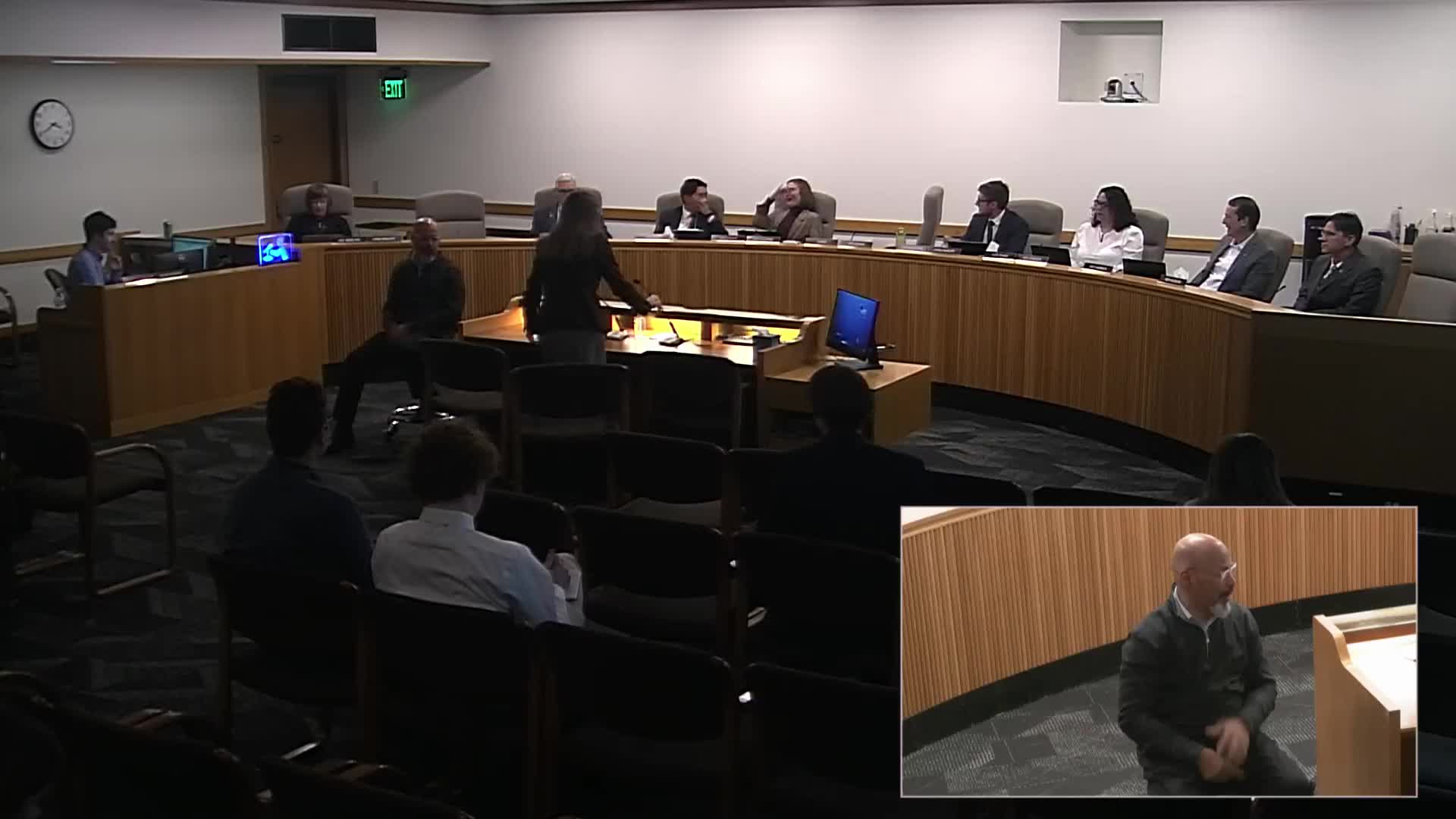
The committee held a Feb. 3 hearing on House Bill 2,596, which would enact the Interstate Compact for School Psychologists (ICSP) to facilitate licensure mobility and help address Oregon’s shortage of school psychologists.
Representative Courtney Miron, sponsor of the bill, told the panel that Oregon currently has roughly one school psychologist for every 1,448 students — far above the National Association of School Psychologists’ recommendation of roughly 1 per 500 students — and that rural and underserved communities are disproportionately affected. “By joining this interstate compact, Oregon can streamline this licensure process, allowing qualified professionals from other member states to practice here without unnecessary delays,” Miron said.
Adam Dier Singh, senior policy analyst for the Council of State Governments and a staff lead on compact development, described the ICSP’s development process and said the compact model is “boilerplate” for occupational licensure compacts while providing benefits through an interstate information-exchange system. He told the committee that the compact has built-in protections and that background checks remain an explicit authority of the state: “Background checks are explicitly carved out of the compact to be maintained as a full authority of the state,” he said.
School-district administrators and practicing psychologists testified in support. Cynthia Velasquez, program administrator for Portland Public Schools’ Comprehensive School Psychologist Program, recounted personal delays transferring an out-of-state license to Oregon and urged the committee to adopt a compact that reduces barriers and speeds placement of qualified clinicians. Kristen Erwin, Oregon state delegate for the National Association of School Psychologists, noted Oregon’s high rates of youth mental-health concerns and said the ICSP would help attract trained staff from other states; she also urged additional funding for behavioral health workforce development.
Witnesses and the sponsor said the compact’s effects depend on enactment by multiple states; the ICSP becomes effective after seven states enact the model legislation. At the time of testimony, two states were members and several others were considering similar bills. The committee held a hearing and did not take final action on HB 2,596 during the Feb. 3 meeting.