Lawmakers warn of conflicts and legal risks as Musk-led 'DOGE' gains access to federal systems
Get AI-powered insights, summaries, and transcripts
SubscribeSummary
During a House Oversight hearing, lawmakers and witnesses debated the administration's Department of Government Efficiency (DOGE), with Democrats warning that Elon Musk's advisers and rapid administrative moves pose conflicts of interest, security risks and potential legal overreach.
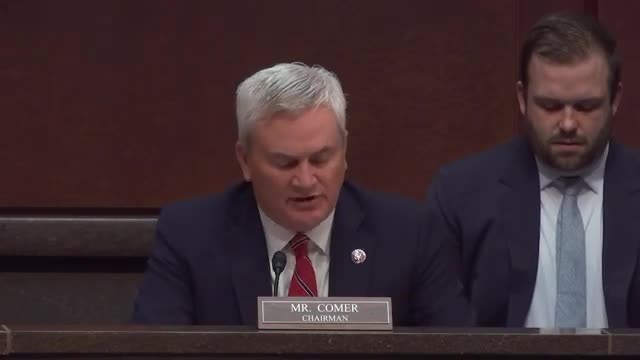
Members of the House Committee on Oversight and Reform used testimony and questioning during a lengthy hearing to press concerns about the White House's new Department of Government Efficiency, commonly abbreviated "DOGE," and the role of Elon Musk and his private-sector team.
Representative Gerry Connolly, the panel's ranking member, warned that Musk and his allies are positioned to "dismantle federal agencies" and could threaten programs that many Americans rely on. Connolly said in his opening that "This is the so called deep state that President Trump and his acolytes continue to demonize, and these are the programs and services sitting on Elon Musk's chopping block right now." That comment framed many of the Democrats' questions and motions for further oversight.
Expert witnesses told the committee they share some of those concerns. William G. Resch, an associate professor at the University of Southern California, said the concentration of authority in an unelected private actor invites conflicts. "Whenever there is no security clearance, there is a corruption risk," Resch testified, noting the difficulty of auditing or limiting how private teams might use government data.
Key concerns raised in the hearing - Data and systems access: Members cited multiple reports and communications suggesting Musk-affiliated staff have been granted temporary or ‘‘special government employee’’ roles that afford access to Treasury and other systems that manage federal payments. Lawmakers pressed whether those staffs have the security clearances or financial-disclosure safeguards typical for officials with such access. - Conflicts of interest: Witnesses and members highlighted that Musk’s companies hold multiple federal contracts and that exclusive access to government data or decision-making could advantage private firms in bidding or shaping markets. - Legal authority and procedure: Several witnesses noted that major reorganizations of agencies or moves to withhold congressionally appropriated funds require statutory authority or congressional action. William G. Resch said dismantling or consolidating agencies created by Congress could exceed executive authority and should come to Congress for formal votes. - Operational risk: Committee members described near-term disruptions they say were caused by an administration hiring freeze and a short-lived attempt at a broad funding freeze; witnesses said those moves produced service interruptions and increased uncertainty among contractors and grantees.
Administration role and witnesses: Committee members heard testimony from Governor Kim Reynolds (Iowa) on state-level reforms and from Tom Schatz of Citizens Against Government Waste and William G. Resch, each testifying about efficiency, duplication and the risks of politicizing the civil service.
What members asked for: Several lawmakers and witnesses urged the committee to subpoena Musk and DOGE staff (a motion later tabled by the committee), to require security and financial disclosures for outside advisors with wide access to government systems, and to demand a written accounting of any data access or system changes made by private hands.
Why it matters: The committee's debate goes to the heart of congressional oversight powers and practical safeguards around federal data, payment systems and the nonpartisan civil service. Lawmakers who spoke in favor of aggressive oversight said the convergence of private contracts, access to federal systems and administration directives merits fast, formal congressional review.