Get Full Government Meeting Transcripts, Videos, & Alerts Forever!
Get email alerts on the Data Center topic
No spam. Unsubscribe anytime.
Cannon Falls council schedules March work session as AUAR scoping continues for proposed data center
Summary
A Cannon Falls resident pressed the council for a timeline on a proposed data center; city staff said an AUAR environmental scoping document is underway and a March work session is planned to explain public-comment opportunities and the parallel zoning (PUD) process.
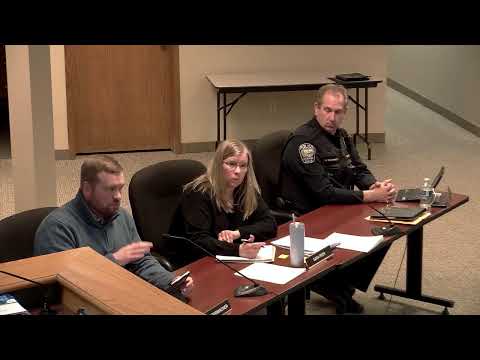
A Cannon Falls resident asked the City Council on Feb. 4 when the community would learn more about a proposed data center, and city staff said the local review is moving forward under a state-required environmental study known as an AUAR.
David Olvestad, a Cannon Falls resident, asked for a guideline on timing and scope, saying, “Because a lot of people in town are talking,” and asked whether new wells or additional residential building lots would be involved.
City Administrator John (last name not specified) said staff is developing the AUAR scoping document now; public agencies are reviewing the scoping material and the results will come back to the council in March for approval. He told the council the AUAR — an environmental review used in Minnesota to study area-wide impacts — will handle issues such as water use and other environmental matters. “The AUAR is very much the environmental study,” he said.
John also said the project will follow two parallel processes: the AUAR for environmental review and a separate zoning process in which the developer will seek a planned unit development (PUD) for land-use questions such as building setbacks. He said those zoning issues and the PUD public hearings will be the proper venue for comment on land-use matters not covered by the AUAR.
To clarify timing and public-engagement opportunities, staff proposed a council work session on March 4 and asked the council to consider starting an hour earlier that night to review the AUAR process, the schedule for public information sessions and the windows for submitting comments to the agencies handling the environmental review. John said the March work session would explain “where the opportunity for those comments fall in the right place.”
The city did not take any formal votes on project approvals at the meeting. John also noted he will be out of the office Feb. 5–17 and that additional scheduling details for the work session and related public meetings will be announced if dates change.
Ending
Council members and staff emphasized that the AUAR and the zoning (PUD) process provide separate, structured opportunities for public comment: the AUAR for environmental issues such as water use and the PUD/public-hearing process for land-use matters. The council set a tentative March 4 work session to walk through those steps and public-comment windows.