Get Full Government Meeting Transcripts, Videos, & Alerts Forever!
Get email alerts on the Trucking Liability Statute Of Limitations topic
No spam. Unsubscribe anytime.
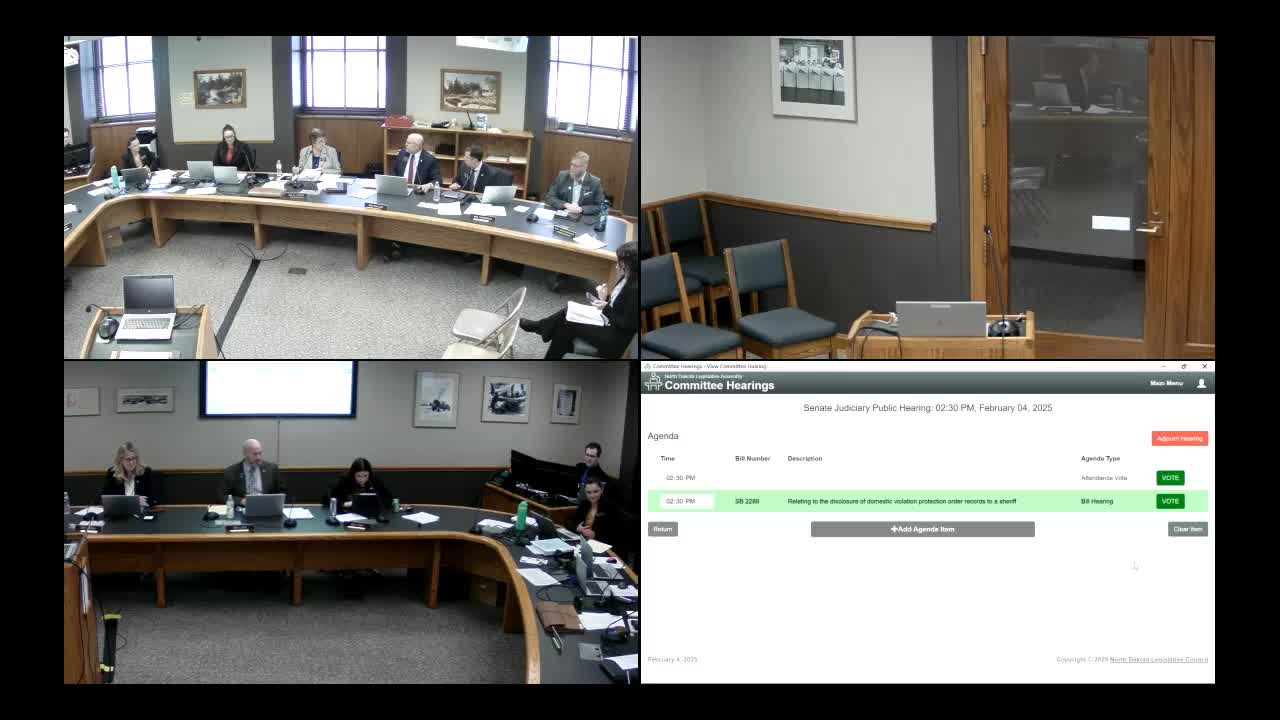
Committee reconsiders trucking-liability bill, rejects due-pass and orders do-not-pass
Summary
The Senate Judiciary Committee reconsidered Senate Bill 2206 after floor changes and ultimately issued a do-not-pass recommendation, amid disagreement over whether amended language properly identifies liable parties in commercial motor-vehicle cases and concern about shortening the statute of limitations from six to three years.
The Senate Judiciary Committee reopened consideration of Senate Bill 2206 after the bill returned from the floor with amended language. Committee members questioned changes made during the floor process, debated whether the bill’s wording properly targets the intended defendant in motor-vehicle-related civil actions, and considered a reduction in the statute of limitations from six years to three.
Victoria Christian of Legislative Council told the committee the bill had been effectively "hog-house" amended so that only a single section was preserved. Christian explained the bill language was adjusted because "it didn't make sense to sue the motor vehicle," and Legislative Council changed the wording to create an action against an employer for injury or death "occurring during the operation of a commercial motor vehicle." Christian said the change reflected the technical reality that a plaintiff sues a person or entity, not a vehicle.
Senators pressed on practical effects. Senator Cory asked what would happen when a carrier subcontracts a load to an independent company and whether the statute would reach the proper party; Senator Castaneda described a common logistics scenario in which company B is subcontracted by company A and argued plaintiffs should be able to target the responsible carrier. Senator Cory and others also objected to shortening the statute of limitations. Senator Cory said she knew a person who was hit by a semi and did not identify the responsible party until seven years later, and said, "I just don't think that 3 years is long enough for this incident." The committee discussed whether starting court action preserves the statute of limitations while parties sort out the proper defendant.
The committee took procedural steps. Members voted to reconsider the committee's prior actions on SB 2206; that motion to reconsider was approved. Later the committee considered a motion to give the bill a due pass as amended; in a roll call the due-pass motion failed (yes: Paulson, Myrtle, Chair Larson; no: Luke, Brownberger, Castaneda, Cory). After further discussion, a motion to recommend "do not pass" was moved by Senator Cory and seconded by Senator Castaneda. The committee recorded the do-not-pass recommendation and the motion carried by voice/roll call; Senate Bill 2206 was not recommended for passage out of committee.
Legislative Council and committee members talked about whether the words "commercial motor carrier," "commercial motor vehicle," or "employer" best capture the intended target of liability and about how courts handle identifying proper defendants. The committee also noted the practical effect of shortening the statute of limitations and asked staff to confirm whether initiating litigation would preserve a claim while parties establish the correct defendant.
The committee's formal action sent a do-not-pass recommendation on SB 2206; members who requested clarification said they expect Legislative Council to be available to explain technical wording when the bill is carried on the floor.