Get Full Government Meeting Transcripts, Videos, & Alerts Forever!
Get email alerts on the Eminent Domain Procedures topic
No spam. Unsubscribe anytime.
Subcommittee advances eminent domain changes, shortens certificate-of-take waiting period and adds disclosure requirements
Summary
Senate omnibus eminent domain bill that shortens the certificate-of-take waiting period and requires more detailed disclosures at the certificate stage was reported by the subcommittee 7-1 after testimony from property-owner attorneys and local government counsel.
A Senate omnibus eminent domain bill that shortens the waiting period after a certificate of take and expands what must be disclosed when a condemning authority records a certificate was reported from the Veil Law Subcommittee 7-1.
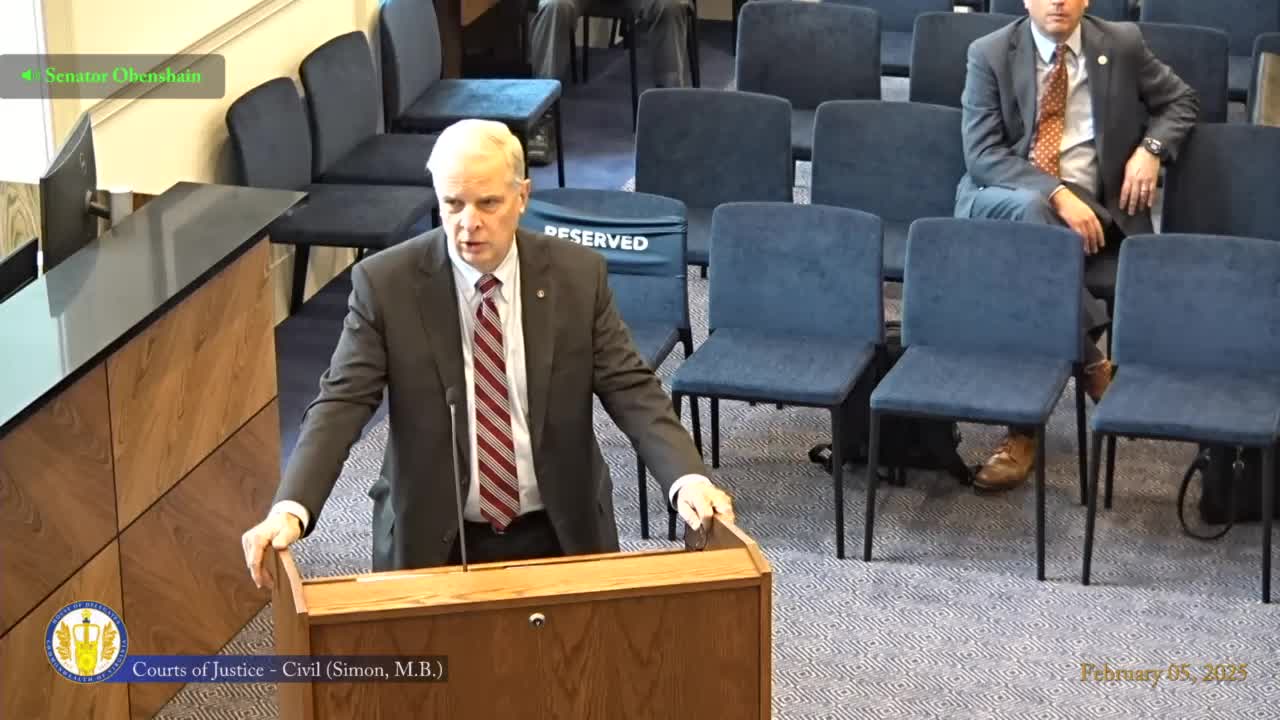
Senator Obenchain presented the measure as a multi-part, negotiated package intended to streamline condemnation procedures and correct inconsistencies across code sections. Key changes include reducing the statutory period between filing a certificate of take and commencement of litigation from 180 days to 100 days (with the option to extend by agreement), a provision that interest on awards be compounded daily, and a requirement that condemning authorities provide more specific descriptions and plans to property owners at the certificate stage.
Josh Baker, an attorney who represents property owners, said the bill—s disclosure requirement addresses a common problem: owners often receive a certificate that transfers title without sufficient detail about what will be taken or how uses will affect the remainder of the property. "The certificate is the actual means by which the government acquires title to the property," Baker said, and he described cases in which owners faced months or years of delay with little information.
Local-government witnesses voiced practical concerns about the disclosure requirement and other operational consequences. Christine (identified as Fairfax County counsel) said many takings in Fairfax County are small strip takings for roadwork and other infrastructure; requiring plan sheets, elevations and grading details at certificate filing would increase upfront costs and could be unnecessary in many cases. Virginia Beach—s associate city attorney, Elizabeth Chupiak, said her clerk—s office does not record plan sheets and that design-build and large stormwater projects often lack final plans at the certificate stage; she warned that the language as drafted could make acquisition or construction infeasible in some cases and risk legal consequences if recorded plans become binding.
Senator Obenchain said the provision was negotiated with the Virginia Municipal League and localities, and that the intent is to provide property owners the information they need to evaluate a taking without imposing unreasonable burdens. Committee members asked technical clarifying questions about whether the proposed language would force repeated restarts of the process when plans change; witnesses said code currently allows amendment of a certificate and courts routinely permit amendment so the mechanism would not require restarting the process.
Other provisions in the bill clarified that when any permanent interest (including easements) is acquired the condemnor must provide title reports/instruments and sought to conform interest-computation rules across multiple code titles. Opponents asked for narrower or carved-out language to avoid imposing high design costs on small, routine takings.
After extended questioning and debate, the clerk opened and closed the roll; the transcript reports the bill as "your bill reports 7 to 1." The bill was moved and seconded to report and will be considered in subsequent committee stages.
The hearing record shows negotiated language intended to increase transparency for property owners while local governments raised concerns about feasibility and cost for routine infrastructure takings; the committee directed the sponsor and counsel to continue discussions on technical clarifications.