Get Full Government Meeting Transcripts, Videos, & Alerts Forever!
Get email alerts on the Child Support Guidelines topic
No spam. Unsubscribe anytime.
Subcommittee advances bill updating Virginia child support guideline amounts for inflation
Summary
A House Courts of Justice subcommittee reported Senate Bill 805 after testimony for and against. Sponsors say the change updates child support tables for inflation; parents and advocates warned higher orders can increase arrears and enforcement actions.
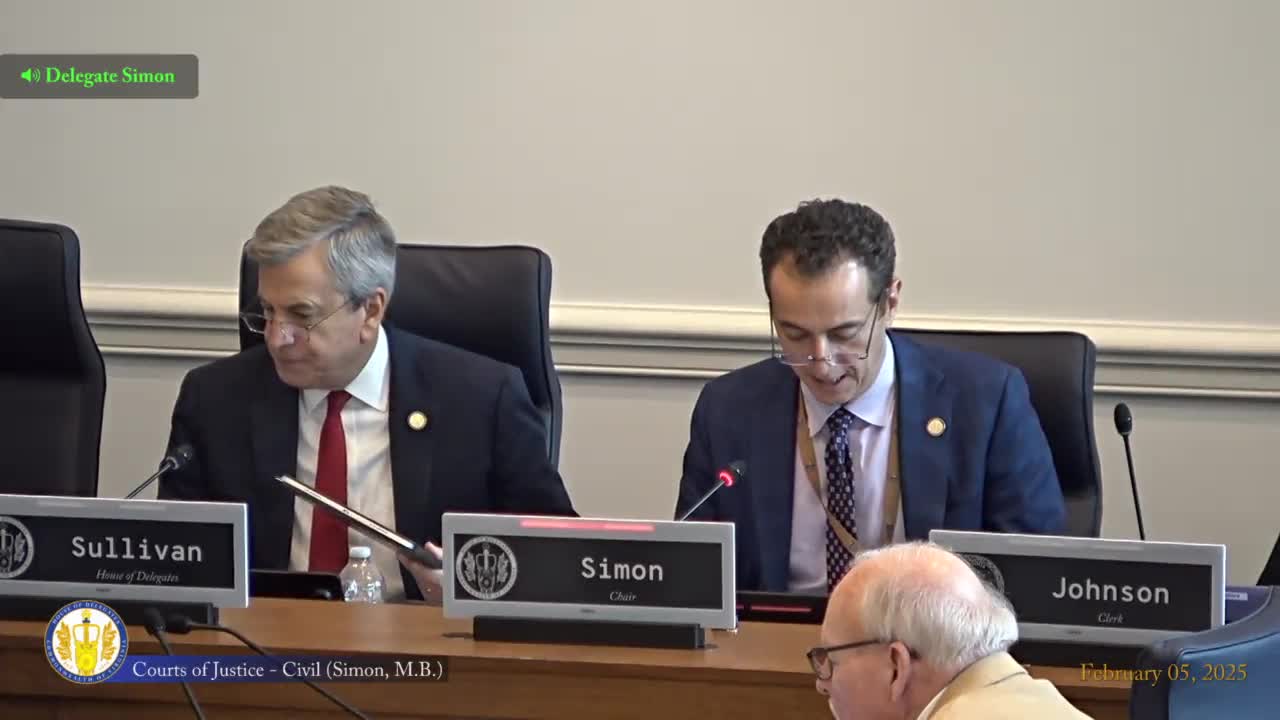
Senate Bill 805, which adjusts Virginia—s child support guideline table to reflect inflation since the last update, was reported out of the Veil Law Subcommittee of the House Courts of Justice Committee on a voice roll call of 8-0.
The bill, presented by Senator Serravel, directs the Division of Child Support Enforcement—s recommended table into statute after a state-hired economist recalculated support amounts to account for changes in housing, food, clothing and other categories since the table was last revised in 2014. "This bill, all it really does is updates child support for the rate of inflation," Serravel said.
Supporters told the committee the update is a routine statutory housekeeping step tied to federal requirements. Serravel said federal law requires states to maintain and periodically update child support guidelines and that the Department of Child Support Enforcement (DCSE) hired an economist to prepare the recommended table. "We're required to keep them up to date with the cost of living," Serravel said.
Multiple public witnesses opposed the bill or urged caution. Emma Johnson, a Richmond resident who identified herself as a parent and advocate, said increases throughout the table could make child support orders unaffordable for many noncustodial parents and could raise arrears and enforcement actions. "Child support is not affordable," Johnson said. She told the panel that higher orders can increase conflict and reduce parental engagement in some families.
Thomas Ward, a Virginia Parents United member, and Natalia Dalton, who identified herself as a parent who pays child support, also testified in opposition. Dalton raised concerns about arrearages, enforcement, and an incentive the state may gain from higher collections tied to federal reimbursements. "The system manipulates child support guidelines to maximize federal assistance," Dalton said, reading comments about federal matching funds.
Committee members pressed for factual detail about the numbers. Delegate Elliot Ballard noted that the changes increase low-end monthly obligations by roughly $30–$60 and upper-middle-income obligations by $100–$150 in DCSE—s estimates, and that the top end could increase by about $200 annually. Serravel and other members repeatedly said they did not personally set the numbers and that the figures came from the economist—s analysis.
The clerk opened and closed the roll after debate; the bill "reports" from the subcommittee on an 8-0 voice tally.
The subcommittee record shows support from some family-law groups but also sustained public concern that raising guideline amounts without accompanying affordability measures could increase arrears and criminal enforcement. The bill is now reported out of the subcommittee to the next stage of the legislative process.
Details included in the subcommittee hearing: the update is framed as an inflation adjustment to the existing guideline table; proponents referenced federal statutory requirements and the role of TANF and DCSE in administering and enforcing support; opponents cited affordability, arrears, and collateral effects on families.