Get Full Government Meeting Transcripts, Videos, & Alerts Forever!
Get email alerts on the Dui Private Property topic
No spam. Unsubscribe anytime.
Senate committee hears bill to exempt some private-property conduct from DUI law; bill tabled
Summary
Senators debated Senate Bill 9-18, which would bar DUI charges for people operating vehicles on their residential property, drawing testimony from law-enforcement and safety groups before the panel laid the bill on the table 8-0.
Richmond — The Senate Courts Subcommittee on Criminal Law on Tuesday considered Senate Bill 9-18, a measure from Senator Stewart that would remove a prohibition on charging a person with driving under the influence while operating a motor vehicle on their residential property.
Supporters of the change said the bill restores an understanding of private property rights they said existed before a Virginia Supreme Court decision. "Senate Bill 9-18, very simply, would remove, a prohibition from drinking and driving on your private property," Senator Stewart told the committee, adding the bill would not affect driving on public roads.
Opponents, including public-safety groups and prosecutors, told the panel the change could leave victims and bystanders at greater risk. Kurt Erickson, president of the Washington Regional Alcohol Program and representing multiple highway-safety organizations, said the bill "bifurcates Virginia's DUI laws. At the end of the day, it says that it's okay to drive drunk here, but it's not okay to drive drunk here." David Bloodbetter, Commonwealth's Attorney for Waynesboro, said the inherent danger of impaired operation remains on residential property and pointed to the courts' reasoning in Sarafin. "Residential property is generally defined as property zoned for living or dwelling," Bloodbetter said, warning the bill could exempt parking lots and other multi-tenant areas.
Committee members pressed sponsors on drafting details, including whether the bill's use of the term "residential property" could be read to include adjoining parcels, condominiums' common areas or gated complexes. Counsel told the committee this measure would not affect areas open for public vehicular travel, and members debated whether the possession interest (a tenant versus an owner) should control applicability.
Lawyers and advocates also discussed criminal consequences beyond DUI: a committee member asked whether a fatal crash on private property could be prosecuted as involuntary manslaughter if DUI charges were precluded. Counsel and Senator Stewart disagreed about the interplay of DUI-specific manslaughter statutes and general homicide statutes; counsel said defense arguments could rely on a specific statutory exemption, while Senator Stewart and others argued other homicide statutes could still apply.
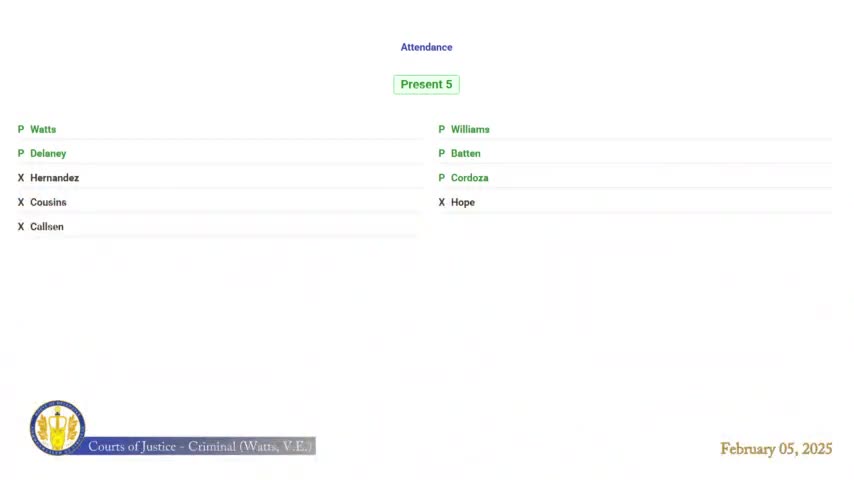
After testimony from multiple groups including DriveSmart Virginia and the Virginia Association of Commonwealth's Attorneys, the chair put the matter to a motion. Delegate Hernandez moved to lay SB 9-18 on the table; the measure was laid on the table by voice and recorded as unanimous, 8-0.
The vote leaves the bill without further action from the subcommittee at this time; proponents and opponents agreed substantial drafting clarifications would be needed to limit the bill to the sponsor's intended scope.
The record shows the committee heard multiple witnesses and extensive legal questions but took no further action other than tabling the bill.