Get Full Government Meeting Transcripts, Videos, & Alerts Forever!
Get email alerts on the Restorative Programs topic
No spam. Unsubscribe anytime.
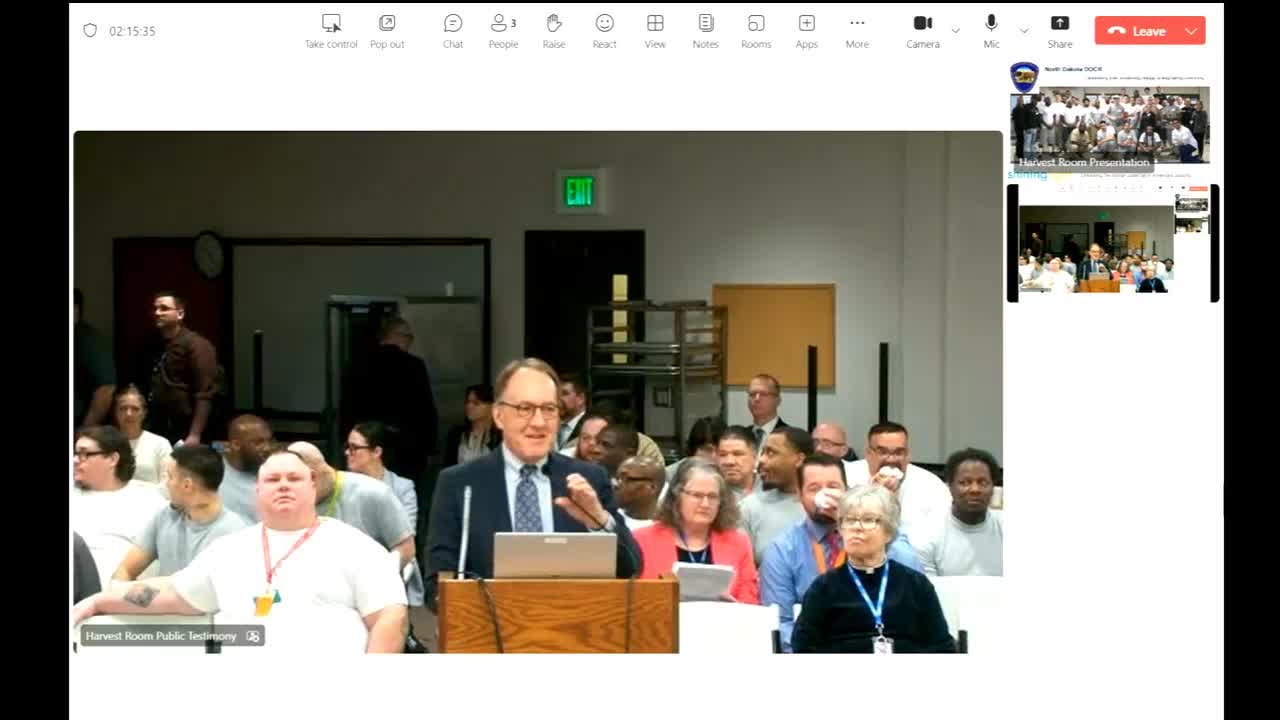
Nonprofits describe prison programs they say build hope and reduce incidents at NDSP
Summary
Shining Light and Prison Fellowship representatives described evidence‑informed courses, peer leadership and community connections that facilitators say increase hope, prosocial behavior and positive disciplinary outcomes among participating residents.
Representatives of Shining Light and Prison Fellowship told the Senate Appropriations Human Resources Division that their programs at NDSP focus on character strengths, resilience and restoration and produce measurable participant improvements.
Jeff Boone, executive director of Shining Light, described multi‑session courses based on positive psychology and virtue development that his group has delivered in NDSP and other facilities. Boone said participants reported increased hope and prosocial intentions; he cited aggregate results including a 26 percent increase in positive behavior reports and a 25 percent decrease in violent incident reports across comparable time periods for participants.
Zachariah Jones, a program participant who previously spent eight years in restrictive housing, credited the program with changing his approach and said he has become active in GED and caregiving training. Boone said the program has trained more than 200 people across North Dakota institutions in the last two years and requested $500,000 over two years to expand to five facilities.
Prison Fellowship officials described a 12'14 month Prison Fellowship Academy model that combines curriculum, coaching and cohort community living. Prison Fellowship Senior Vice President Cody Wilde and a participant, Ashley Hunter, testified about how curriculum and life‑on‑life coaching work together. Wilde noted North Dakota DOCR as an early national leader and commended department culture changes that support programming.
Why it matters: Speakers argued that positive‑psychology and faith‑based restoration work can change resident behavior, increase engagement in treatment and education, and produce cost savings by reducing violent incidents and segregated housing usage.
Committee exchange: Senators asked about program costs; Shining Light requested $500,000 for expansion to five facilities over two years. Prison Fellowship emphasized volunteer and staff coaching and cohort residential models, linking program success to the institution's culture.
Ending: Committee members thanked presenters and residents. No formal votes were taken during the visit.