Get Full Government Meeting Transcripts, Videos, & Alerts Forever!
Get email alerts on the Rio Hb1022 topic
No spam. Unsubscribe anytime.
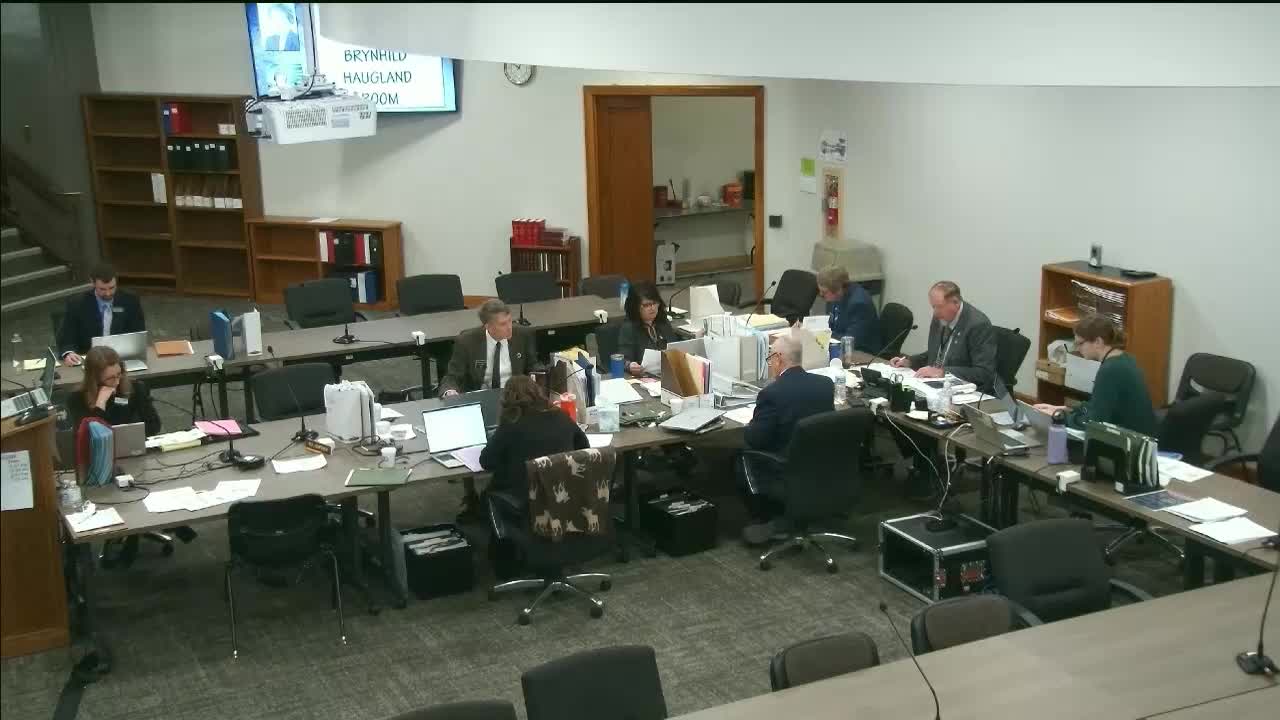
House panel reviews RIO budget, including hosting fees for new pension system and funding for investment staff
Summary
The Government Operations section of the House Appropriations committee reviewed House Bill 1022, the budget for the Retirement and Investment Office (RIO), concentrating on hosting fees for a new cloud pension system, consultant support for accounting modernization and funding for several investment staff positions.
The Government Operations section of the House Appropriations committee reviewed House Bill 1022, the budget for the Retirement and Investment Office (RIO). Committee members focused on recurring hosting costs for a new pension administration system, one-time consultant funding to plan an accounting upgrade, staffing and the agency’s incentive-compensation arrangements.
Chairman Munson and Representative Bosch led a line-by-line review of the RIO long sheet. Jody Smith, interim executive director for the Retirement and Investment Office, confirmed the agency manages special funds and that unspent special-fund balances remain in those funds rather than being carried forward into operating appropriations.
On the pension software, Chad Roberts, deputy director of RIO, described the new system and hosting costs: “The hosting fee is for the new pension administration system. Our existing system, which is 20 to 30 years old, is an on-site database, a very antiquated database. The new system is hosted through the web.” Committee staff noted an operating increase of about $751,000 for annual licensing/hosting related to the new, vendor-hosted system Neospin (vendor Sagitec). Committee members discussed whether portions of costs are one-time (development, test and production deployment) versus an ongoing operating line; staff and agency leaders said the development costs are largely one-time while hosting/licensing is recurring and will be part of the base going forward.
RIO requested a $50,000 one-time consultant to plan an accounting-system replacement ahead of the accounting system’s planned “end of life” in September 2029. Rachel Kamatz, interim CFO/COO for RIO, said a consultant would help identify a replacement product and prepare for a potential integrated solution across accounting and investment reporting.
Staffing and compensation: committee staff and RIO confirmed seven investment-related positions had been authorized and partially funded previously; the long sheet showed approximately $1.2 million associated with positions that were only partially funded. Jody Smith said those seven positions include five investment professionals, one operations professional and one administrative staffer and that the employees have been hired. The committee noted a related policy bill, House Bill 1348, which would curtail RIO’s ability to use unclassified positions and the incentive-compensation program; agency leaders warned that if HB1348 were enacted it would make it difficult to retain recruited staff.
On recruitment and pay practices, RIO described an incentive-compensation model intended to help bring investment professionals in-house and tie pay to performance. A committee member summarized the issue: HB1348 “is to terminate the incentive compensation program and our ability to unclassify those employees.” Committee members discussed that bonuses have ranged from 25% to 100% under the board’s policy and that retaining staff recruited from the private market may depend on those incentives.
Other items: members tentatively approved an additional $20,000 in the operating budget for RIO-hosted investment conferences (with prior conferences receiving some sponsorship support), and considered funding an internship expansion (current funding $16,000; committee discussed adding $24,000 to reach about $40,000 total) and a retirement-education outreach initiative (a requested $35,000; some members preferred to pause on that new initiative pending coordination with other education efforts).
Next steps: staff (Adam and Brady) will prepare an amendment consolidating the committee’s decisions and line-item choices. Committee members said they intend to watch the outcome of related policy bills including HB1319 (transparency website) and HB1348 before finalizing some FTE and program decisions; one communications FTE tied to HB1319 was moved from the budget worksheet because it will be addressed in that policy bill.
Ending: the committee reviewed the worksheet and asked staff to prepare a formal amendment for committee action later; no recorded roll-call votes on the bill excerpt were taken in the provided transcript.