Get Full Government Meeting Transcripts, Videos, & Alerts Forever!
Get email alerts on the Reentry topic
No spam. Unsubscribe anytime.
DOCR reentry manager and community partners outline housing, ID and employment barriers
Summary
NDSP reentry staff and community partners described efforts to connect residents to Medicaid, state ID, housing and jobs prior to release; partners urged continued financial support for reentry services and proposed incentives for landlords and employers.
The Department of Corrections and Rehabilitation and its community partners told the Senate Appropriations Human Resources Division that housing, identification and employment remain the principal reentry barriers for people leaving NDSP.
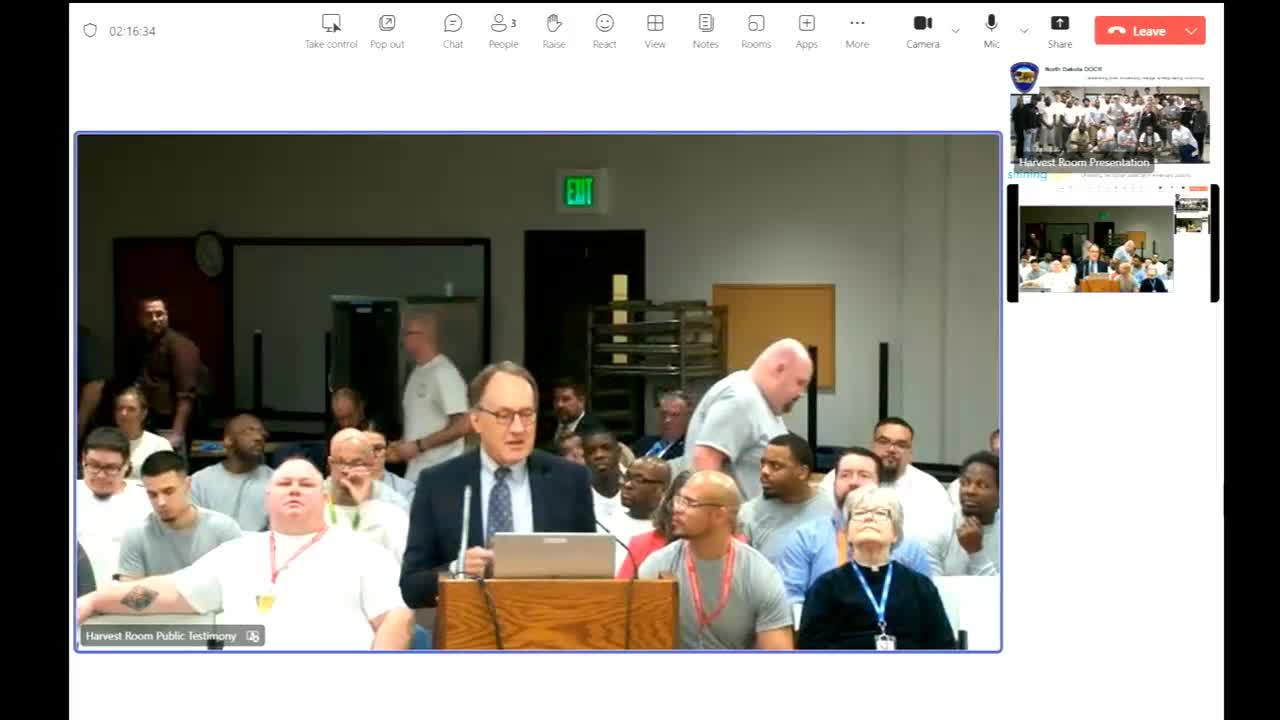
Robin Schmalenberger, DOCR reentry program manager, said the department works with community partners to facilitate Medicaid access, state identification and employment connections before release. "Returning from incarceration can be incredibly challenging," she said, citing housing, transportation and healthcare as common obstacles.
Community partners described their work to bridge the gap. Ministry on the Margins's Prison Reentry Manager Nate Mickelson described pre‑release planning, resource fairs and community connection events. FI Project CEO Adam Martin described peer‑led housing and reentry supports through housing sites in multiple cities and reported a roughly 75 percent three‑year success rate among his program participants; he suggested incentives for landlords and employers to increase community absorption of returning residents.
Why it matters: Staff and partners said early connection to services improves reentry stability and reduces the risk of recidivism. Partners requested sustained funding and suggested policy incentives (landlord incentives and employer tax credits) to expand housing and employment options for people leaving corrections custody.
Committee exchange: Senators asked what additional investments would reduce returning populations; partners emphasized community incentives and coordinated housing strategies and noted the small supply of housing options relative to demand.
Ending: No formal committee votes were taken; legislators thanked partners and DOCR staff for in‑facility and community coordination.